
As you or your partner have proposed and set the date, another milestone awaits: choosing a wedding band that actually looks good with your engagement ring. Matching two rings to sit comfortably side-by-side on your finger can feel like a mini geometry puzzle. Should they match metals? Will a straight band leave an awkward gap? Do you want them to fuse together or contrast? Let’s break down the ultimate guide to help you find the perfect wedding band that pairs well with your engagement ring.
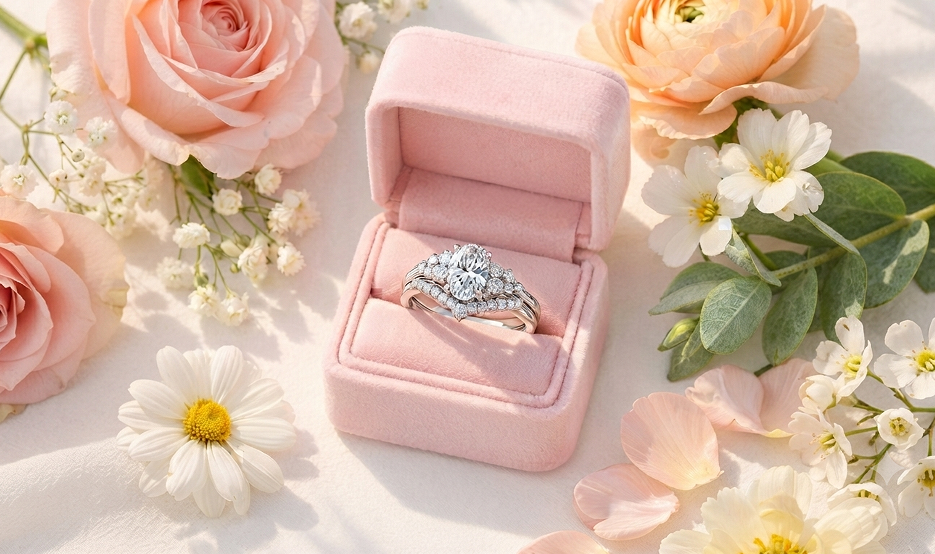
How to Choose a Wedding Band Based on Your Engagement Ring?
When to choose the wedding band, you should know your engagement ring’s design and structure. Here are some factors to consider.
Metal
Metal is the foundation of your ring’s durability and overall aesthetic. When it comes to pairing, you basically have two distinct routes to take:
- The Harmonious Match (Safe & Classic): Pairing the exact same metal type and karat weight with your engagement ring—such as 18K yellow gold with 18K yellow gold, or platinum with platinum. This creates a seamless, uniform look and ensures both rings wear down at the exact same rate over time (as dissimilar metals can cause friction and scratching when rubbed together).
- The Modern Mix (Trendy & Bold): Embracing mixed-metal stacks, like pairing a platinum solitaire with a yellow gold wedding band. If you love this contemporary look, ensure the bands share a similar width or profile so they complement each other harmoniously rather than competing for attention. Just a quick heads-up: this style may require a bit more regular maintenance and professional polishing to keep both rings looking their absolute best.
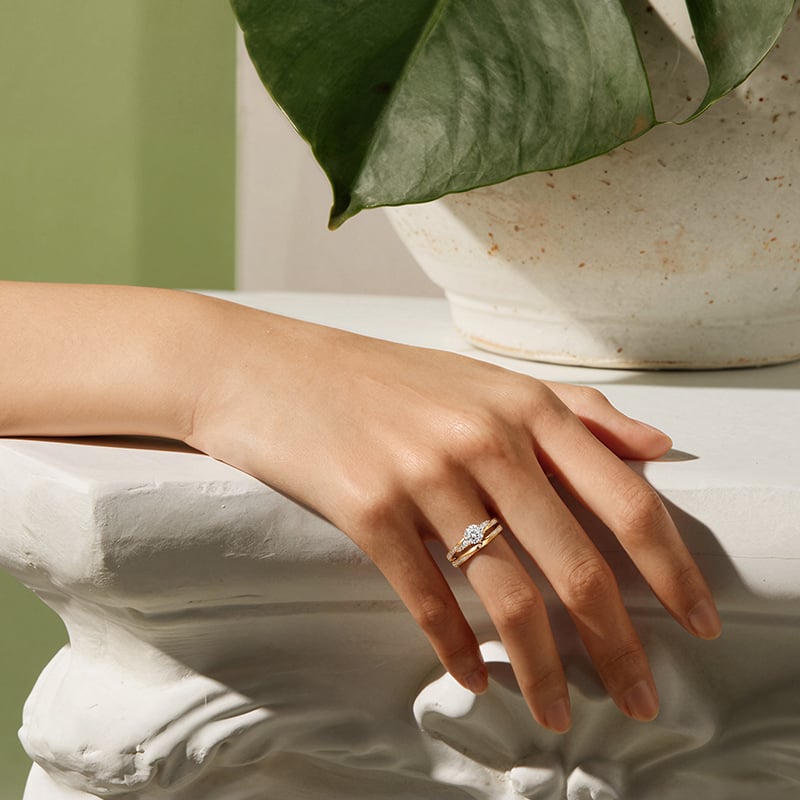
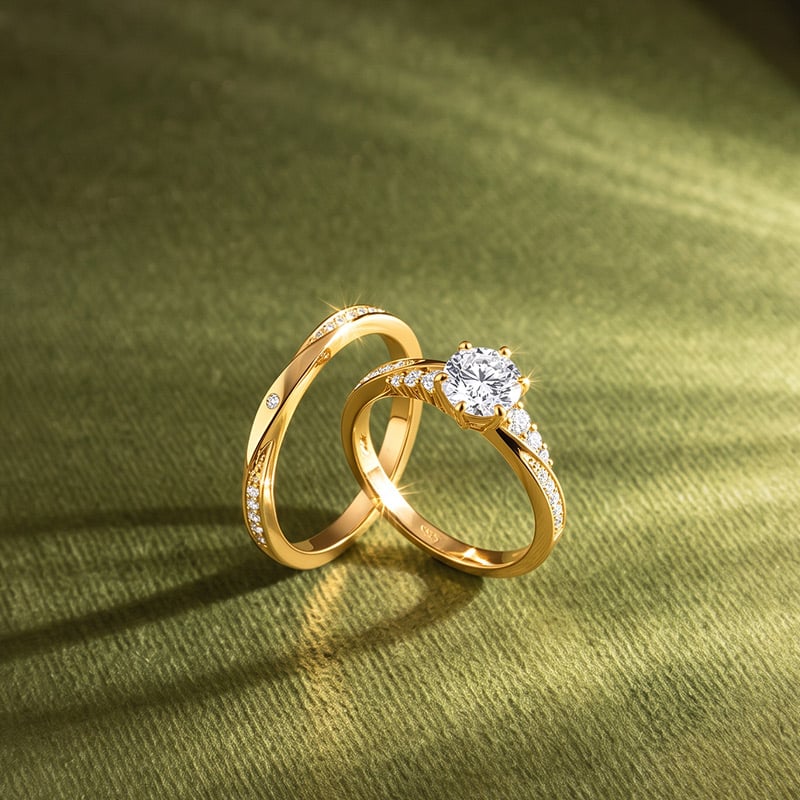
Stone Shape & Setting Height
Take a close look at the setting of your engagement ring. Is the center stone set high above the band, or does it sit flush against your finger?
- High-Set: You are in luck! Almost any straight wedding band will slide right up next to it, sitting flush against your engagement ring without any gaps.
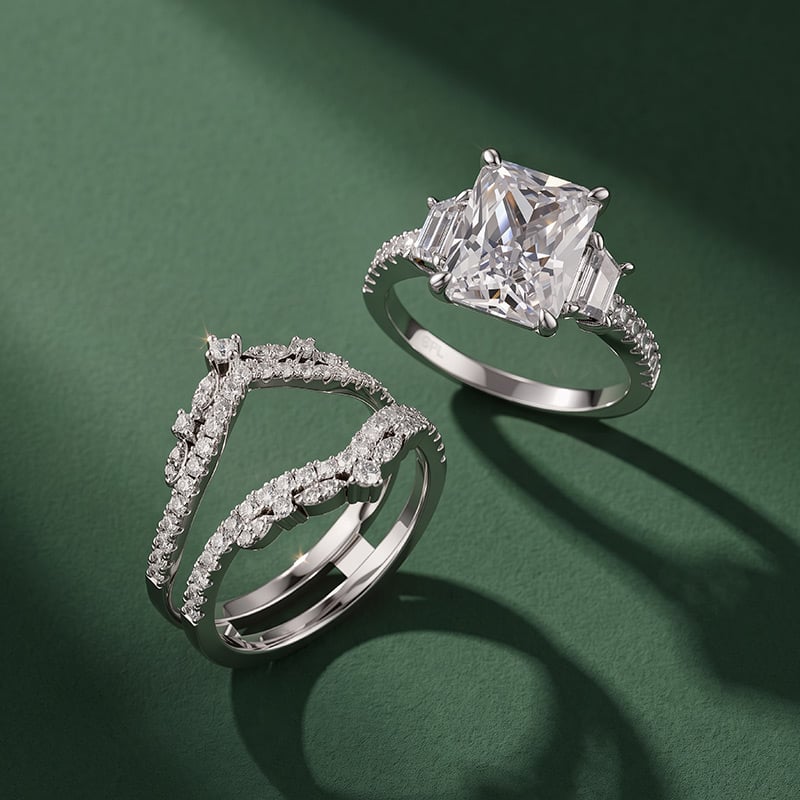
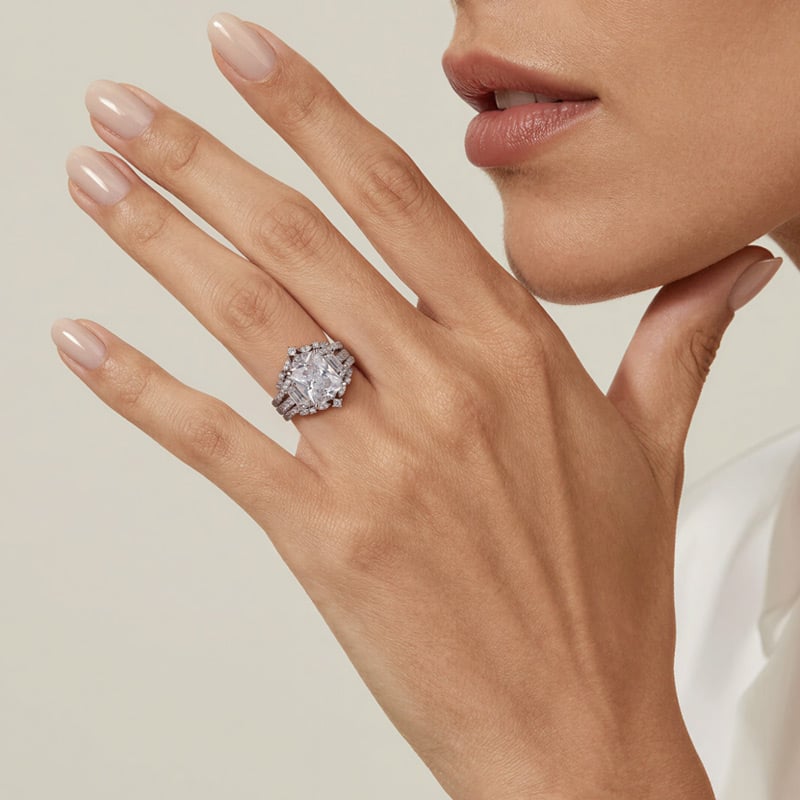
- Low-Set, Halo, or Unique Cuts: If your center stone sits low, features an intricate gallery, or has a unique shape—such as an oval, pear, marquise, or emerald cut—a traditional straight band might leave an annoying gap because it hits the stone’s basket or prongs. In this case, look for a contoured (curved) or chevron band—these are specifically shaped with a little dip or curve to hug your engagement ring like a puzzle piece.
Width
Ring widths typically range from 1.5mm to 3.5mm. Comparing these numbers makes it much easier to visualize the final look:
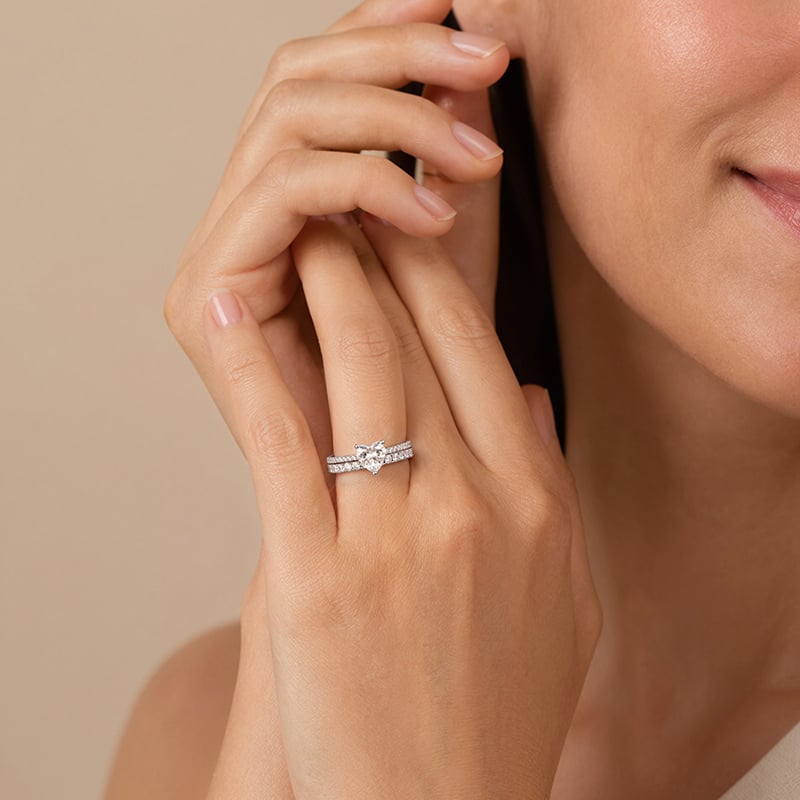
- If your engagement ring is ultra-dainty (e.g., a 1.5mm–1.8mm micro-pavé band): Keep your wedding band around 1.5mm to 2mm. Two delicate, matching lines complement each other gracefully. Pairing a dainty solitaire with a chunky 3mm plain band will visually overwhelm the engagement ring, making the center stone look disproportionately heavy.
- If your engagement ring is substantial or vintage-inspired (e.g., 2.5mm–3.5mm): Match its presence with a wedding band in the 2.5mm to 3mm range, or opt for a substantial diamond band. This ensures equal weight and balance on your finger without looking top-heavy.
Popular Wedding Band and Engagement Ring Stacking Styles
Your wedding band should enhance your engagement ring, not compete with it for the spotlight. Depending on the vibe you want to achieve, here are a few popular stacking formulas to try:
The Timeless & Low-Maintenance Stack:
- Best for: Elaborate, ultra-detailed engagement rings or massive center stones.
- The look: A simple, sleek plain metal band. It lets your statement engagement ring do all the talking while offering a comfortable, everyday-friendly feel.
The High-Sparkle Solitaire Stack:
- Best for: Clean, classic solitaires (where you have a total blank canvas).
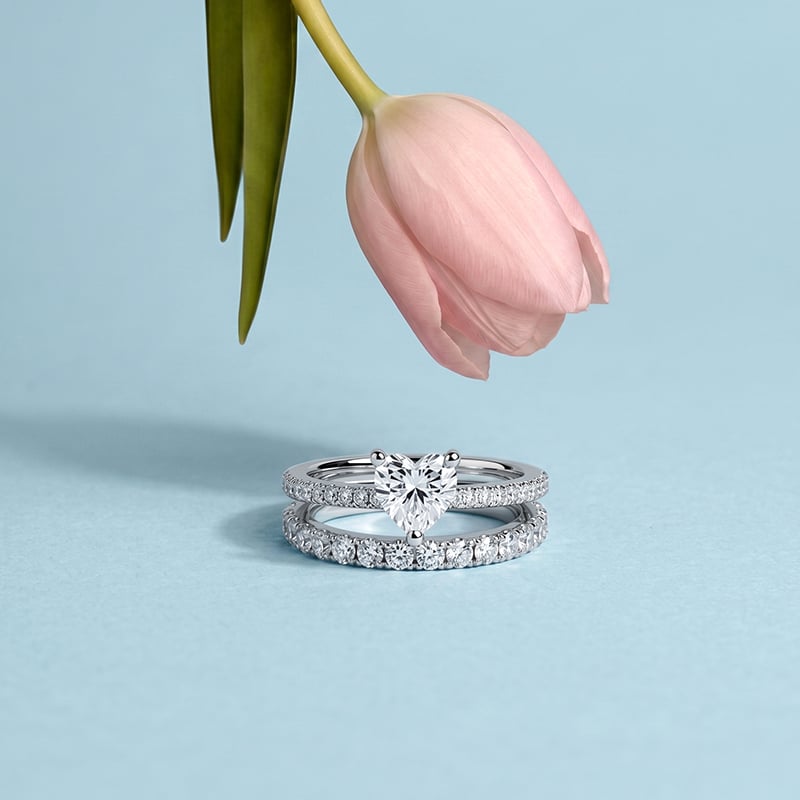
- The look: Amp up the brilliance by pairing it with a pavé diamond band or a shared-prong eternity band. This adds maximum sparkle and transforms a simple ring into a dazzling set.
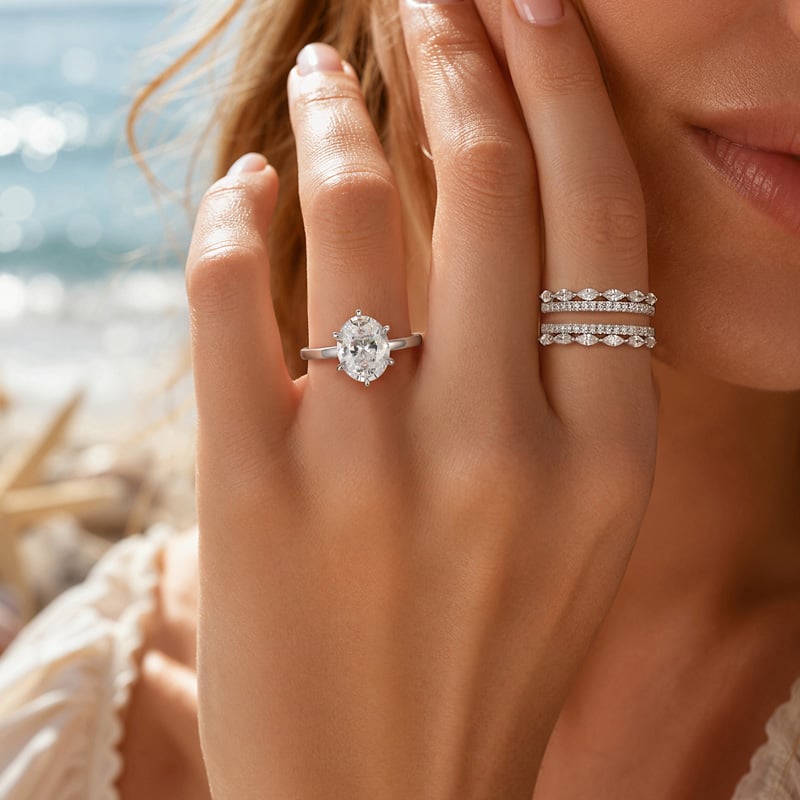
The Glamorous Statement Stack:
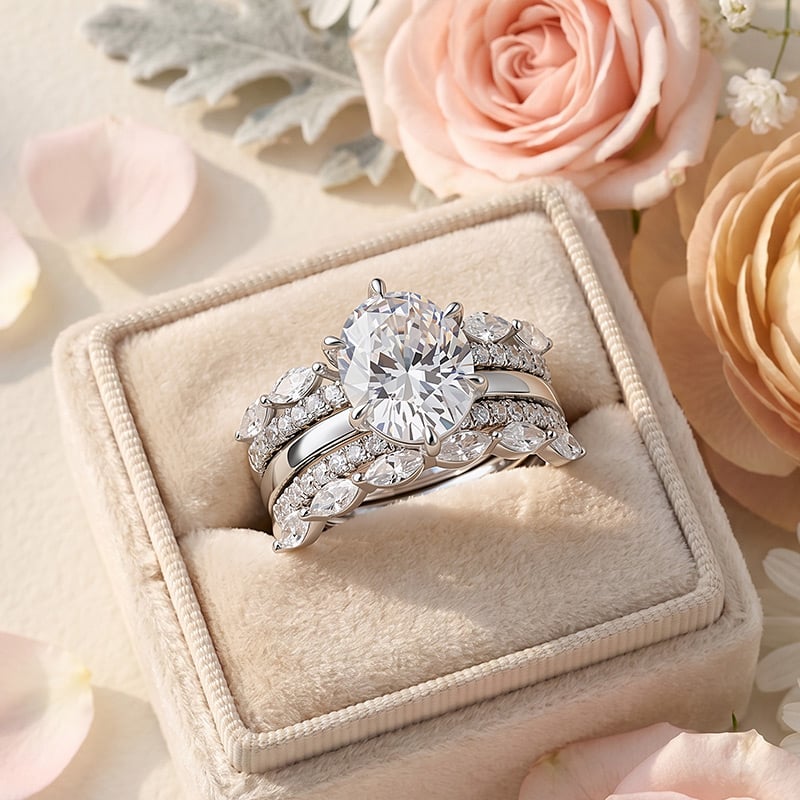
- Best for: 2+ carat center stones or elaborate halo settings.
- The look: A medium-width diamond half-eternity band. The matching brilliance frames and supports a large center stone, creating a cohesive, high-end, and glamorous look without looking top-heavy.
The Minimalist & Subtle Stack:
- Best for: Delicate center stones (under 0.5 carats) or minimalist solitaires.
- The look: A classic plain metal band or a slim micro-pavé band. Keeping it understated ensures the stack doesn’t overpower your subtle center stone, letting its delicate beauty shine.
Practical Considerations for Engagement and Wedding Band Stacking
Your wedding band is the ring you will likely wear every single day—through cooking, typing, working out, and sleeping. Beauty is important, but comfort and durability matter for daily wear.
The “Gap” vs. The “Flush Fit”
Decide early on if a small gap between the two rings bothers you. Some people love the distinct separation of a straight band, while others prefer a locked-in, gapless fit.
Prong Rubbing & Wear
If both rings feature sharp prongs or intricate side stones, they can rub against each other over time, causing premature wear on the metal or loosening the stones. Consider spacer bands if needed.
Single-Wear Versatility
Remember that there will be days when you only want to wear your wedding band (e.g., gym sessions, traveling, or doing messy house chores). Ask yourself: Does this band look gorgeous and feel comfortable all by itself?

Trust Your Instincts-Choose Your Dream Wedding Band
Finding the perfect wedding band shouldn’t feel like a chore—it’s an exciting milestone to celebrate your upcoming chapter. Whether you fall for a seamless matching set or a trendy mixed-metal stack, the best combination is the one that fits your lifestyle and makes you smile every time you look down at your hand. Take your time, weigh your options, and choose a ring you’ll love wearing for a lifetime.
More Jeulia Post: