
Stainless steel necklaces are durable, affordable, hypoallergenic, and resistant to tarnish and rust. Unlike sterling silver, which requires frequent polishing, or gold, which can scratch easily, stainless steel offers the perfect balance of beauty and toughness.
But after weeks or months of daily wear, you may find your once-shiny stainless steel necklace starts to look dull, cloudy, or even grimy. Don’t worry, here’s the thing: even the toughest materials need a little TLC. The good news? Restoring that brilliant shine is incredibly easy—and you probably already have everything you need right in your kitchen.
In this guide, we’ll walk you through everything you need to know about cleaning, caring for, and preserving your stainless steel jewelry.
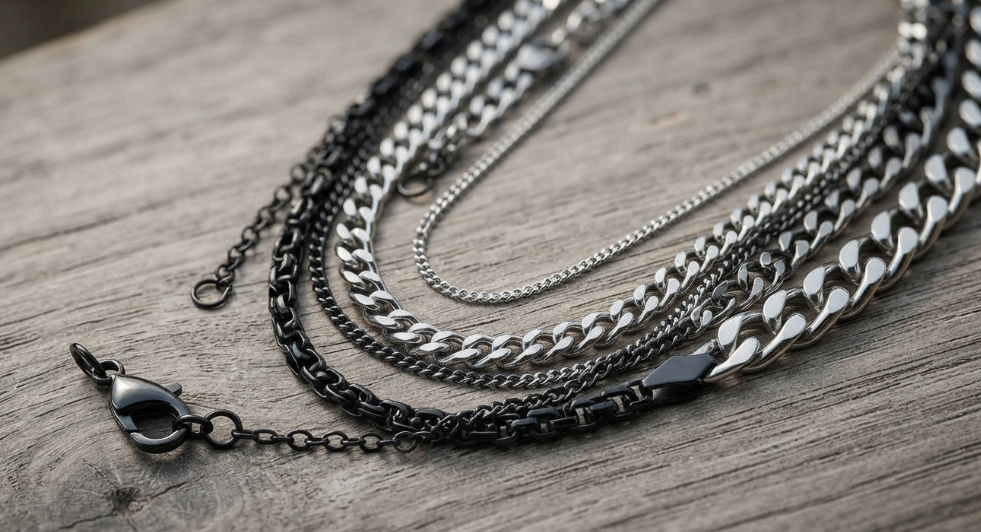
Navigate to:
What is Stainless Steel Jewelry?
Before we dive into the cleaning process, let’s take a moment to understand what stainless steel actually is—and why it behaves the way it does.
The Science Behind the Shine
Stainless steel is an alloy composed primarily of iron, with a minimum of 10.5% chromium. This chromium content is the secret ingredient: it reacts with oxygen to form a thin, invisible layer of chromium oxide on the surface. This layer acts as a protective shield, preventing rust, corrosion, and tarnishing.
When it comes to jewelry, 316L stainless steel (also known as surgical steel) is the gold standard. It contains added molybdenum for extra corrosion resistance and is highly biocompatible—meaning it’s safe for even the most sensitive skin.
Why Stainless Steel Necklace Still Gets Dirty
Despite its corrosion resistance, stainless steel is not immune to surface grime. Over time:
- Skin oils and sweat create a film that traps dirt.
- Cosmetics, lotions, and perfumes leave residues.
- Soap and shampoo can build up in chain links and crevices.
- Airborne dust and pollutants settle on the surface.
The result? A necklace that looks dull, dark, or even slightly discolored. For unplated stainless steel pieces, this is almost always just surface-level dirt and a simple wash will remove. For plated pieces, we’ll cover a different scenario later in this guide.
How to Clean Stainless Steel Necklace — Step by Step
One of the best things about cleaning stainless steel is that you don’t need expensive specialty products. Most of what you need is already in your kitchen or bathroom.
What NOT to Use
- Steel wool or metal brushes – will leave permanent scratches.
- Chlorine bleach – can cause pitting and corrosion.
- Abrasive powders or scouring pads – will scratch the surface.
- Strong Acidic cleaners – can damage the protective oxide layer.
The Basic Wash (Recommended Weekly)
What You’ll Need
- Warm water and mild dish soap
- A soft-bristled toothbrush (a child’s toothbrush works perfectly)
- A microfiber cloth and a soft towel
- A small bowl for soaking
This simple method takes less than 15 minutes and is all you need for routine maintenance.
Step 1: Soak
Fill a small bowl with warm water (not hot) and add a few drops of dish soap. Place your necklace in the solution and let it soak for 5 to 10 minutes —15 minutes if it’s heavily soiled. This softens skin oils, lotions, and dried residues.
Step 2: Scrub
Using your soft-bristled toothbrush, gently scrub the necklace with light, circular motions. Pay extra attention to the clasp, the spaces between individual chain links, the area behind pendants, and any engraved or textured details. Don’t scrub hard—the soaking has already loosened most of the grime.
Step 3: Rinse
Hold the necklace under warm running water until all soap residue is gone. Leftover soap can leave a dull film, so be thorough. And always close the sink drain first—losing a piece down the pipe is not worth the risk.
Step 4: Dry and Buff
Pat the necklace dry with a soft towel—don’t rub, as this can drag dirt particles across the surface and create micro-scratches. Once dry, grab a clean microfiber cloth and buff the necklace with back-and-forth motions to restore that brilliant, mirror-like shine.
Advanced Wash Methods (For Unplated Stainless Steel Without Gemstones Only)
If your necklace still looks cloudy after the basic wash, try one of these advanced methods with caution:
- Baking soda paste – Mix 3 parts baking soda with 1 part water to form a paste. Apply gently, let it sit for 2–3 minutes, scrub lightly, then rinse. (Use sparingly—it’s mildly abrasive.)
- White vinegar soak – Mix equal parts vinegar and warm water and soak for 10–15 minutes to remove hard water stains or mineral deposits. Rinse thoroughly afterward.
- Alcohol wipe – Dampen a cloth with isopropyl alcohol to remove sticky residues, then rinse and dry immediately.
Note: For plated, coated(gold-plated, black PVD, rose gold),or gemstone-adorned pieces,skip the advanced methods entirely. Stick to the basic soap-and-water wash with a very soft cloth—and test a hidden area first if you're unsure.Cleaning for Coated, Plated, or Gemstone-Adorned Stainless Steel
For coated, plated, or gemstone-adorned stainless steel necklaces, stick to the basic soap-and-water wash. Do not use baking soda, vinegar, alcohol, ultrasonic cleaners, or any abrasive materials.
Step-by-step:
- Mix warm water with a few drops of mild dish soap.
- Dip a very soft cloth into the solution and wring it out well—the cloth should be damp, not dripping wet.
- Gently wipe the surface of the necklace. Do not soak or scrub.
- Immediately wipe with a clean, damp cloth to remove any soap residue.
- Pat dry with a soft towel and buff gently with a microfiber cloth.
What If the Basic Wash Doesn’t Work?
If your plated necklace still looks dull or discolored after the basic wash, here may be the reality:
It’s probably not dirt—it’s the plating itself. It’s surface wear, oxidation, or damage. Unlike unplated pieces, where surface grime can be washed away, plated pieces can reach a point where no amount of cleaning will restore the original finish.
Over time, plating can wear thin, react with skin chemistry, or become damaged by exposure to perfumes, lotions, sweat, or harsh chemicals.
At this point, cleaning won’t help. Your options are:
- Embrace the patina – Some people appreciate the character that comes with age.
- Consult a professional jeweler – They may be able to professionally polish the piece.
- Replace it – For affordable pieces, replacement is often the most practical solution.
The key takeaway: For plated stainless steel, prevention is far more effective than cleaning. The best way to keep your stainless steel necklace looking beautiful is to remove it before showering, swimming, exercising, applying perfumes or lotions, and sleeping.Daily Care and for Stainless Steel Necklace
An ounce of prevention is worth a pound of cure. Here’s how to keep your stainless steel necklace looking pristine with minimal effort.
Remove your stainless steel necklace before showering, swimming in chlorinated or salt water, heavy workouts, applying lotions or perfumes, and doing housework to prevent corrosion and grime buildup. For storage, keep the piece completely dry in a separate soft pouch or a low-humidity compartment to avoid scratching and moisture spots.
Spend less than 30 seconds wiping your necklace with a soft, dry microfiber cloth after each wear. This quick daily routine removes accumulated skin oils, sweat, and pollutants, which dramatically reduces how often you need to perform a deep clean.
Stainless Steel Necklace FAQs
Q: Does stainless steel tarnish or turn black?
A: Genuine stainless steel does not tarnish or oxidize the way silver does. However, it can appear dull or darkened due to surface buildup from oils and dirt. If your necklace looks gray or dark, a thorough cleaning will restore its original shine.
Q: Why does my stainless steel necklace have tiny dark spots?
A: This is usually caused by the protective coating wearing off in small areas, or by reaction to harsh chemicals (like bleach or chlorine). If the spots are rust-like, it may indicate that the steel is not high-quality 316L stainless steel.
Q: Can I wear my stainless steel necklace in the shower?
A: Technically, yes—water won’t damage it. However, soap, shampoo, and conditioners can leave residues that dull the surface over time. For the sake of keeping it shiny, it’s better to remove it before showering.
Q: Is it safe to use toothpaste to clean stainless steel?
A: Toothpaste is mildly abrasive and can work in a pinch, but it’s not recommended for regular use. It can leave micro-scratches on the surface. Reserve this method for emergencies only.
Q: Can I use lemon juice to clean stainless steel jewelry?
A: Lemon juice is acidic and can damage the protective chromium oxide layer. Avoid acidic cleaners and stick to mild soap and water.
Q: Is stainless steel completely scratch-proof?
A: No. It’s highly scratch-resistant, but not scratch-proof. Hard knocks or contact with abrasive surfaces can still leave marks.
Q: Can I use use silver polish on stainless steel jewelry?
A: No. Silver polish is formulated for silver and contains chemicals that can leave films or damage stainless steel surfaces.
More Jeulia Post: