
The Hamsa Hand (also known as the Hand of Fatima or Hand of Miriam) is an ancient talisman symbolizing protection, peace, and good fortune across multiple world cultures and religions. Today, it is widely incorporated into fine jewelry design as a meaningful emblem of luck, safety, and spiritual harmony.
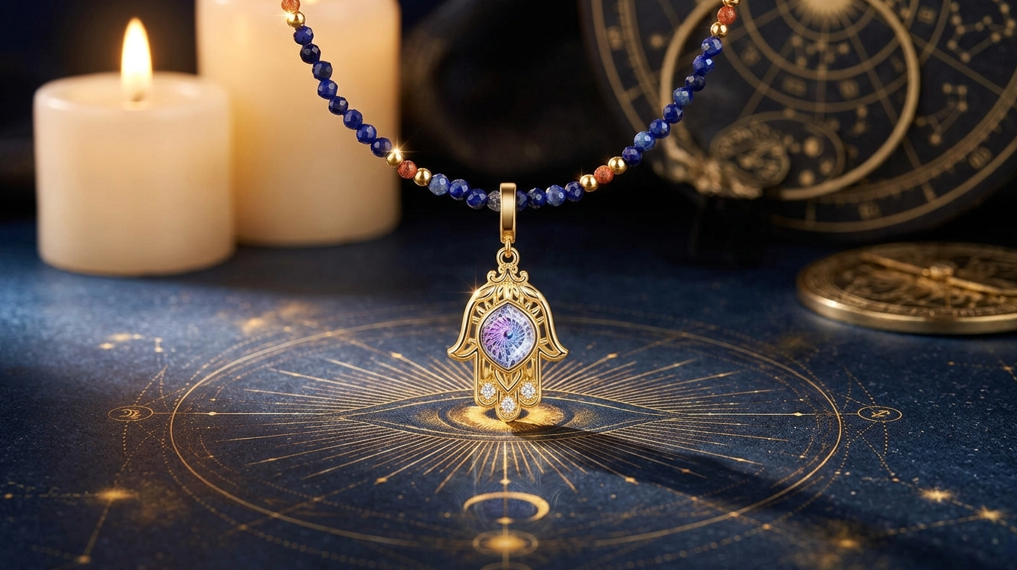
What is the Hamsa Hand?
The Hamsa Hand—also known as “Fatima’s Hand” or the “Lucky Hand”—is a powerful sacred symbol rooted in ancient heritage. In Arabic, it is called “The Hamasa Hand”, while in Hebrew, it is known as the “Hamesh Hand”.
The Legend of Fatima
In Arab culture, the meaning of this pattern is “Hand of Fatima”. Fatima is the daughter of the Prophet Muhammad, who is the legendary moon goddess in Arab mythology. It is said that her hands can heal all diseases of believers. So Hand of Fatima is a symbol of blessings for peace and health in Arab culture. Arabs like to make gold and silver jewelry in this shape to wear as their talisman.
Today, the Hamsa hand is a celebrated element in modern jewelry design, frequently appearing in:
- Hamsa Protection Rings & Bracelets
- Hamsa Necklaces & Pendants
- Hamsa Hand Earrings
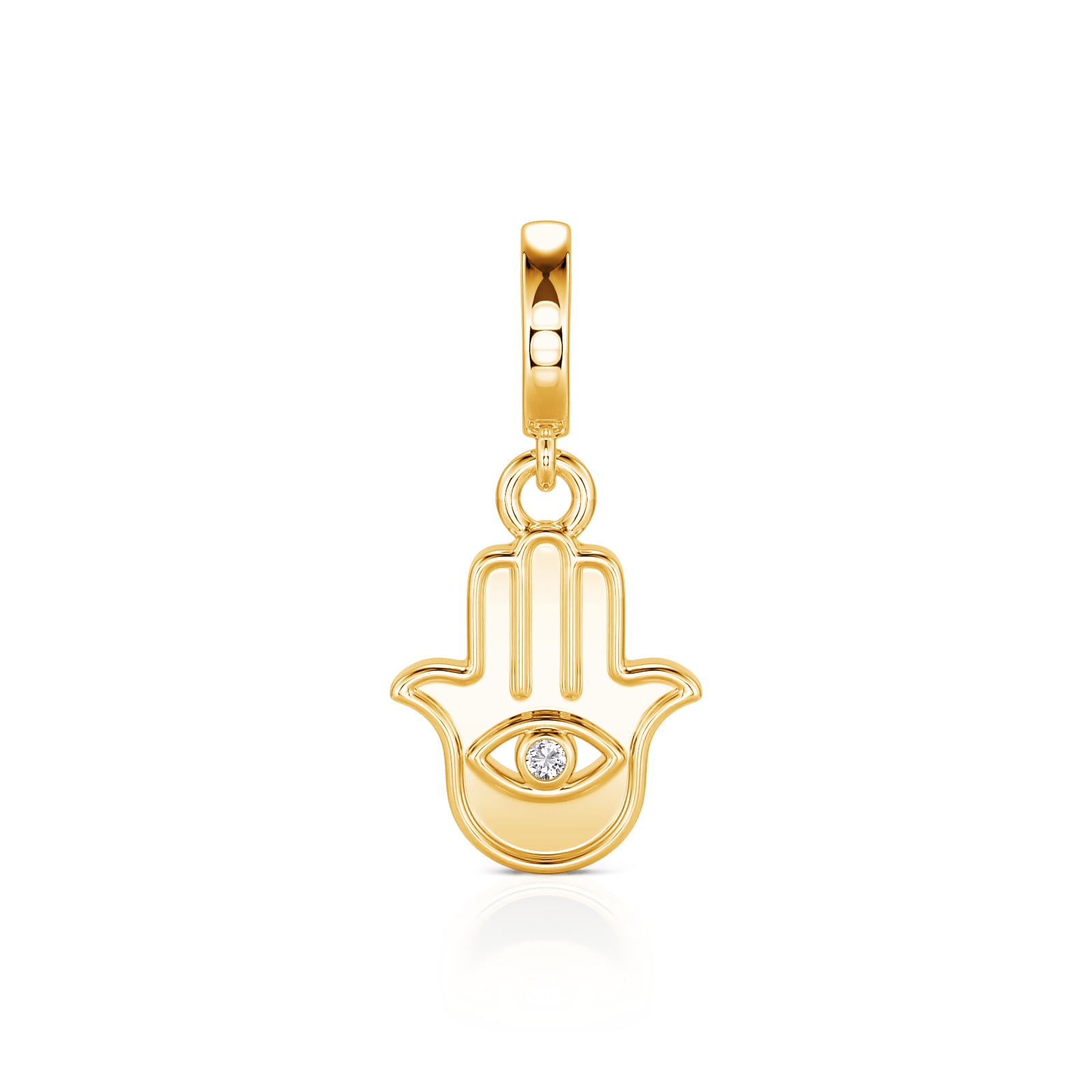
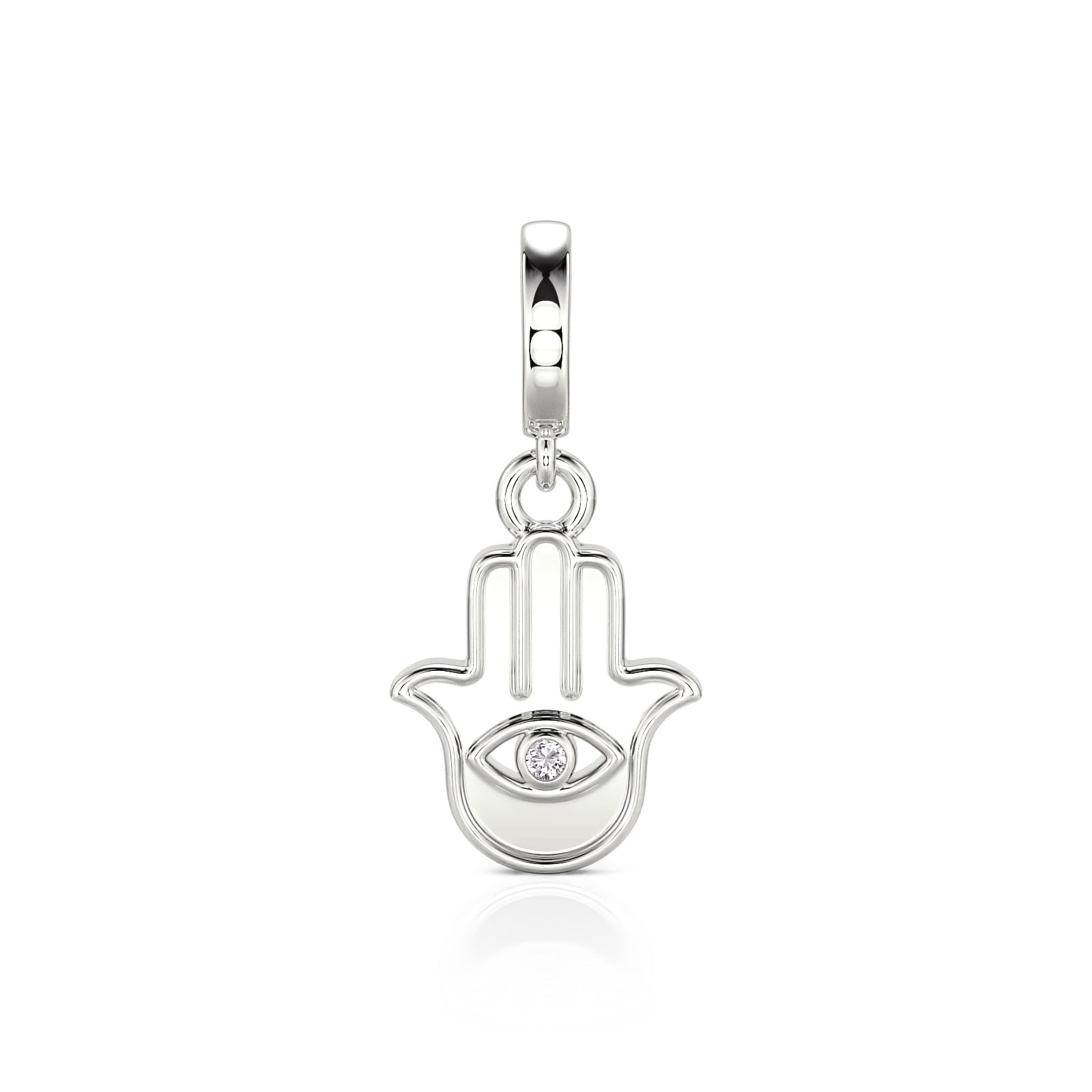
Hamsa Hand Color Meanings: Choosing Your Energy
In spiritual jewelry design, the color of the Hamsa hand enhances its symbolic energy and aesthetic appeal:
- Green: Represents growth, hope, renewal, and sustainable happiness.
- Blue: Stands for tranquility, contentment, safety, and inner peace.
- Red: Symbolizes passion, desire, vitality, and brave pursuits.
- Orange: Embodies vibrant energy, creativity, and enthusiasm.
- Yellow: Inspired by sunlight, representing rationality, mental clarity, and intelligence.
- Pink: Reflects altruism, kindness, gentleness, and patient love.
- Purple: Channels divine love, deep wisdom, and spiritual awareness.
Cross-Cultural & Religious Interpretations of the Hamsa Hand
While its exact name varies across regions, the core essence of the Hamsa hand as a protective emblem transcends geographical and religious boundaries:
- Judaism: Known as the Hand of Miriam, named in honor of Moses’ sister. In Hebrew, “Hamesh” represents the number five and the Hebrew letter “Hey”, referencing the five books of the Pentateuch (Torah).
- Islam & Arab Culture: Known as the Hand of Fatima, named after the daughter of Muhammad. In Arabic, “Khamsah” (or “Khamsa”) translates to “five,” representing the five fingers of the hand. In Sunni tradition, the five fingers relate to the Five Pillars of Islam, while in Shia tradition, they symbolize the holy family (the Prophet, Ali, Fatima, and her two sons).
- Levant Christianity: Known as the Hand of the Virgin Mary, named after the mother of Jesus Christ.
- Ancient Carthage: Associated with Tanit, the guardian goddess of Carthage symbolizing fertility and cosmic wisdom.
- Hinduism & Buddhism: Represents the flow of energy, the five senses, and the interplay of the five elements within the human body.
The 5 Fingers, Elements & Chakras
In Hindu and Buddhist philosophy, the word Hamsa translates to “five”—representing the fingers of the hand. Each finger connects directly to a specific physical element and internal chakra:
- Thumb (Fire Element) ➔ Solar Plexus Chakra (Confidence & Willpower)
- Index Finger (Air Element) ➔ Heart Chakra (Love & Compassion)
- Middle Finger (Ether/Space Element) ➔ Throat Chakra (Truth & Self-Expression)
- Ring Finger (Earth Element) ➔ Root Chakra (Grounding & Stability)
- Little Finger (Water Element) ➔ Sacral Chakra (Creativity & Emotion)
A Classic Symbol Preserved Through Time
While diverse cultures bring unique interpretations to this sacred motif, the underlying human desires remain unchanged: a longing for beauty, a prayer for safety, and the courage to embrace the future.
Fashion trends evolve and pass, but classic protective symbols like the Hamsa Hand endure through time—blending ancient spiritual heritage with modern elegance.
More Jeulia Post: