
When you slip on a piece of custom jewelry, it does more than sparkle—it tells a story. Whether it’s the glint of a mother’s initials on a pendant, the subtle sparkle of a birth‑stone ring, or a bold, one‑of‑a‑kind statement cuff, jewelry has always been a way to broadcast who we are without saying a word.
In the age of mass‑produced fashion, custom jewelry is experiencing a renaissance. Most people are turning to bespoke pieces to celebrate milestones, honor heritage, and curate a personal style that no store‑bought accessory can match.
Navigate to:
What Exactly is “Custom Jewelry”?
The Spectrum of Personalization
| Level | Description | Typical Turn‑around |
|---|---|---|
| Engraved basics | Monograms, dates, or short messages added to an existing design. | 1–2 weeks |
| Semi‑custom | Choose from a curated set of settings, stones, and metal options. | 3–5 weeks |
| Fully bespoke | Co‑create a design from scratch with a jeweler; every detail is yours to dictate. | 8–12 weeks (or longer for complex pieces) |
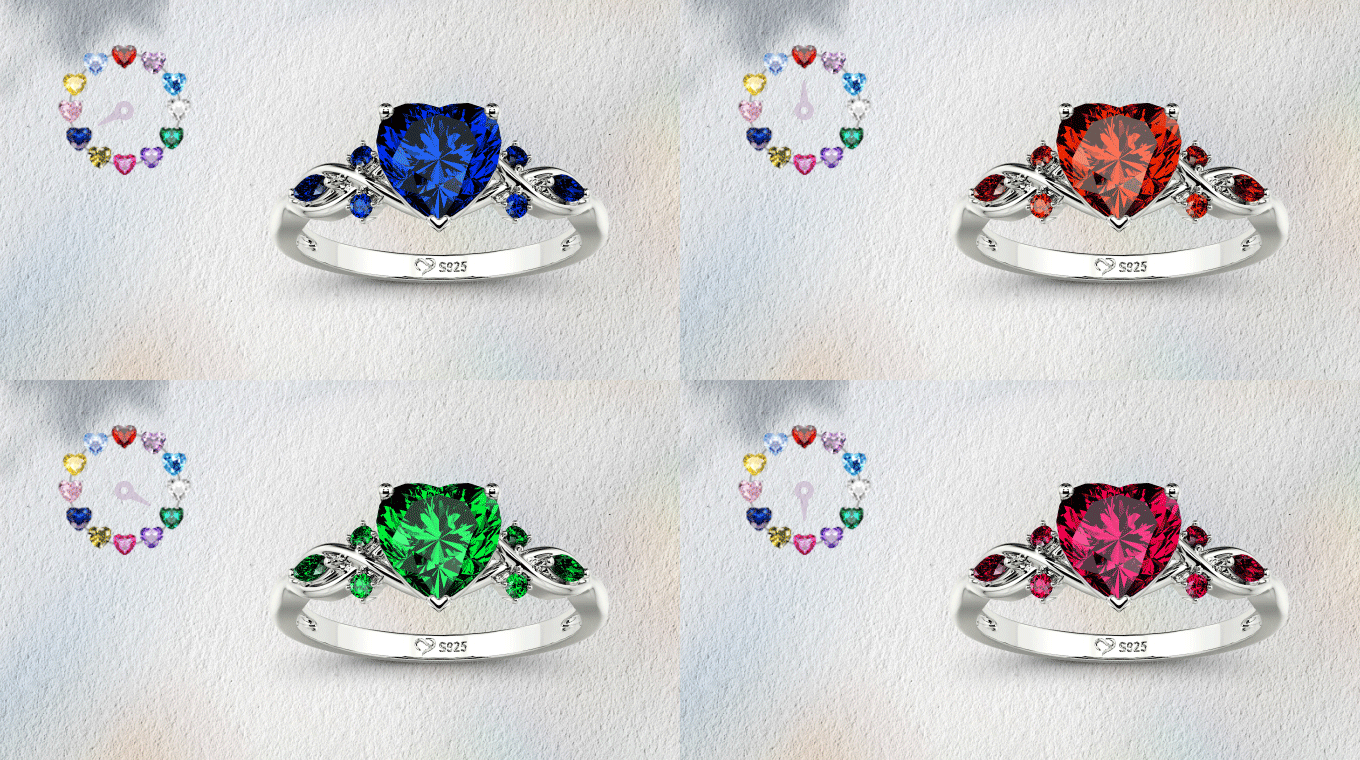
Custom jewelry can mean anything from a simple laser‑etched name on a silver pendant to a completely hand‑forged titanium masterpiece imagined in a sketchbook. The crucial thread connecting all these options is intentionality: you’re actively shaping the narrative of the piece rather than passively picking one off a rack.
The Meaning of Custom Jewelry
- Emotional resonance – A piece that commemorates a specific moment (e.g., a first‑date coordinates or a graduation year) carries an emotional weight that mass‑produced items can’t replicate.
- Fit to lifestyle – Athletes may want a durable, hypoallergenic material; frequent travelers might need a clasp that won’t snag. Customization lets you match the jewelry to your day‑to‑day reality.
- Sustainability – By commissioning only what you truly love, you avoid the overproduction and waste typical of fast‑fashion accessory lines.
- Investment value – Hand‑crafted, limited‑run pieces often retain—or even increase—their market value, especially when they’re signed by a recognized artisan.
The Journey of Custom Jewelry
Below is a step‑by‑step roadmap that Jeulia Jewelry follow. Knowing the flow helps you stay on the same page and avoid common missteps.
Step 1 – Ideation & Inspiration
- Mood board: Gather images from Pinterest, Instagram, or old family photos. Look for colors, motifs, and materials that speak to you.
- Storytelling: Write a one‑sentence “design brief.” Example: “A modern reinterpretation of my grandmother’s 1920s Art Deco brooch, featuring my birthstone and a hidden Morse‑code message.”
Step 2 – Design Development
- Sketches – Hand‑drawn or digital outlines give you a visual anchor.
- Computer‑Aided Design (CAD) – Modern jewelers use CAD to create a 3‑D model you can rotate, zoom, and even 3‑D‑print for a physical prototype.
- Materials selection – Decide on metal (gold, platinum, recycled silver, titanium, etc.), stones (natural diamonds, lab‑grown gems, colored stones, or alternatives like moissanite), and any special finishes (oxidized, brushed, hammered).
Step 3 – Prototyping & Approval
- 3D printing (wax or resin): A tangible mock‑up lets you assess size, weight, and ergonomics.
- Feedback loop: Most jewelers will ask for a “final sign‑off” before they melt any metal. This is your chance to tweak clasp length, stone orientation, or engraving depth.
Step 4 – Fabrication
- Casting (if applicable) – Wax models are encased in plaster, heated to leave a cavity, then filled with molten metal.
- Hand‑fabrication – For pieces like chain links or filigree, artisans will manually shape each element.
- Setting stones – Prong, bezel, tension, or pavé—each has pros and cons in terms of durability and aesthetic.
Step 5 – Polishing, Quality Control & Shipping
- Final polish – From high‑gloss mirror finishes to matte “satin” textures.
- Certification – Gemstones come with grading reports (GIA, IGI, etc.). Metals are usually hallmarked with purity stamps.
- Packaging – Look for tamper‑proof, eco‑friendly boxes and a care‑guide booklet.
Trending Themes in 2026 Custom Jewelry
Sustainable Luxury
- Recycled metals – 95% of new custom pieces now incorporate reclaimed gold or silver, dramatically cutting the carbon footprint.
- Lab‑grown gems – They’re 30–50% cheaper than mined diamonds and have a traceable, conflict‑free pedigree.
Narrative Motifs
- Celestial bodies – Constellation maps, moon phases, and solar eclipses carved into rings or lockets.
- Heritage symbols – Celtic knots, tribal patterns, or family crests reimagined in modern minimalism.
“Mix‑and‑Match” Sets
Instead of a single piece, designers are offering modular sets that can be rearranged: a pendant that becomes a pair of earrings, or a cuff that converts into a bracelet.
How to Ensure Your Custom Piece Is Worth the Investment
Set a Realistic Budget
| Piece Type | Typical Price Range (USD) | Where to Save |
|---|---|---|
| Simple engraved pendant | $150–$350 | Choose sterling silver over 18k gold |
| Semi‑custom gemstone ring | $800–$2,500 | Opt for lab‑grown stones |
| Fully bespoke necklace | $2,500–$10,000+ | Limit the number of side stones |
Remember, the cost isn’t just the metal and stones—it also covers design time, CAD work, and the artisan’s skill.
Prioritize Quality Over Size
A modest 0.25 ct lab‑grown sapphire set in 14k rose gold will outshine an oversized, poorly cut 0.5 ct natural stone set in low‑purity silver.
Ask About Aftercare
- Cleaning – Some metals (e.g., titanium) are low‑maintenance; others (e.g., high‑polish gold) may need quarterly ultrasonic cleaning.
- Repair policy – A reputable jeweler offers lifetime free prong tightening, stone resetting, and polishing.
Get Documentation
- Metal hallmark – Indicates purity (e.g., 925 for sterling silver, 750 for 18k gold).
- Gemstone grading report – Essential for resale value.
- Design sketch/ CAD file – Acts as insurance if you ever need to reproduce the piece.
Real‑World Stories: How Custom Jewelry Changed Lives
The “Legacy Lock”
When Maya turned 30, she commissioned a lock‑plate necklace that incorporated a miniature portrait of her late grandmother, etched in relief. The lock’s keyhole held a tiny hidden compartment with a handwritten recipe—Maya’s family’s secret apple‑pie formula. The piece became a conversation starter at every dinner party and a tangible link between generations.
The “Adventure Band”
Professional photographer Luis and his partner, after a year of backpacking across South America, designed a wide, brushed‑titanium cuff engraved with latitude/longitude coordinates of each major campsite. The cuff is now his “travel passport”—a reminder of the places he’s been and the promise to keep exploring.
These stories illustrate the profound emotional ROI that bespoke pieces can deliver, far beyond their material value.
Make Your Custom Jewlery Shine
Custom jewelry is no longer a niche luxury reserved for royalty or Hollywood A‑listers. It’s a democratized art form that lets anyone translate a memory, value, or aspiration into a wearable masterpiece.
By embracing the process—researching the right artisan, articulating your story, and staying engaged through design and production—you’ll end up with a piece that does more than accessorize; it empowers.
So, what’s the first chapter of your custom jewelry saga?