
Pear cut vs. marquise cut – both celebrated for their elegant, elongated silhouettes that effortlessly blend timeless romance with modern sophistication. Each shape carries its own character and charm, making it a beautiful choice for an engagement ring. But with two such compelling options, how do you decide which one is truly meant for you or your partner? Let’s explore their unique qualities and subtle differences, guiding you to the perfect pick.
Navigate to:
What is a Pear Cut?
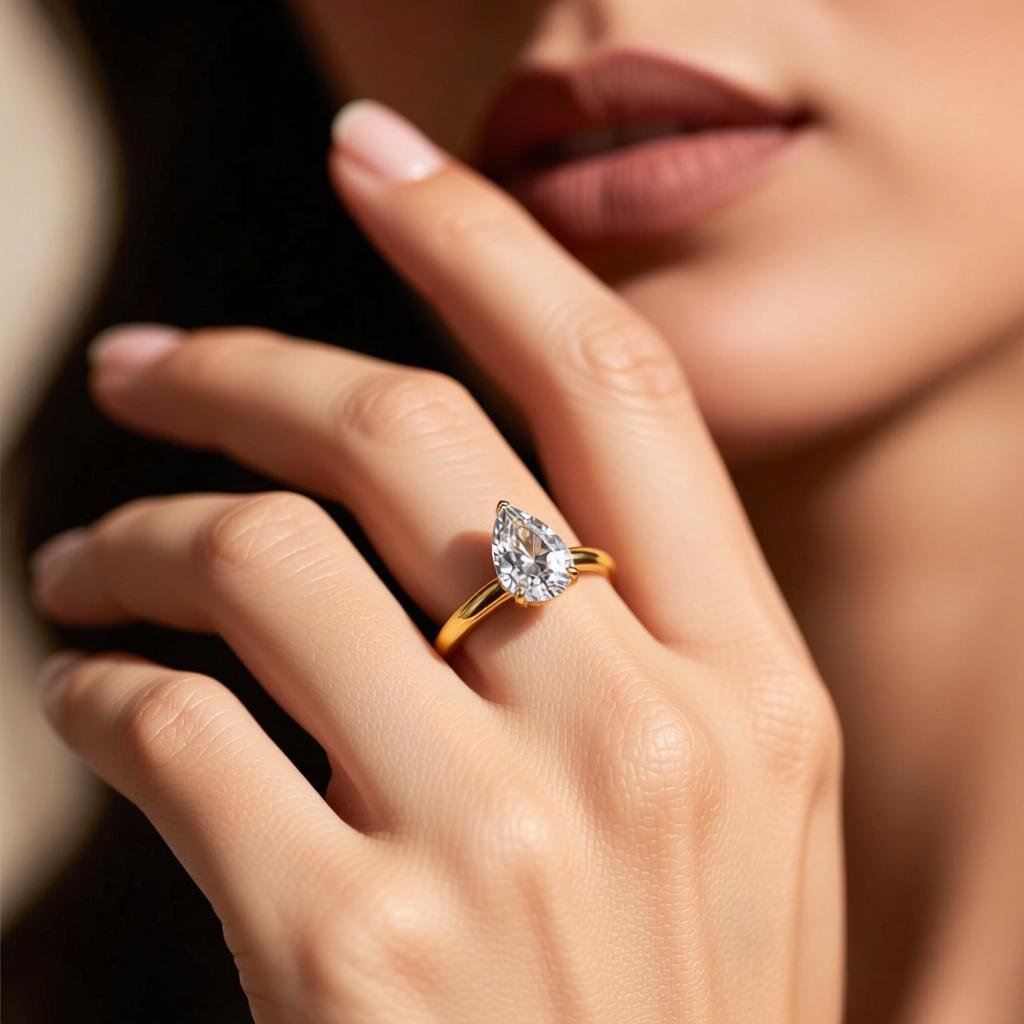
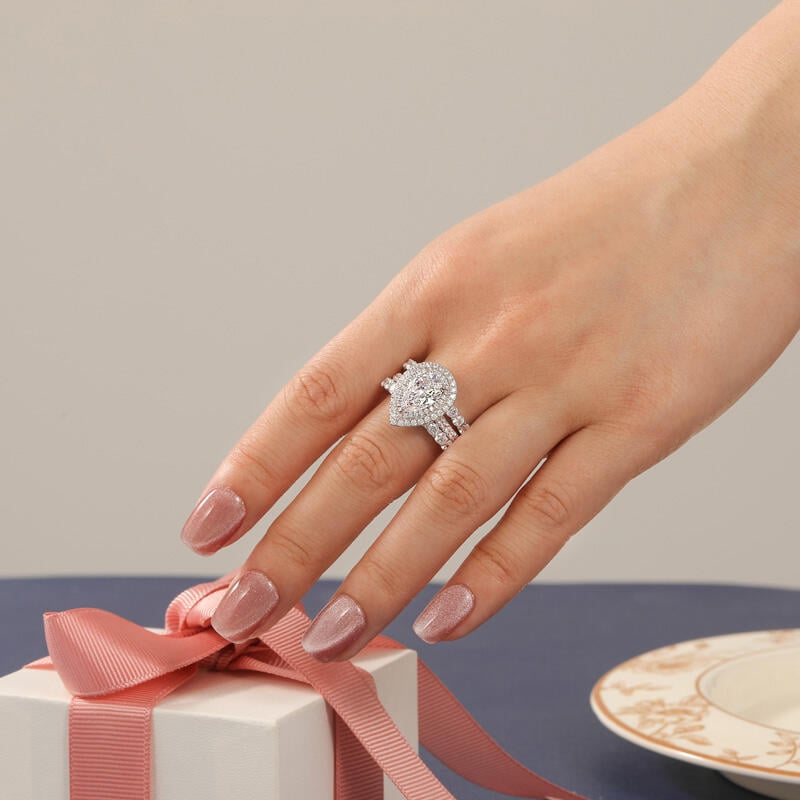
The pear cut is a hybrid of the round brilliant and marquise cuts, featuring a single pointed end and a rounded, bulbous base—giving it the distinctive shape of a teardrop. Typically, it has 58 facets designed to maximize brilliance and fire. The cut is often praised for its balance of classic elegance and unique flair.
What is a Marquise Cut?
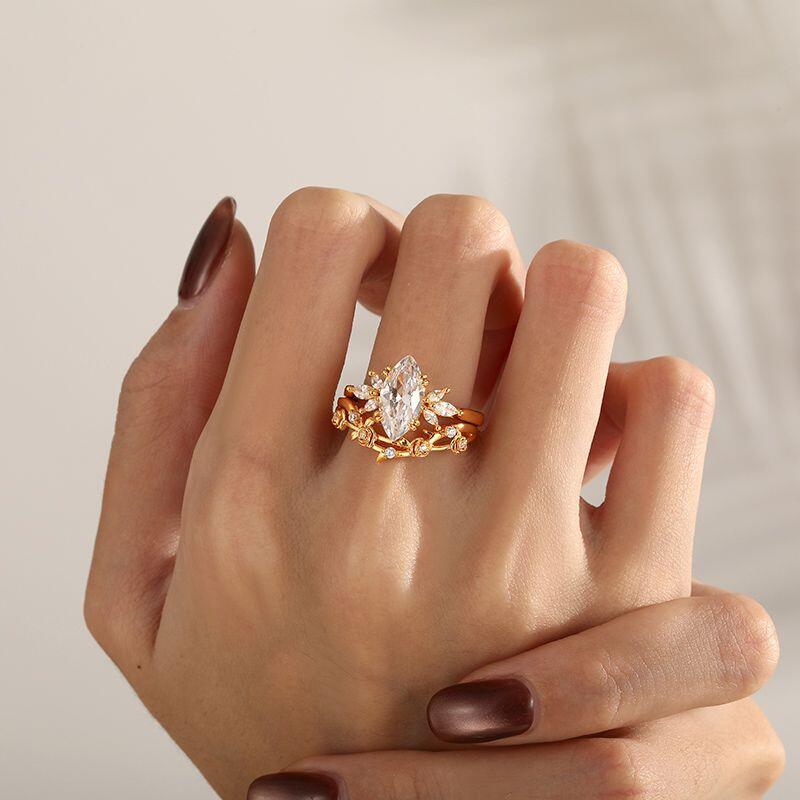
The marquise cut, named after the Marquise de Pompadour (mistress of King Louis XV of France), is a long, narrow shape with two pointed ends and gently curved sides. Designed to maximize carat weight appearance, the marquise boasts dramatic length and a flattering finger-lengthening effect. Its 58 facets are engineered to reflect light extravagantly, contributing to its storied reputation for bold presence.
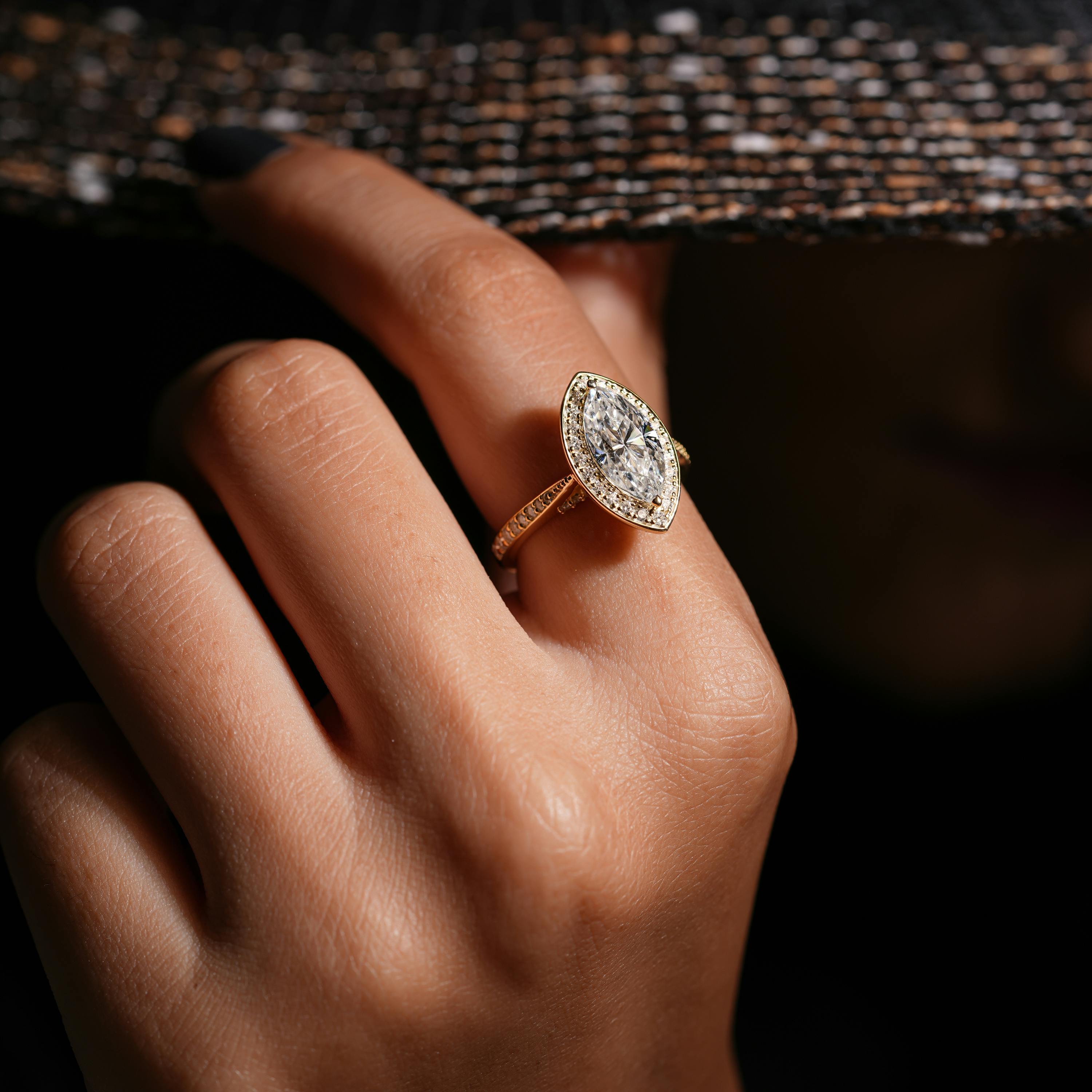
Comparison Between Pear and Marquise Cut
Symbolism and Sentiment
- Pear Cut: Often associated with tears of joy and new beginnings. Its teardrop shape can symbolize a journey or emotional depth, making it a meaningful choice for couples with a romantic story.
- Marquise Cut: Historically tied to love and royal favor—legend says the king wanted a diamond shaped like his lover’s smile. It’s a bold, romantic gesture that speaks to timeless affection.
Visual Appeal
- Pear Cut: Offers versatility. Depending on how it’s set, the pear can point up (toward the nail) for a modern look or down (toward the wrist) for a more traditional feel. Its asymmetry adds personality—ideal for someone who wants a ring that stands out without being too flashy.
- Marquise Cut: Makes a statement. With its elongated profile and symmetrical twin points, it commands attention. Marquise stones offer a larger surface area than pear for the same carat weight, a 1-carat marquise appears bigger than a 1-carat pear. It’s a favorite for those who love a bold, vintage-inspired aesthetic.
Sparkle and Brilliance
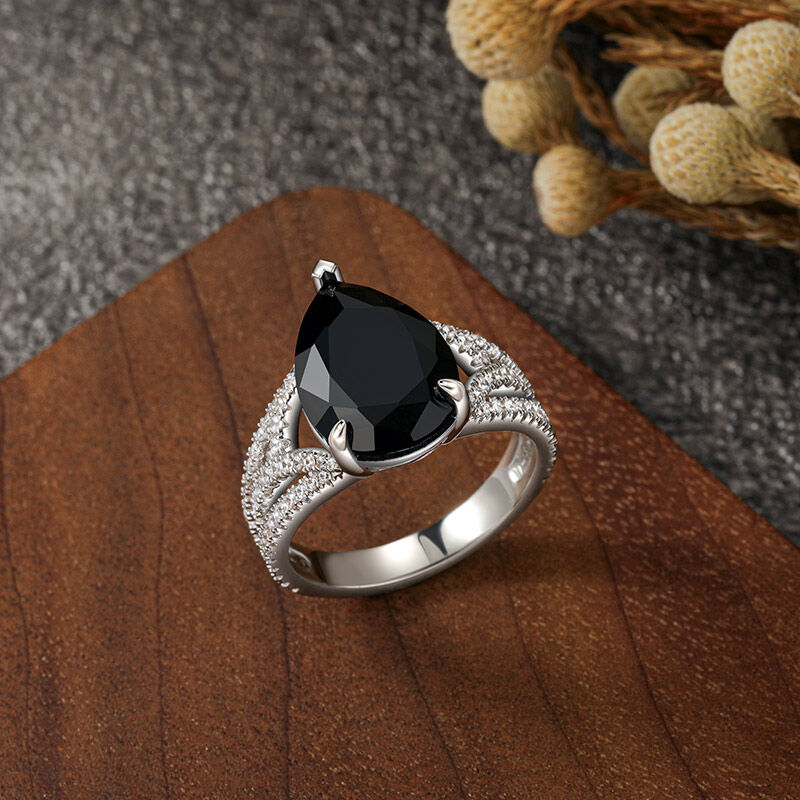
- Pear Cut: Delivers brilliant sparkle comparable to a round diamond, especially in high-quality cuts. Because of its rounded end, the pear tends to have a more even light distribution than the marquise.
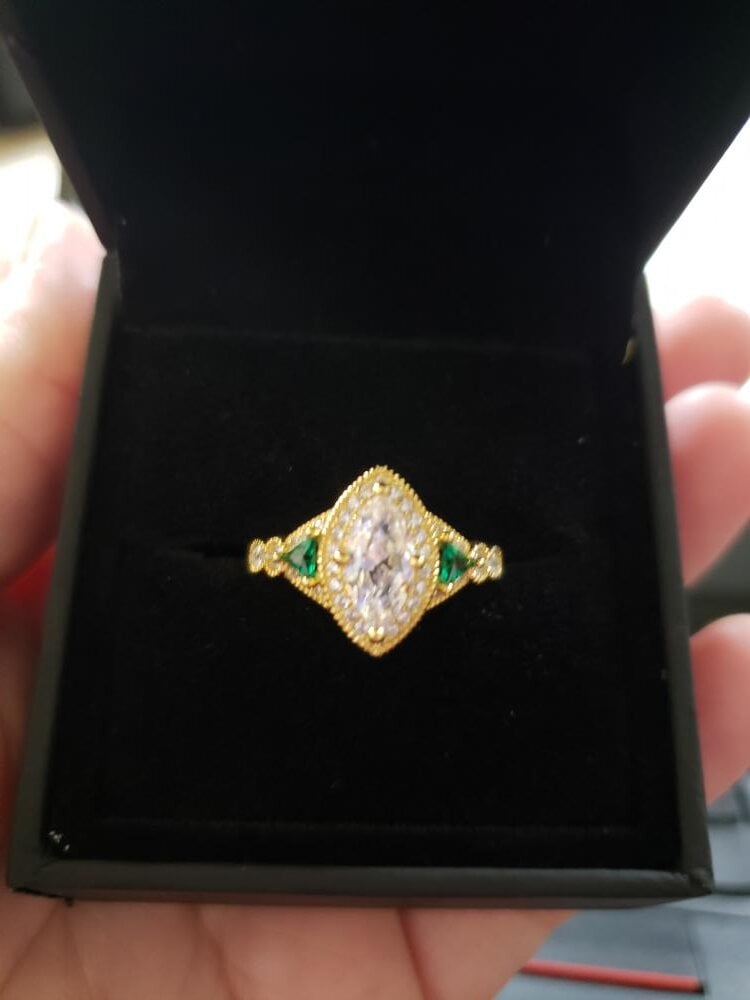
- Marquise Cut: Also highly brilliant, but more susceptible to the “bowtie effect”—a dark shadow across the center of the stone caused by light leakage. A well-cut marquise minimizes this, so always examine the diamond in person or via high-definition video.
Finger-Flattering Factor
Both cuts are known for elongating the finger, but they achieve this in slightly different ways.
- Pear: Creates a graceful, tapered silhouette that mimics the natural curve of the hand. Ideal for those with shorter fingers, the pear cut can make the hand appear more slender and elegant.
- Marquise: The extended length and pronounced symmetry draw the eye lengthwise, dramatically enhancing finger proportions. Pro tip: Ensure the ring is centered correctly—poor alignment can create a “bowtie” effect or make the stone look off-center.
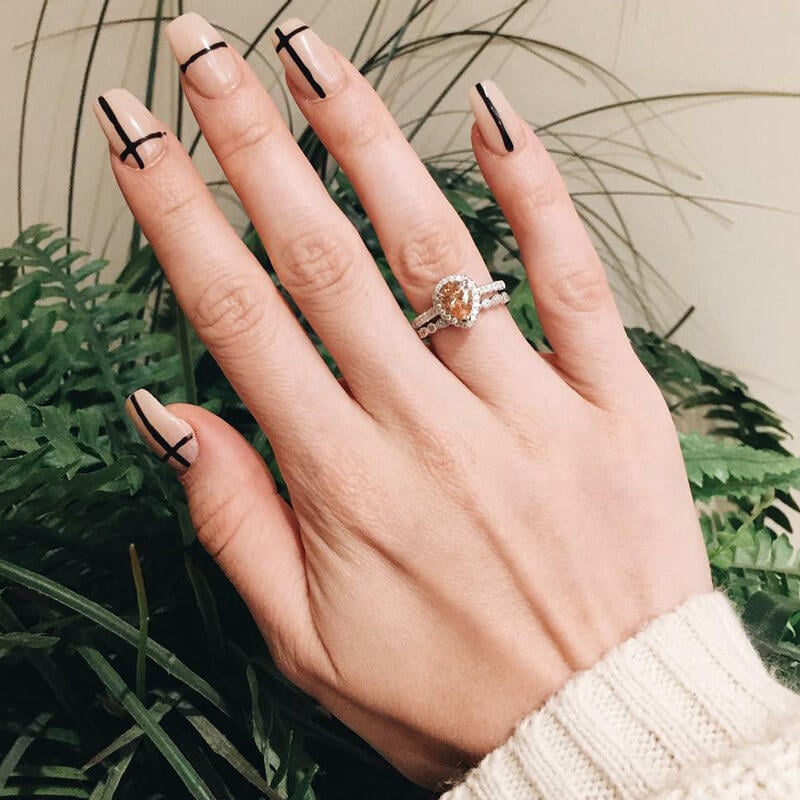
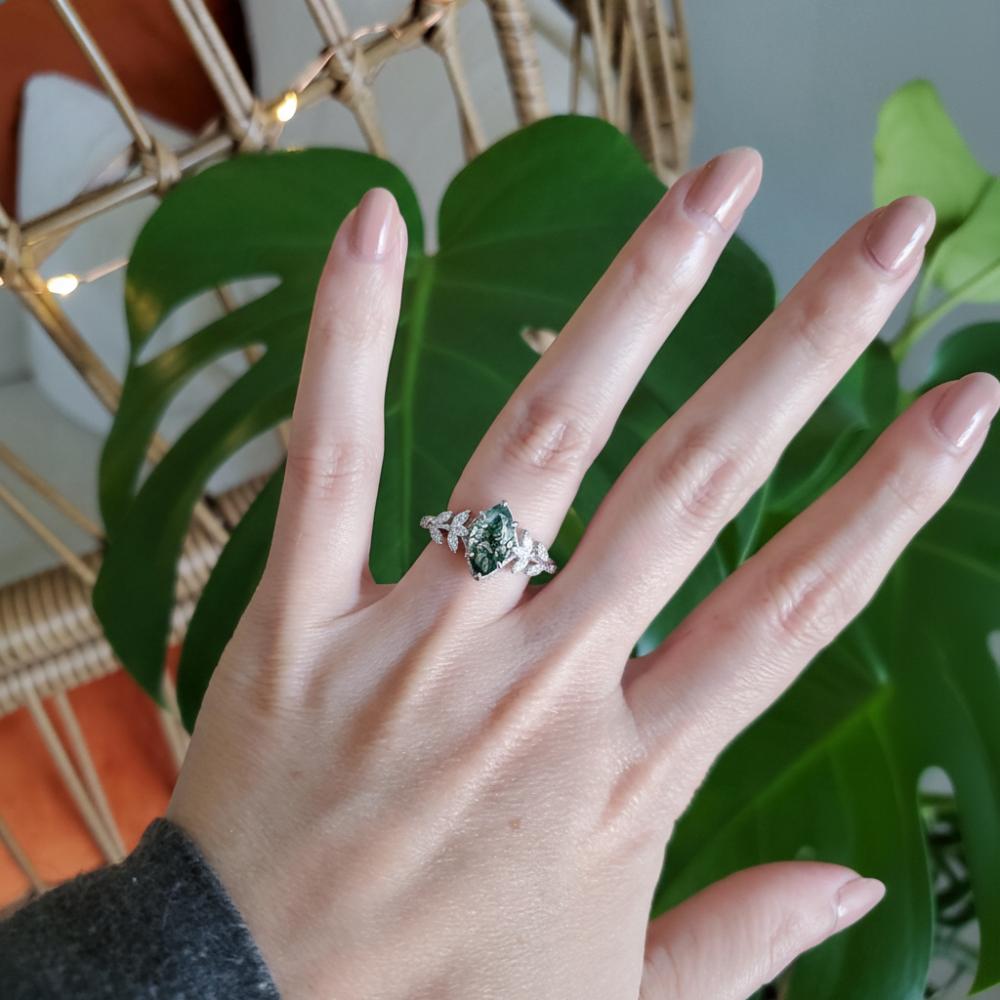
Styles
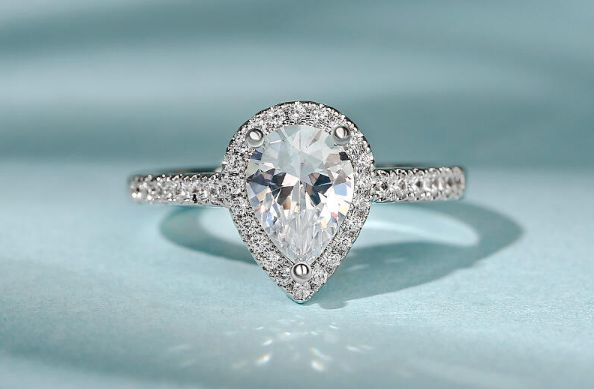
- Pear: Its soft, rounded end and flowing point evoke a sense of timeless grace and movement. This cut often leans towards vintage-inspired, boho, or classic solitaire settings. It pairs beautifully with delicate milgrain detailing, ornate halo surrounds, or a simple, understated band that lets its unique silhouette shine.
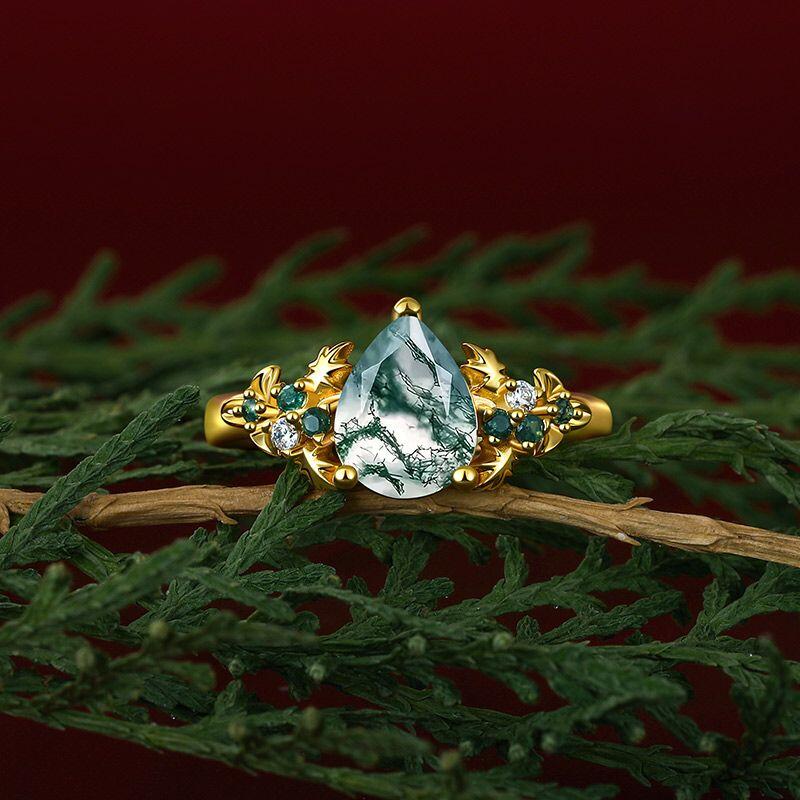
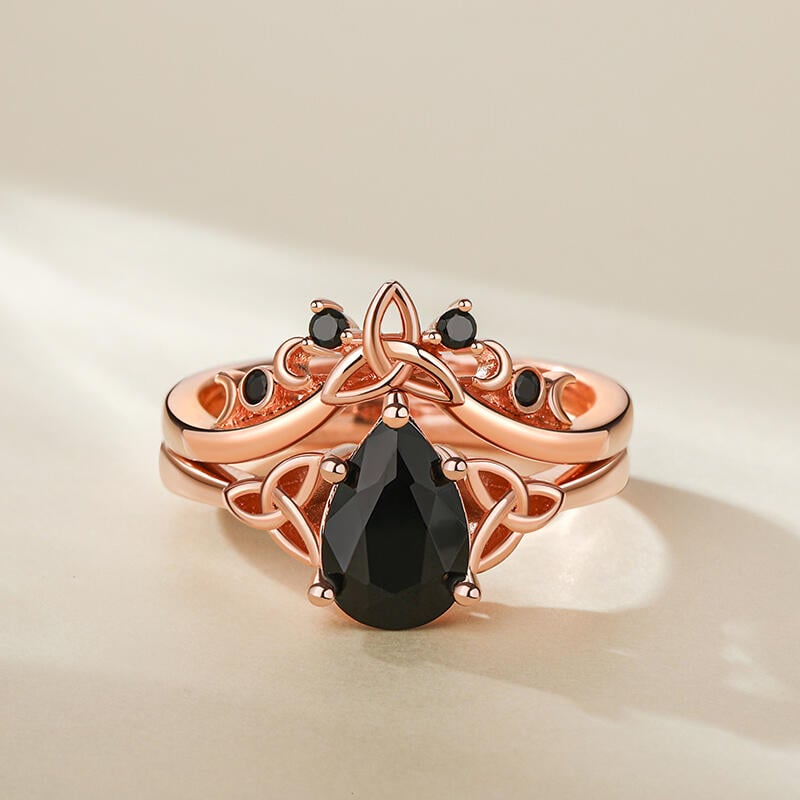
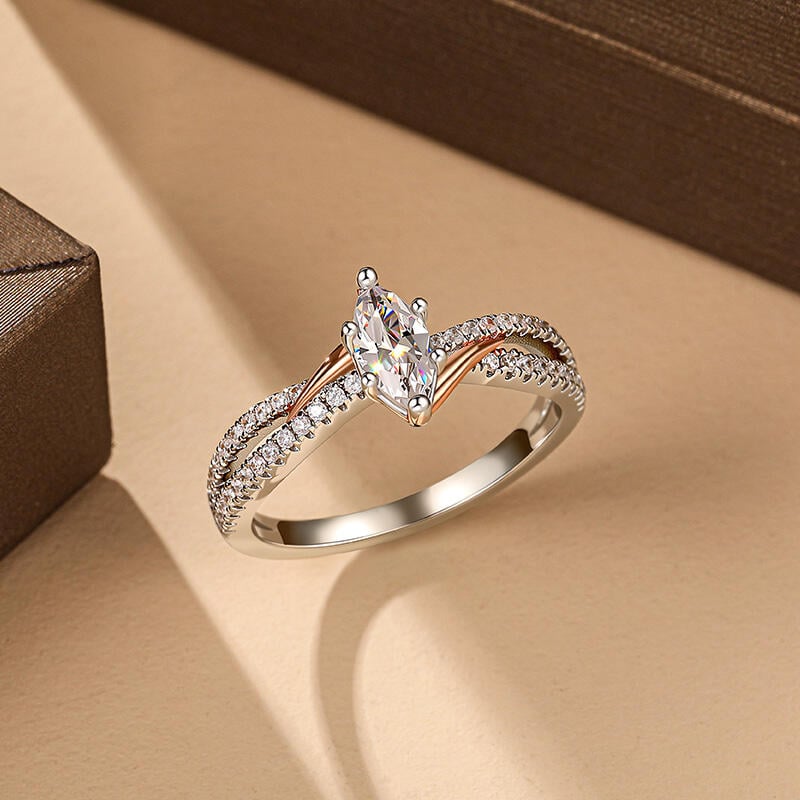
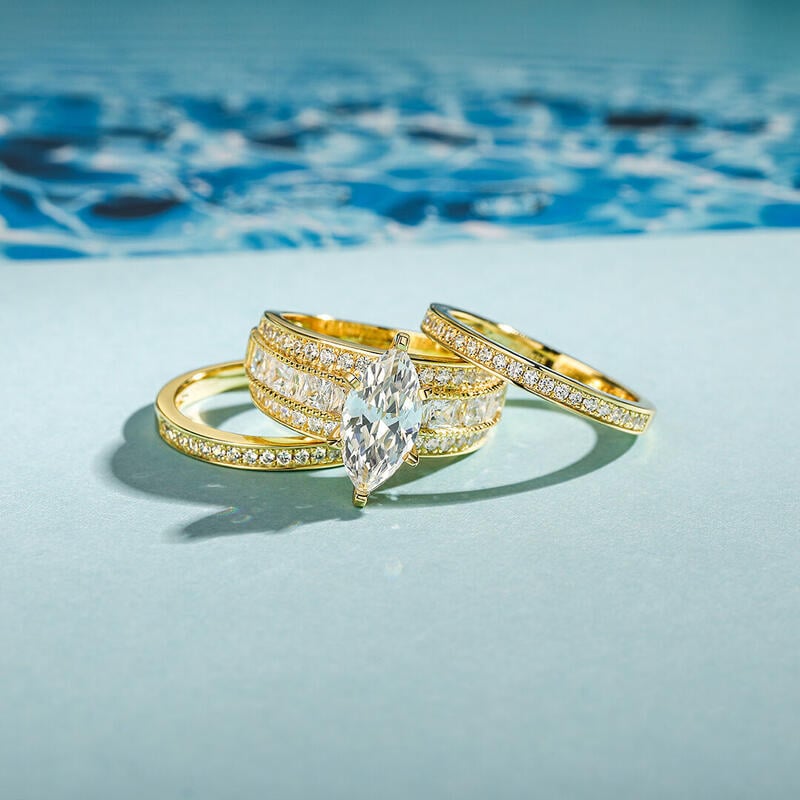
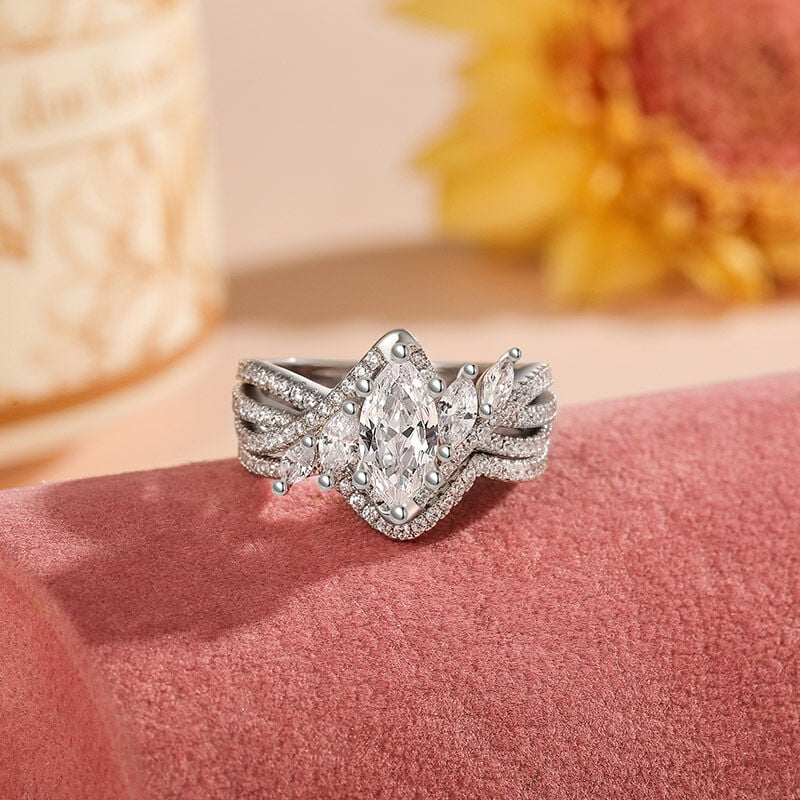
- Marquise: Its sharp, symmetrical points and elongated form are inherently dramatic and architectural. This cut thrives in settings that emphasize its linear beauty, such as three-stone designs (with tapered baguettes), sleek bezels, or East-West orientations. It suits contemporary, art deco revival, or minimalist aesthetics perfectly.
Durability and Daily Wear
Because both cuts feature pointed ends, extra care should be taken to protect the tips.
- Pear Cut: The single point means only one area is vulnerable. Securing it with a V-prong setting helps prevent chipping.
- Marquise Cut: With two delicate points, it requires more protection. Bezels or sturdy prongs at both ends are recommended for active lifestyles.
Tip: Opt for a protective setting if you’re prone to bumping your hands during the day.
Which Is Right for You?
👉 Choose the Pear Cut if you…
- Want a balance of classic and unique
- Appreciate asymmetry with a feminine touch
- Prefer a softer, more organic silhouette
- Are looking for a stone that looks larger than its carat weight but still refined
👉 Choose the Marquise Cut if you…
- Love vintage glamour and dramatic impact
- Want maximum finger coverage and presence
- Are drawn to bold, historical designs
- Appreciate symmetry with a bold, elongated profile
Conclusion
There’s no “wrong” choice between pear and marquise—both are stunning, expressive, and full of character. The decision ultimately comes down to personal preference, lifestyle, and the story you want your ring to tell.
More Jeulia Post: