
If you or someone you love was born in October, you are blessed with not just one, but two extraordinary birthstones: Opal and Tourmaline. Both offer an incredible range of hues, making October one of the most visually stunning months for jewelry lovers.
Why does October have two birthstones, and what makes these gems so special? Let’s dive into the history, colors, and meanings behind October’s stunning birthstones.
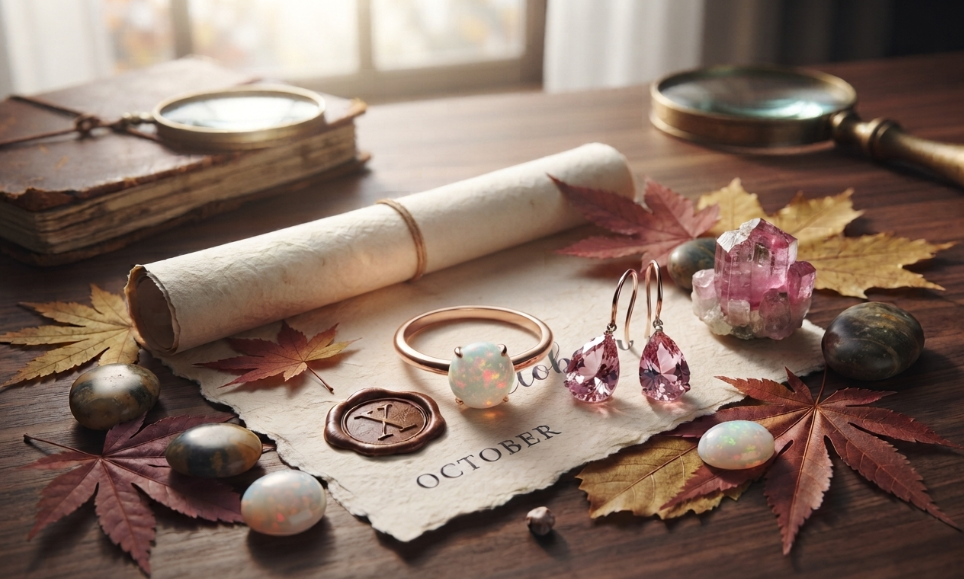
Navigate to:
Why October Has Two Birthstones?
The tradition of birthstones dates back centuries, rooted in ancient cultures and religious texts. However, modern birthstone lists were officially standardized in the early 20th century to make them more uniform for jewelers and consumers.
Over time, as certain gemstones became rarer, more expensive, or as consumer tastes evolved, official organizations (such as the Jewelers of America) updated and expanded the list. This is why many months now feature more than one birthstones. For October, this dual-stone designation gives October-born people the best of both worlds: the mystical, ethereal play-of-color of the opal and the vibrant, rainbow versatility of the tourmaline.
October’s Traditional Birthstone: Opal
What Is Opal?
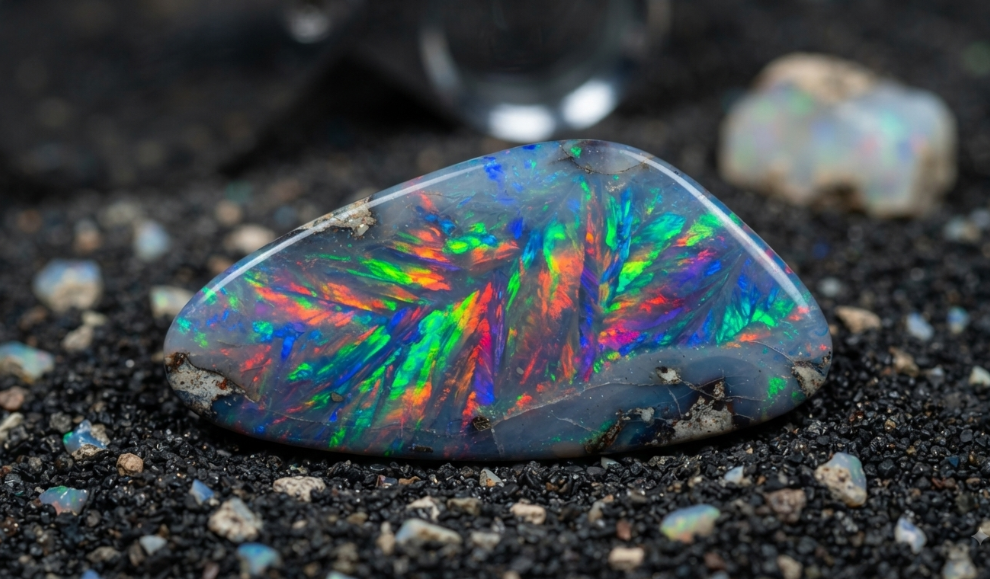
Opal is a mesmerizing gemstone formed from a solution of silicon dioxide and water that seeped into cracks in the earth millions of years ago. Unlike crystalline gemstones, opals are amorphous, meaning their internal structure is made of microscopic silica spheres that bend and scatter light, creating their signature glowing interior. Revered since ancient times—with its name tracing back to the ancient Sanskrit upala, meaning “precious stone”—opals have captivated civilizations for millennia, from the Roman Empire to modern jewelry designers.
The Meaning and Symbolism of Opal
Ancient Romans viewed opal as a symbol of hope and purity, believing it captured the beauty of all other precious gems combined. Across various cultures, opal has symbolized:
- Creativity and Inspiration: Believed to unlock the imagination.
- Fidelity and Loyalty: Often used in romantic tokens and alternative engagement rings.
- Transformation: Representing inner truth and emotional clarity.
Why Opal Makes the Birthstone for October?
Opal’s dynamic, shifting colors mirror the transition of nature during October—the moment when summer fades into the rich, changing colors of autumn. Its ethereal warmth and individuality make it a timeless choice for anyone born during this mystical month.
October’s Modern Birthstone: Tourmaline
What is Tourmaline?
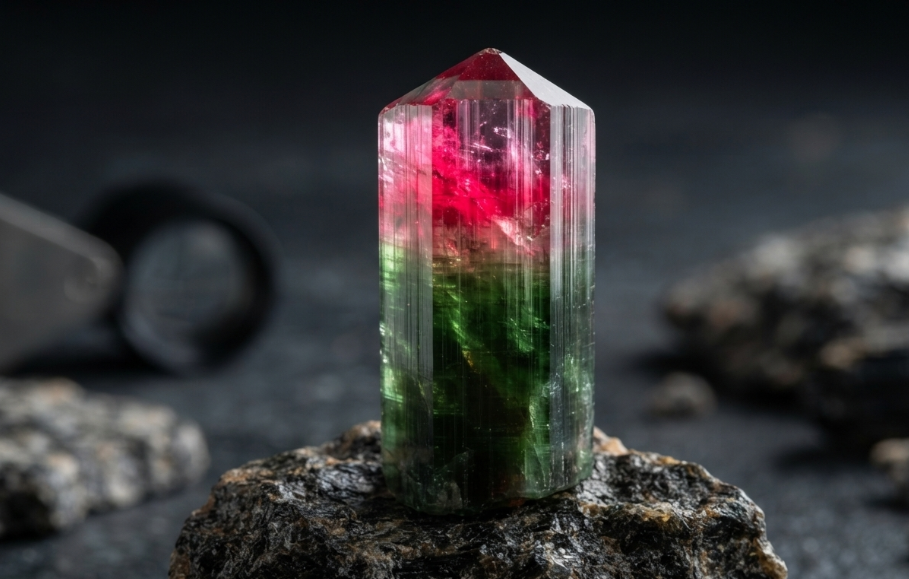
Tourmaline is a complex silicate mineral family renowned for its astonishing range of colors. Its name comes from the Sinhalese word toramalli, meaning “stone of mixed colors.” Because of its unique chemical composition, tourmaline crystals can display multiple colors within a single stone.
The Meaning and Symbolism of Tourmaline
An ancient Egyptian legend says that tourmaline traveled along a rainbow on its journey up from the earth’s center, gathering all the rainbow’s colors along the way. Symbolically, tourmaline is associated with:
- Healing and Balance: Believed to calm the mind and ground the spirit.
- Strength and Resilience: Represented as a protective stone that fosters confidence.
- Unconditional Love: Particularly pink and red varieties, which are tied to matters of the heart.
Why Tourmaline Became an October Birthstone?
Added to the official modern birthstone list in 1952, tourmaline was chosen to give October babies a durable, incredibly versatile alternative to opal. With its incredible variety of shades, tourmaline ensures that every October-born person can find a gemstone color that matches their personal aesthetic.
October Birthstone Color
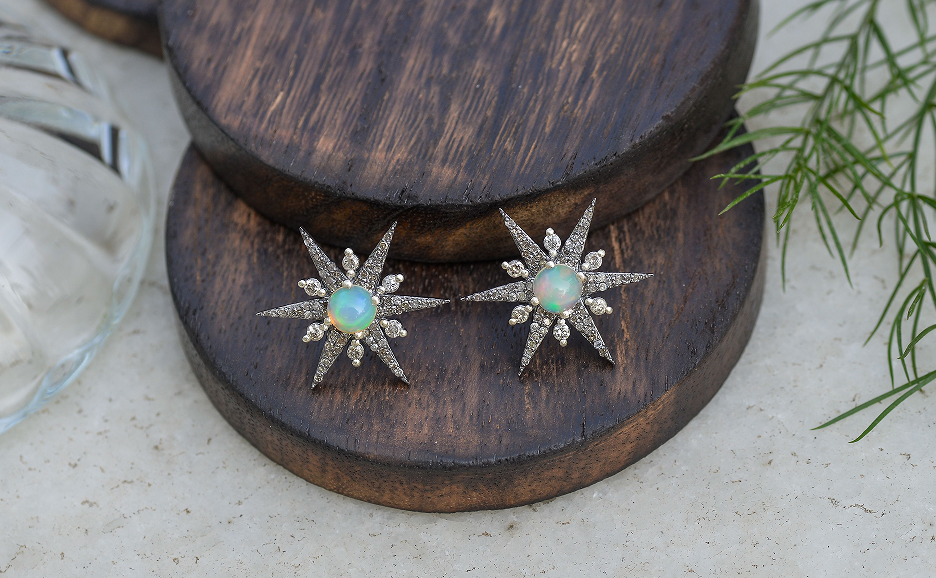
Both opal and tourmaline are birthstones for October, its color palette is virtually limitless.
- Opal is famous for its signature “play-of-color,” a phenomenon where the stone flashes an entire rainbow of hues—from fiery reds and electric blues to neon greens—when it catches the light.
- Tourmaline is known as the chameleon of gemstones, occurring in every color of the spectrum, though pinks, greens, and deep bi-color combinations (like watermelon tourmaline) are most iconic for October.
Together, October’s birthstone colors represent a balance of dreamy iridescence and rich, saturated brilliance.
Opal vs. Tourmaline: How to Choose Your October Birthstone
Choosing between opal and tourmaline comes down to your personal style, daily routine, and how you plan to wear your jewelry.
- Choose an opal if you are captivated by a mesmerizing, ethereal play-of-color that shifts with the light. It’s an absolute dream for romantic souls. However, with a Mohs hardness of about 5.5 to 6.5 and a unique water content, opals require a bit of mindful, gentle care. While they make breathtaking statement rings or special occasion pieces, they are generally better suited for occasional wear rather than heavy daily or hands-on labor.
- Choose a tourmaline if you prefer a vibrant, highly durable gemstone for everyday elegance. Ranging from 7 to 7.5 on the Mohs hardness scale, tourmaline is much more resistant to daily wear and tear. This makes it an exceptional, long-lasting choice for a daily-wear ring, a modern alternative engagement ring, or for those whose daily routines involve frequent hand use.
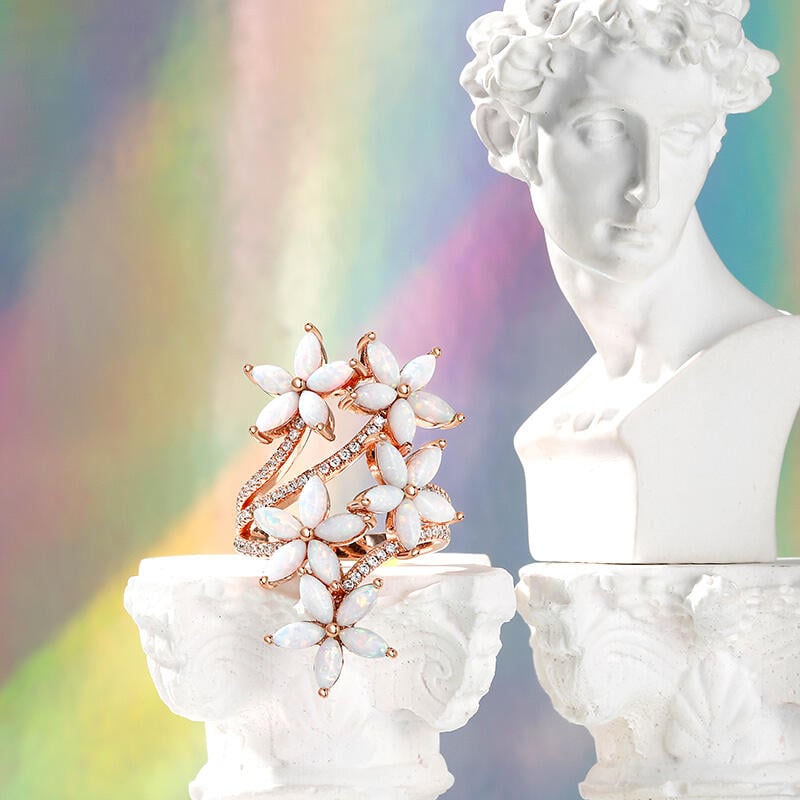
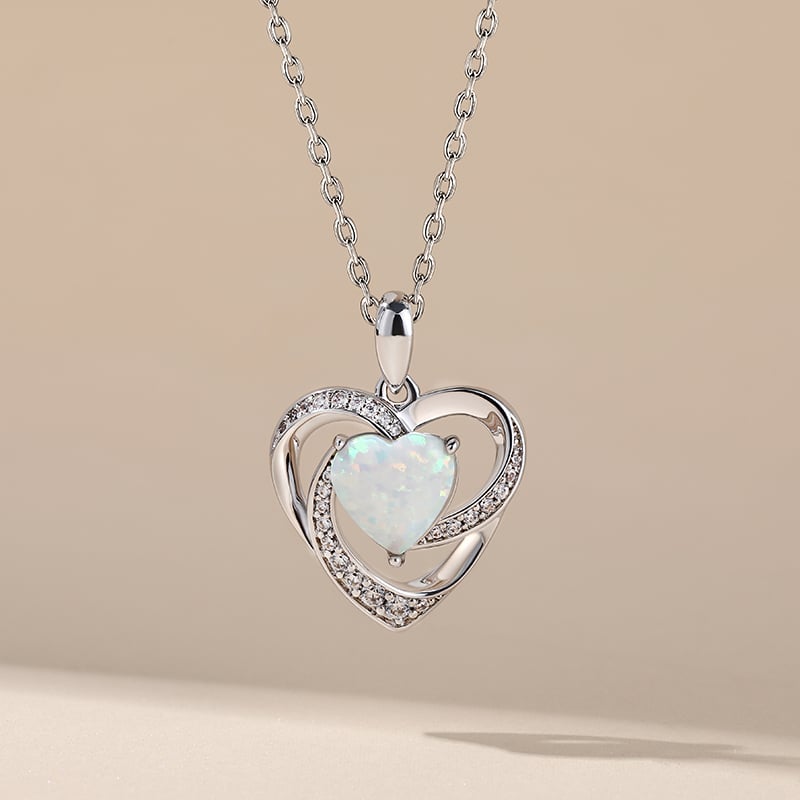
Your October Story, Told in Gemstones
Whether you are drawn to the cosmic, rainbow-flashing wonder of an opal or the vibrant, modern versatility of a tourmaline, October’s birthstones offer a unique way to celebrate a birthday, an anniversary, or a personal milestone. Explore our collection to find the piece that speaks to the personal story of you or your loved one.
More Jeulia Post: