
Picture this: you’re strolling through a sun-drenched garden with your beloved, and the deep emerald green of your engagement ring captures the light perfectly. Later that evening, under the soft glow of candlelight at a romantic dinner, you glance down and your ring has magically transformed into a rich raspberry red. This isn’t a scene from a fantasy novel. This is the everyday magic of alexandrite engagement rings.
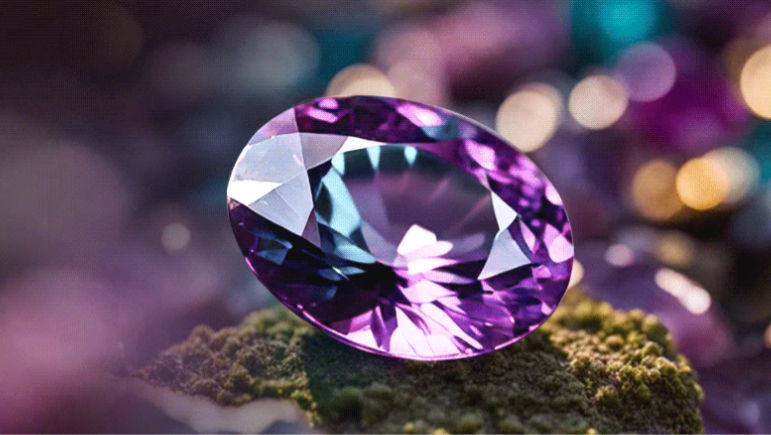
While diamonds are a classic and timeless choice, a growing number of couples are seeking out unique gemstones that tell a more personal story. If you’re dreaming of a ring that is as dynamic, rare, and fascinating as your love, then allow us to introduce you to alexandrite.
Navigate to:
What is Alexandrite?
Alexandrite is an exceptionally rare variety of the mineral chrysoberyl. The most defining—and utterly captivating—feature of alexandrite is its phenomenal color-change ability. Known as the “emerald by day, ruby by night” stone, alexandrite appears a stunning bluish-green in natural daylight but shifts to a purplish-red under incandescent (indoor) light.
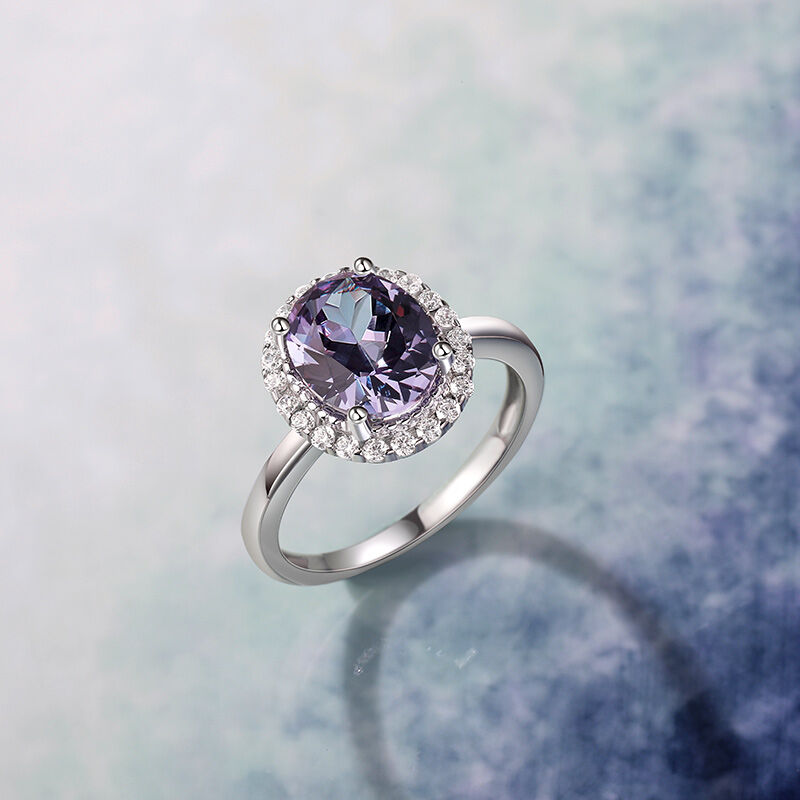
This isn’t just a neat trick; it’s a scientific marvel caused by the unique way the stone’s crystal structure absorbs light. This chameleon-like quality makes an alexandrite ring a constant source of wonder, ensuring it never looks the same twice. It’s a beautiful metaphor for a relationship that adapts and shines in different circumstances.
With a hardness of 8.5 on the Mohs scale, alexandrite is more than durable enough for everyday wear. While not quite as hard as diamond (10), it ranks above many popular gemstones like emerald (7.5–8) and amethyst (7), making it a practical and resilient choice for an engagement ring.
The History of Alexandrite
Discovered in Russia’s Ural Mountains in the 1830s, it was named after the young Tsar Alexander II.
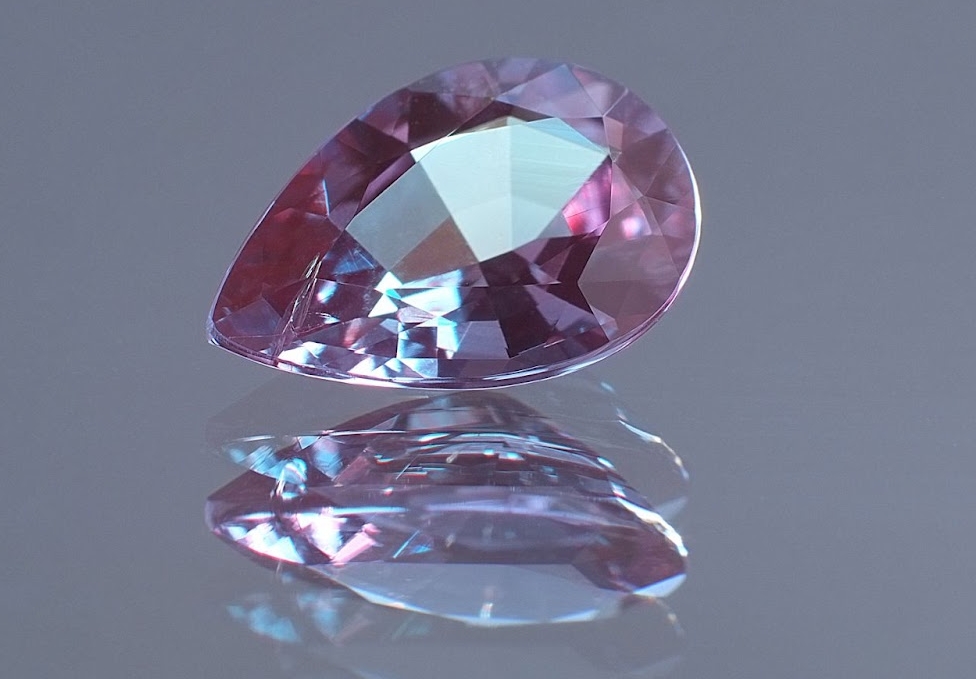
Its colors—green and red—mirrored the imperial Russian military colors, making it an instant national treasure. The original Russian mines have been largely depleted for over a century, making fine-quality natural alexandrite one of the most sought-after and valuable gemstones in the world.
Choosing an alexandrite engagement ring means adorning your finger with a piece of geological and historical rarity.
What Does Alexandrite Symbolize?
Every gemstone carries meaning, and alexandrite’s symbolism is particularly poignant for an engagement.
- Balance and Joy: Alexandrite is said to promote joy, luck, and love. Its ability to balance the green of growth (the heart) and the red of passion creates a powerful symbol for a balanced and harmonious partnership.
- Adaptability and Growth: The stone’s color-change represents the ability to thrive in different environments—a perfect metaphor for a lasting marriage that evolves and grows stronger through all of life’s seasons.
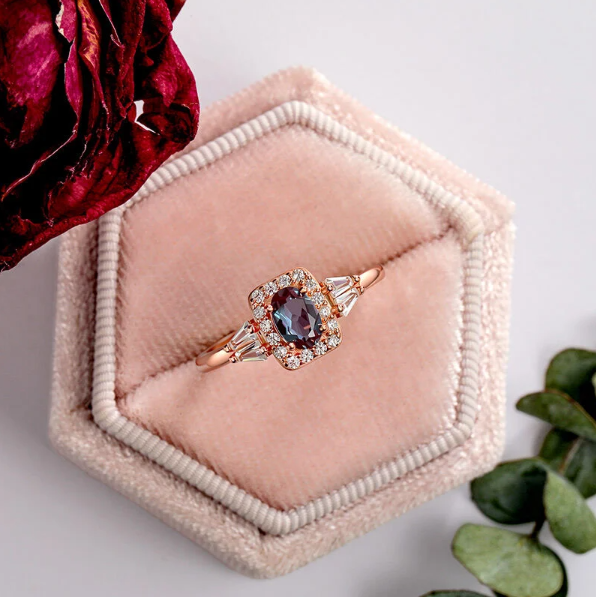
- Uniqueness: In a world of lookalikes, an alexandrite ring is a bold declaration of individuality. It says that your love story is one-of-a-kind and deserves a symbol that is equally extraordinary.
In addition, alexandrite is the official birthstone for June, making it a deeply personal choice for June brides—or lovers of June birthdays.
What to Consider When Choosing an Alexandrite Ring?
Because of its rarity, venturing into the world of alexandrite requires a bit of knowledge.
- Natural vs. Lab-Created: Natural alexandrite with a strong color change is exceptionally rare and comes with a price tag to match. Fortunately, lab-created alexandrite is a brilliant and popular alternative. It possesses the same mesmerizing color-change properties, is more affordable, and is ethically and sustainably produced. For many couples, this is the perfect way to enjoy this magical gem.
- The Strength of the Color Change: The value of an alexandrite is judged heavily on how dramatic and distinct its color change is. Look for stones that show a clear transition from green to red, rather than a muddy brown.

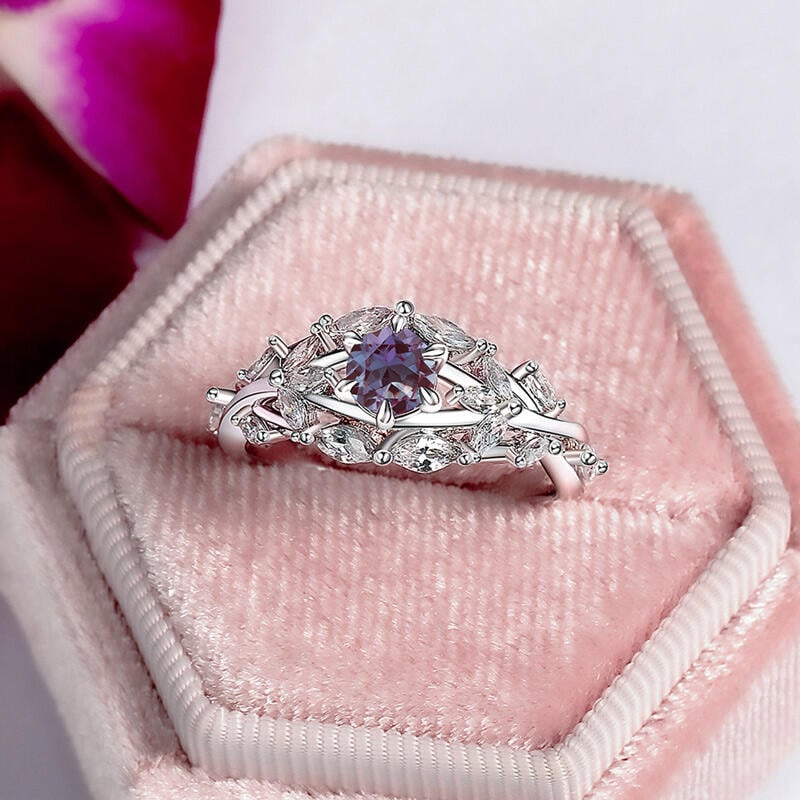
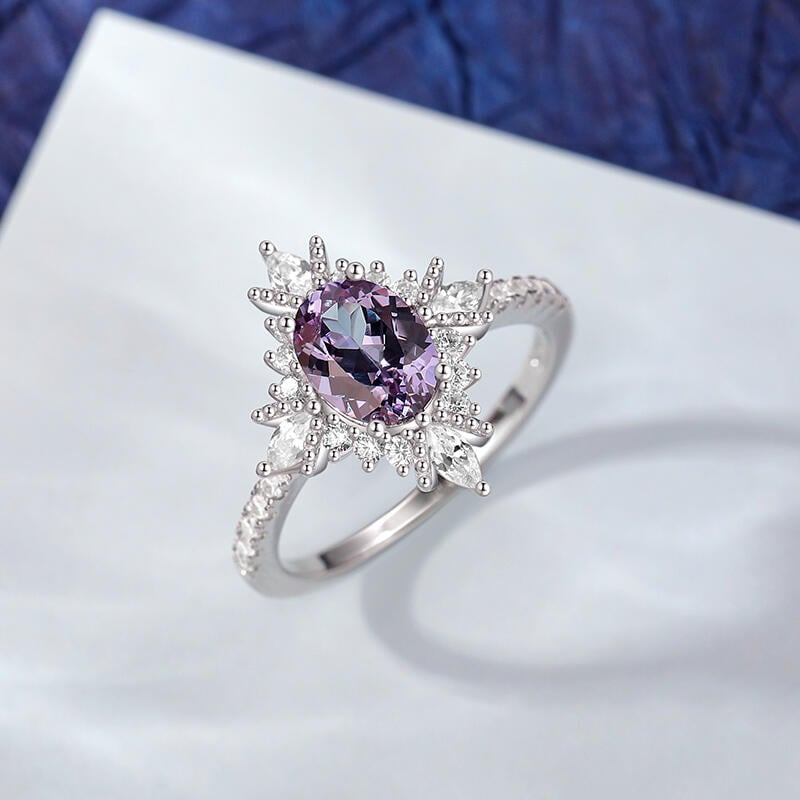
- The Setting is Key: An alexandrite is a star that deserves a supporting cast. While a classic solitaire beautifully highlights its color-changing magic, alexandrite is exceptionally complemented by white gold or platinum, which enhance both its cool and warm tones. Rose gold, on the other hand, elegantly amplifies its reddish and purple flashes. For added security and style, consider a protective bezel or halo setting. Many choose to accent their alexandrite with diamonds or other gemstones to make the central stone truly pop.
Is an Alexandrite Engagement Ring Right for You?
An alexandrite ring is perfect for the couple who:
- Values uniqueness and personal expression over tradition.
- Loves the idea of a ring that is interactive and dynamic.
- Appreciates rich history and fascinating gemology.
- Seeks a profound and beautiful symbolism for their union.
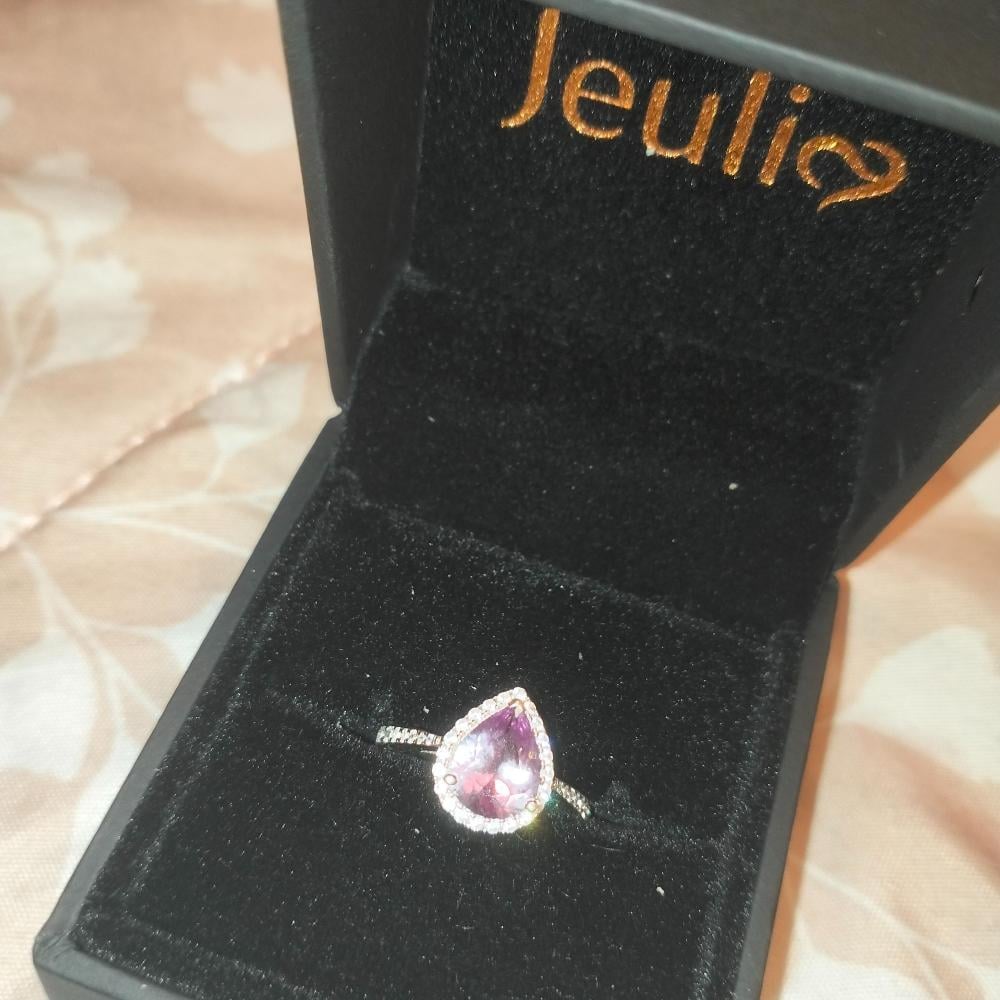
While it may not be the “traditional” choice, an alexandrite engagement ring is a breathtakingly modern declaration of love. It’s a ring that doesn’t just sparkle—it tells a story, transforms with the light, and symbolizes a love that is truly once in a lifetime.
FAQS:
Q: Does Alexandrite Look Better in Silver or Gold?
A: It depends on the look you love. For maximum “color-change” effect, choose silver tones. For a warmer, unified glow, choose gold.
Q: What Birthday Month is Alexandrite?
A: Alexandrite is the modern birthstone for the month of June. It shares this honor with the pearl and the moonstone.
Q: Can Alexandrite Scratch Easily?
A: No, alexandrite is a very durable gemstone for daily wear. With a hardness of 8.5 on the Mohs scale, it resists scratches better than most gems, though care should still be taken to protect it from hard knocks.
Q: Can Alexandrite Get Wet?
A: Warm, soapy water is the recommended method for cleaning alexandrite. Just be sure to avoid prolonged soaking, harsh chemicals (like bleach or chlorine), and extreme temperature changes to protect both the gemstone and its setting.
More Jeulia Post: