The moment you decide to propose is filled with excitement, dreams, and one very important question: what will the ring look like? Today, more couples than ever are turning to moissanite for its unmatched brilliance, ethical origin, and exceptional value. But how do you choose the one – a ring that truly reflects your story? This guide will walk you through everything you need to know to pick the perfect moissanite engagement ring.
Navigate to:
Why Choose Moissanite Engagement Ring?
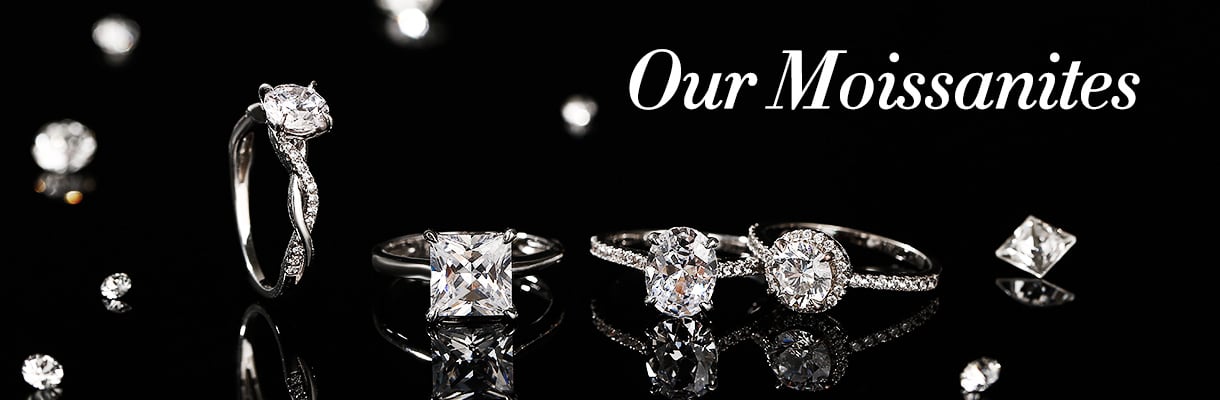
Before we dive into the details, let’s talk about why moissanite has captured the hearts of so many modern couples. Originally discovered in 1893 by Henri Moissan in a meteorite crater, natural moissanite (silicon carbide) is incredibly rare. Today, the moissanite used in jewelry is lab-created, making it a masterpiece of science and nature.
- Unmatched Brilliance: It sparkles even brighter than diamond, with fiery rainbow flashes. (Related Post: Moissanite vs. Lab Diamond: Unpacking the Differences)
- Exceptional Durability: At 9.25 on the Mohs scale (second only to diamonds), it’s tough enough for everyday wear.
- Ethical and Sustainable: Lab-created, it’s conflict-free and environmentally sound.
- Astounding Value: It offers luxury looks and lasting quality within a realistic budget.
What is the “4 Cs” of Moissanite?
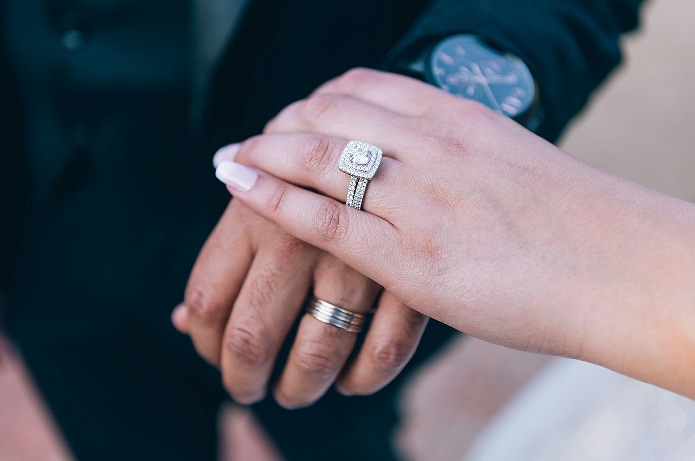
Moissanite is not a diamond. Chemically, diamond is carbon, while moissanite is silicon carbide (SiC). It is a unique gemstone in its own category. Despite this fundamental difference, its quality is typically graded using a system similar to the diamond 4Cs. Here’s what each “C” means for moissanite.
Moissanite Color
The color of moissanite refers to how white or colorless it appears, graded on a scale from D (colorless) to Z (light yellow or brown).
- Early Years: Stones often had noticeable yellow, green, or gray undertones.
- Modern Production: Technology now yields consistently whiter stones.
- Two Main Categories:
- Colorless (D-E-F): This is the premium standard. These stones are icy-white and indistinguishable from the highest-grade diamonds.
- Near-Colorless (G-H-I): While still beautifully white, these may have a very faint warmth in certain lighting, which some people prefer.
Shopping Guide: For most settings and styles, a Near-Colorless (G-H-I) moissanite will look perfectly white and deliver exceptional brilliance. Opt for Colorless (D-E-F) if you desire the absolute highest, most neutral whiteness or plan to set it in platinum or white gold. You can rarely go wrong with either—both represent the impressive achievement of modern moissanite.
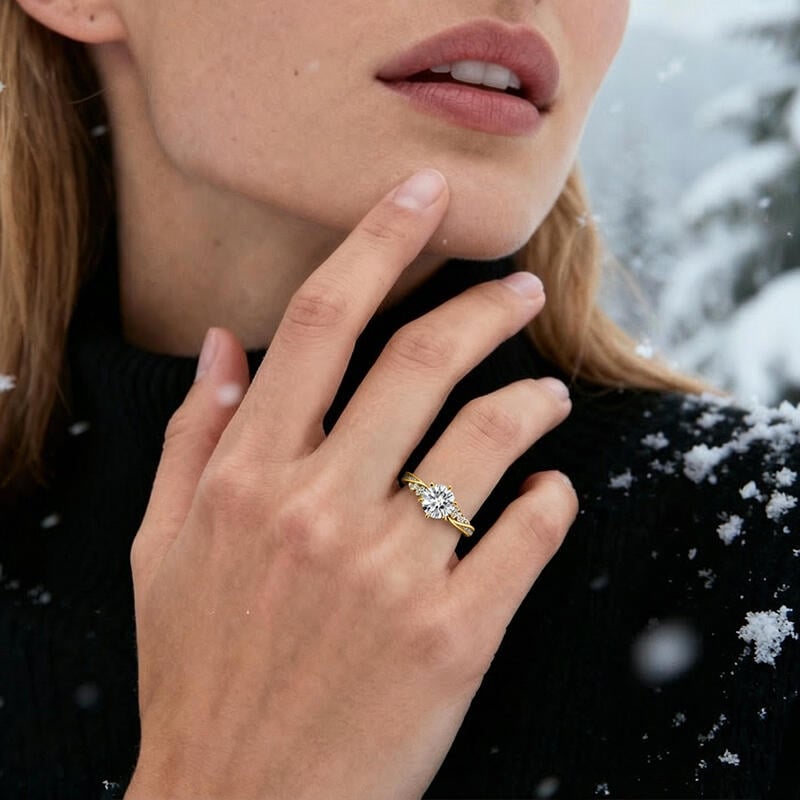
Clarity of Moissanite
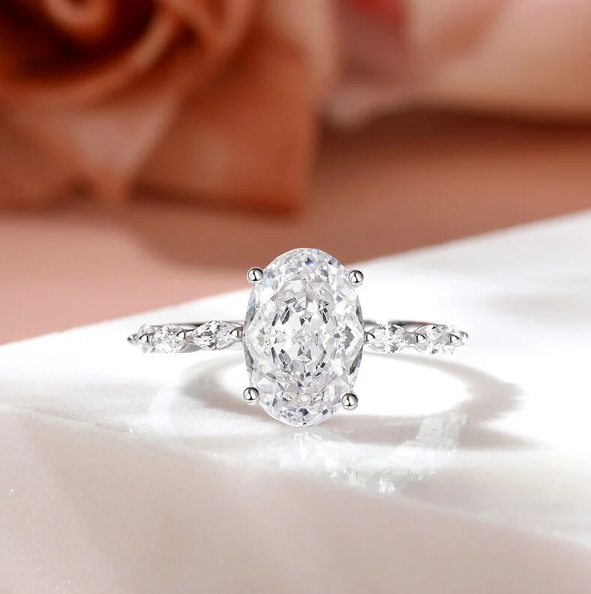
Clarity refers to the absence of inclusions (internal flaws) and blemishes (external imperfections) within and on a gemstone. Thanks to its controlled lab-creation process, moissanite naturally achieves exceptional clarity. Most high-quality stones are “eye-clean” — meaning they appear perfectly clear to the naked eye. This innate purity ensures that nothing interferes with its remarkable brilliance.
Moissanite is graded using the same scale as diamonds:
- FL (Flawless): No inclusions or blemishes visible under 10x magnification.
- IF (Internally Flawless): No inclusions, but some minor blemishes visible under 10x magnification.
- VVS1, VVS2 (Very, Very Slightly Included): Inclusions are extremely difficult to see under 10x magnification.
- VS1, VS2 (Very Slightly Included): Has minor inclusions that are difficult to somewhat easy to see under magnification.
- SI1, SI2 (Slightly Included): Inclusions are noticeable under magnification and may become visible to a sharp naked eye.
- I1, I2, I3 (Included): Contains obvious inclusions visible to the naked eye, which can affect transparency and brilliance.
Shopping Guide: When selecting a moissanite engagement ring, you can confidently prioritize VS (Very Slightly Included) or higher grades. At these levels, the gem is guaranteed to be eye-clean, offering perfect clarity for daily wear. You rarely need to pay a premium for the highest clarity tiers, as the visual difference is negligible without magnification.
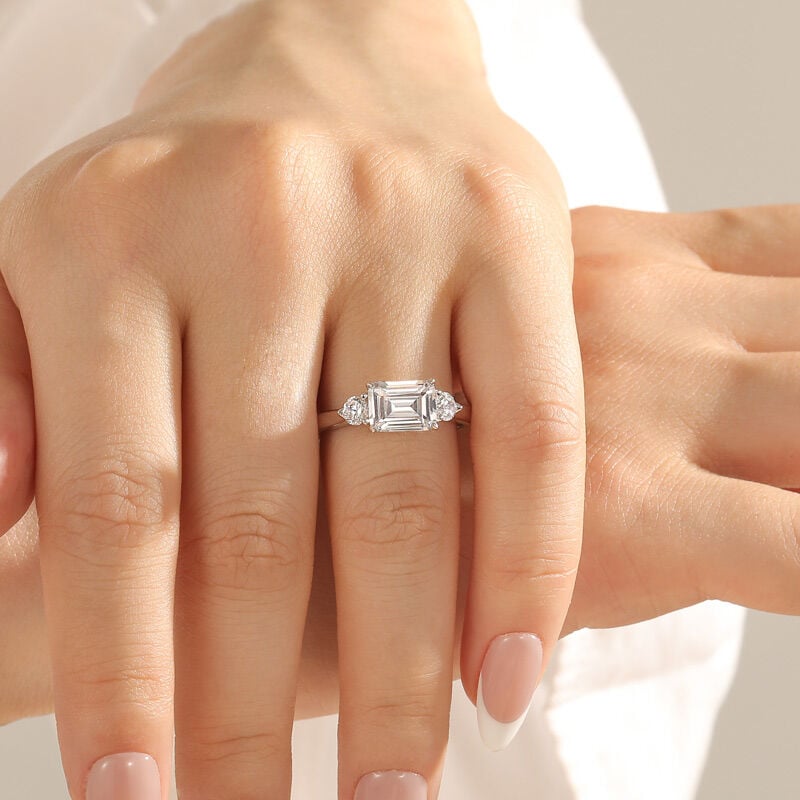
Carat Weight
When shopping for moissanite, understanding how size is measured is crucial. Unlike diamonds, which are primarily sold by carat weight, moissanite is best compared by its physical dimensions in millimeters (mm).
The Science Behind the Size
Moissanite has a lower density than diamond, making it about 15% lighter. This means a moissanite stone will be physically larger than a diamond of the same carat weight. Therefore, “carat” can be a misleading indicator of its actual appearance.
Shopping Guide:
- Focus on Millimeters (mm): Always prioritize the stone’s diameter in millimeters over its carat weight. This guarantees you get the exact visual size you desire.
- Understand “DEW”: Many sellers also list a Diamond Equivalent Weight (DEW). This helpful reference tells you what carat size a diamond would be to look the same on your finger. For example, a 6.5mm round moissanite visually matches a 1.0-carat round diamond.
- Pro Tip: Use a carat-to-mm conversion chart (easily found online) as your shopping companion. When comparing stones, lead with the millimeter measurement to ensure perfect clarity and the exact look you’re after.
Which Moissanite Cut is best for you?
While shape determines style, cut determines soul. This is the most critical factor in selecting a moissanite engagement ring, as it’s the precision of the cut that unlocks the gem’s legendary brilliance and fiery rainbow flashes.
Why Cut Reigns Supreme
Think of cut as the gemstone’s architect. An expert cut aligns every facet with mathematical precision, creating a pathway for light to enter, reflect internally, and explode back to your eye as maximum sparkle. A poor cut, however, allows light to leak out, leaving the stone looking flat, glassy, or dull.
Your Key to Maximum Sparkle
To ensure you’re getting a moissanite engagement ring that lives up to its full potential, always prioritize the cut grade:
- Excellent / Ideal Cut: The pinnacle of light performance. Every facet is optimized for unrivaled fire and brilliance.
- Very Good Cut: Delivers outstanding sparkle and is a brilliant, value-conscious choice.
This single choice guarantees that the moissanite’s inherent optical magic is fully realized, regardless of the shape you ultimately fall in love with.
The Popular Shape for Moissanite Engagement Ring
The shape of the stone defines the moissanite engagement ring’s entire personality. Here are four of the most popular cuts and the styles they pair with beautifully. (Related Post: Top 3 Moissanite Ring Cuts for Maximum Brilliance)
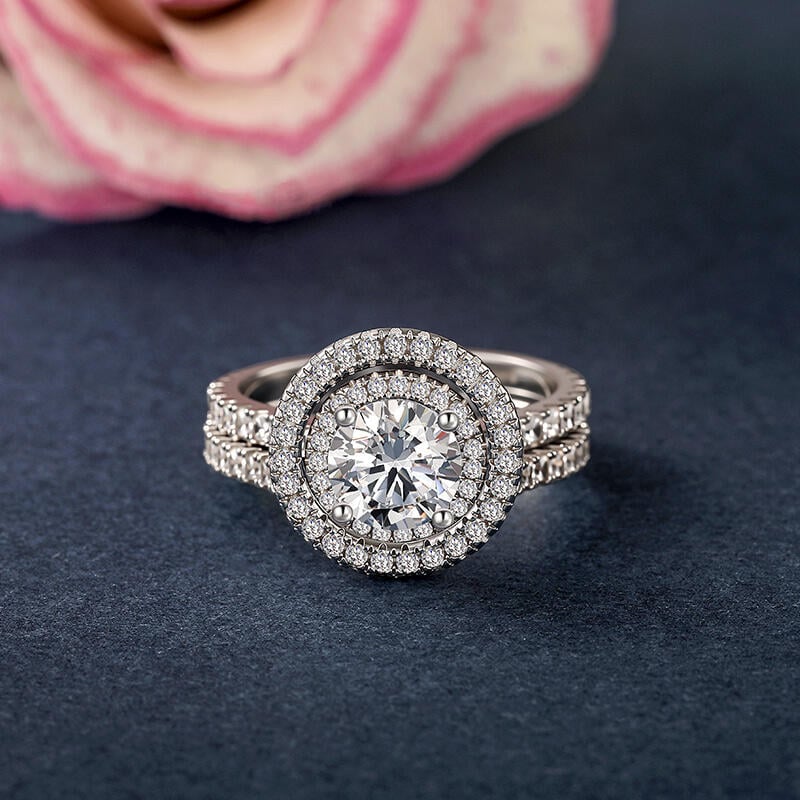
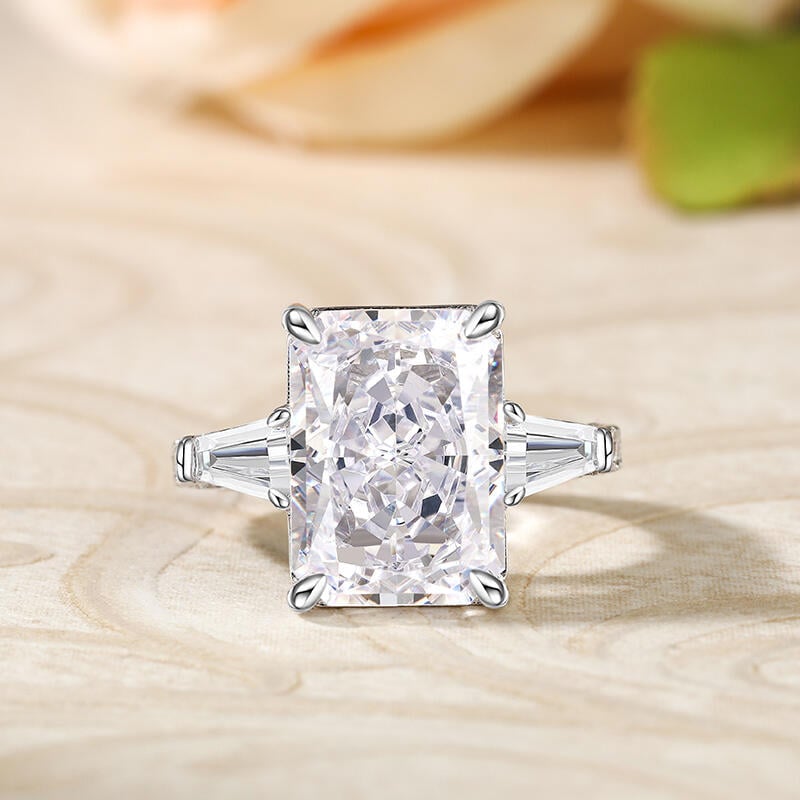
Round Brilliant – The classic all-rounder, cut for maximum sparkle and fire. Fits any style from solitaire to halo.
Oval – Combines round-cut brilliance with an elongating shape that flatters the finger and appears larger. Perfect for solitaires or vintage-inspired designs.
Emerald – Step-cut facets create a sleek, “hall-of-mirrors” flash instead of scattered sparkle. This shape is perfect for minimalist or Art Deco styles. It looks stunning in a simple solitaire, while a three-stone design with baguette side stones enhances its geometric elegance.
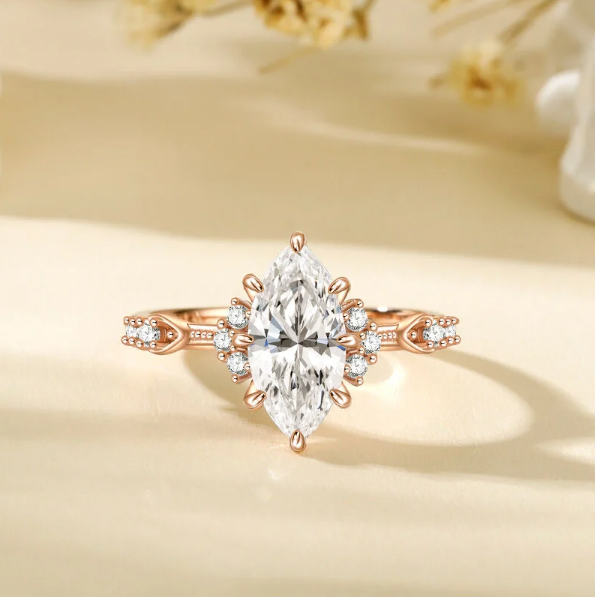
Marquise – A bold, elongated shape with pointed ends that exudes drama and vintage charm. It looks stunning set vertically in intricate, nature-inspired bands with filigree or vine details or horizontally for a modern unexpected twist.
Your Forever Moissanite Ring
Choosing a moissanite engagement ring is an exciting journey that reflects both your personal style and deeper values—celebrating love with a stone known for its brilliance, durability, and ethical origin.
If you want a ring even more personal? Jeulia is here to co-create it with you. Through our personalized jewelry experience, you guide every detail: from metal and stone to intimate engravings. The result is a one-of-a-kind masterpiece that tells your love story, crafted exclusively for you.