
A cluster ring gathers multiple smaller gems together in a thoughtful, often artistic arrangement. This clever design makes the ring look larger, sparkle harder, and cost significantly less than a single diamond of the same visual size. If you’re looking for an engagement ring that feels personal, artistic, and brilliantly sparkly, you’ve come to the right place. In this article, we’ll explore everything from what a cluster ring to why it might just be the most meaningful ring you’ll ever wear.
Navigate to:
What Is a Cluster Ring?
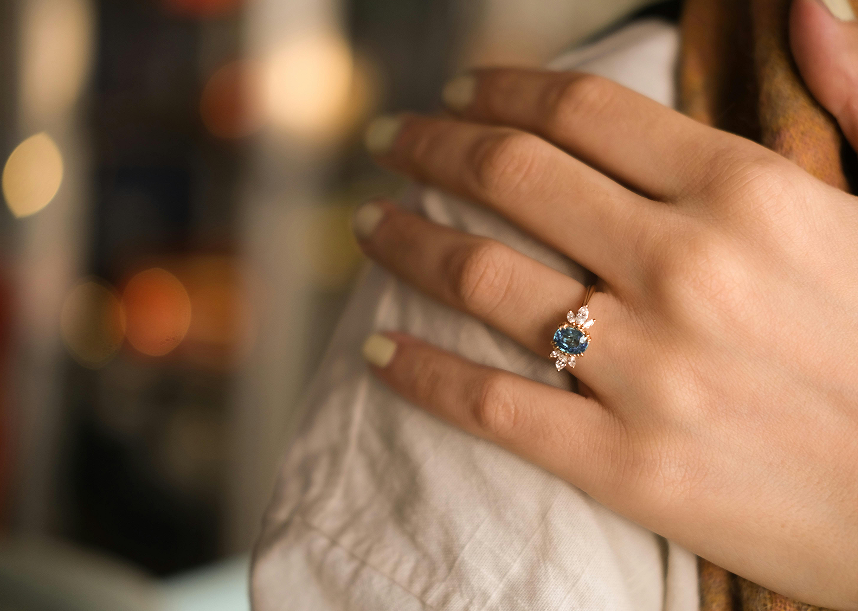
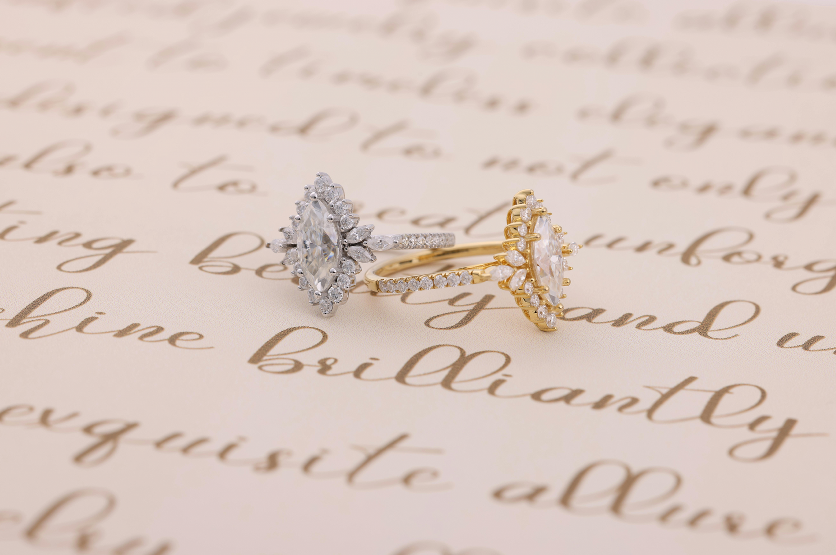
A cluster ring is a design where multiple smaller gemstones are grouped closely together to function as one visual unit. The most classic layout features a central stone surrounded by a “cluster” of smaller stones—often diamonds or colored gems—creating the illusion of one large, dazzling center.
Key characteristics:
- Stones can be all the same size or graduated
- Common shapes: round, oval, flower, starburst, geometric
- Settings: shared-prong, pave, bezel, or grain setting
Unlike a solitaire (one center stone) or pavé (small stones flush with the band) ring, a cluster ring puts the focus on the grouping as a single design feature. The whole truly looks greater than the sum of its parts.
History & Evolution of the Cluster Ring
Cluster rings are far from a modern invention. Their history adds to their charm.
Georgian Era (1714–1837):
The earliest cluster rings appeared as “flower rings” or “posey rings,” often shaped like daisies or roses. Hand-engraved details and foil-backed stones maximized sparkle in candlelight. But these rings weren’t just decorative—a daisy symbolized loyal love, making the ring a quiet declaration of devotion.
Victorian Era (1837–1901):
Cluster rings became deeply sentimental. “Forget-me-not” rings and heart-shaped clusters expressed eternal love. Queen Victoria herself popularized floral jewelry, and the cluster ring became a way to carry a secret message: don’t forget me. The more stones, the stronger the promise.
Art Deco Era (1920s–1930s):
Geometric cluster rings emerged with baguette-cut diamonds, emeralds, and sapphires. Sharp angles, clean lines, and architectural precision defined the style. During this era, a small number of independent women—artists, writers, and early professionals—began buying cluster rings for themselves, planting the seed for what would become the “right-hand ring” tradition.
Mid-20th Century:
After World War II, more women entered the workforce. The cluster ring fully evolved into the “right-hand ring” —a gift a woman bought for herself to mark a promotion, graduation, or personal milestone. Unlike an engagement ring given by someone else, this ring said: I earned this. The symbolism shifted from quiet independence to confident self-celebration.
Throughout these eras, one thing remained constant: the cluster ring has always been a choice for those who want their jewelry to say something. It has never been a shy accessory. From Victorian secret messages to Art Deco independence, the cluster ring has always made a statement.
Popular Cluster Ring Styles
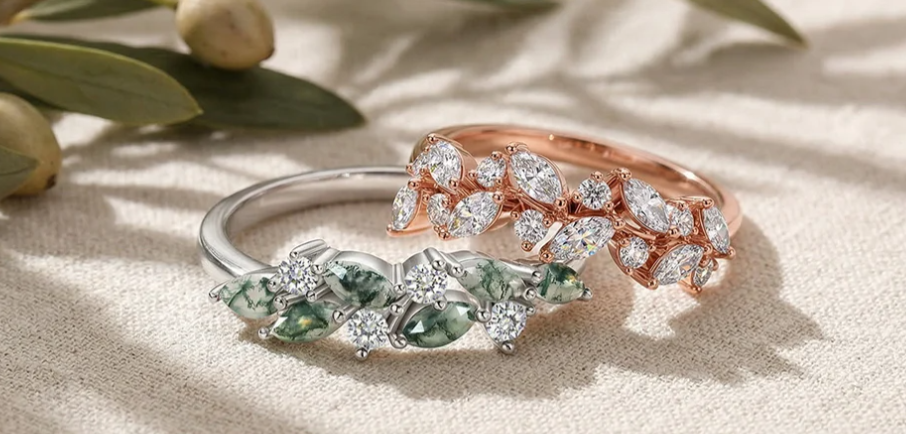
Today, these historic influences live on in a wide range of cluster ring styles. Here are the most popular directions:
All-Diamond Cluster
A classic choice that never goes out of style. All-diamond clusters deliver maximum sparkle and timeless elegance, making them perfect for traditional engagement rings. The uniform brilliance of diamonds creates a clean, luxurious look that suits any metal setting.
Colored Center Stone + Diamond Halo
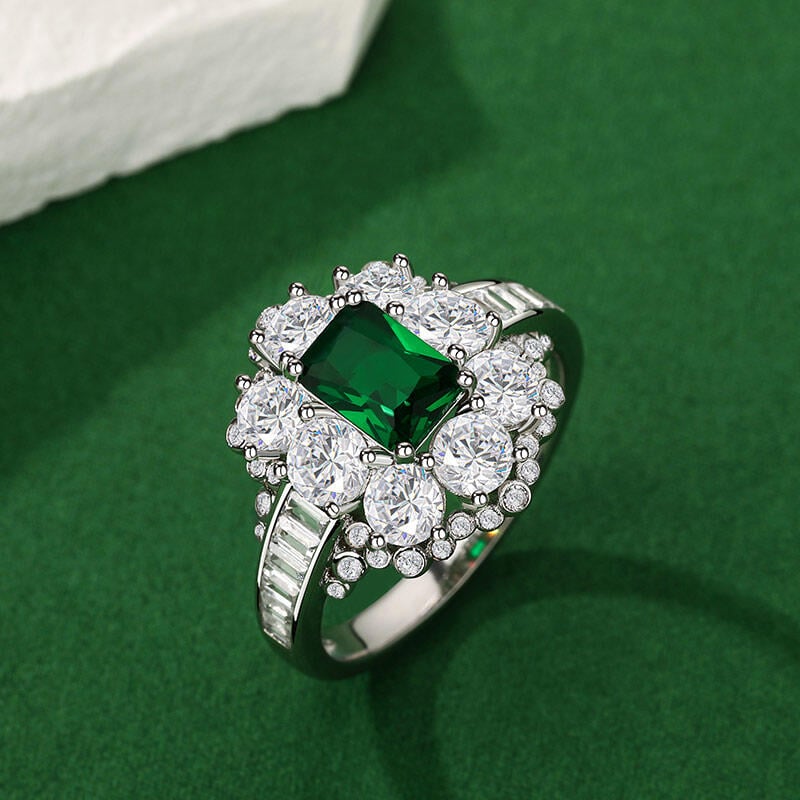
For those who want color without sacrificing sparkle, this style pairs a vivid center gem with a diamond surround. Popular combinations include sapphire for royal elegance, ruby for passionate boldness, and emerald for vintage glamour. The diamond halo amplifies both the color and the brilliance.
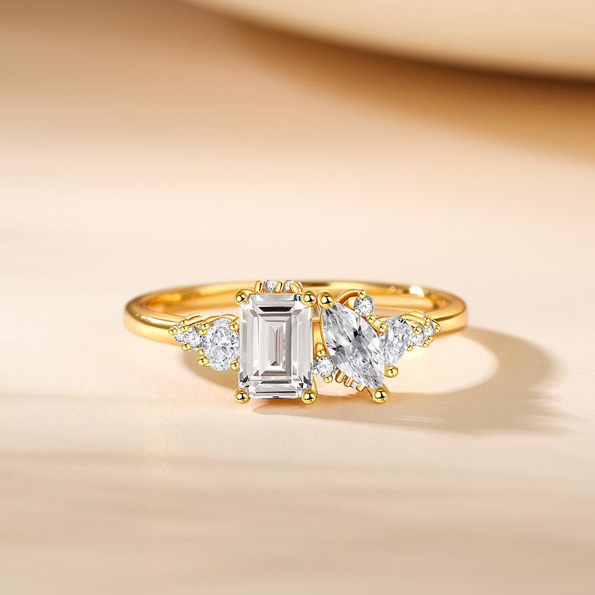
Mixed Shapes
This design plays with contrast by combining different gemstone cuts in one ring. A round center might be surrounded by pear-shaped “petals” and marquise accents, creating a dynamic, artistic look. The result is highly unique and visually intriguing.
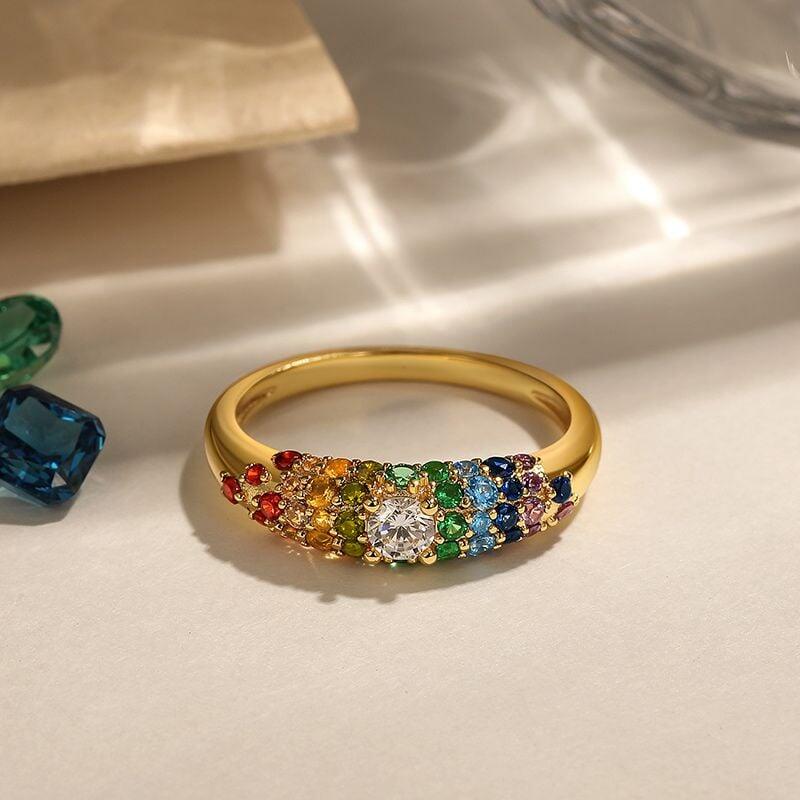
Mixed Colors
Perfect for the free-spirited and the romantic. Pastel sapphires in pink, yellow, and lavender can be arranged like a candy garden. Birthstone clusters offer a deeply personal touch—each stone representing a family member, a child, or an anniversary.
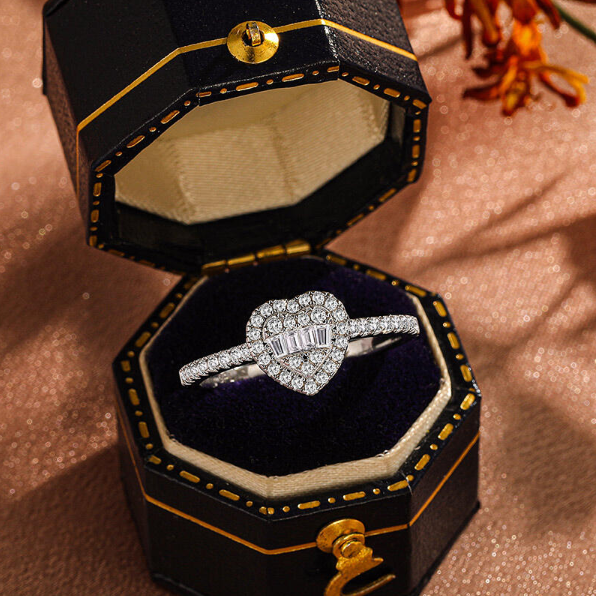
Halo Cluster
A halo cluster features a center stone surrounded by a ring (or “halo”) of smaller stones. This design makes the center gem appear larger and more brilliant while adding an extra layer of sparkle. The halo also carries symbolic meaning: protection and devotion, as if the outer stones are protecting the center.
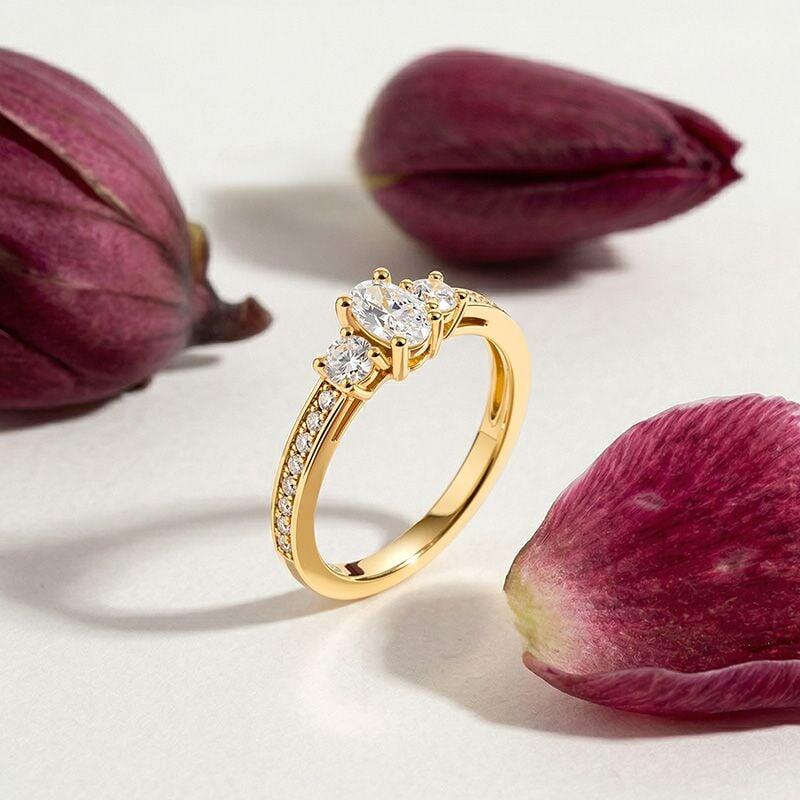
Three-Stone Cluster
Also known as past-present-future rings, three-stone clusters carry deep sentimental value. The three stones represent the couple’s history together, their present moment, and their hopes for the future. This layout offers more visual interest than a solitaire but remains cleaner and less busy than a full cluster.
Flower Cluster
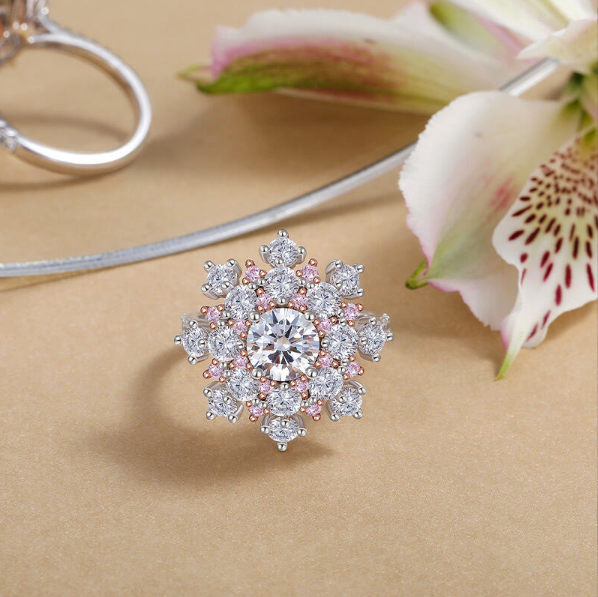
Shaped like a blooming flower, this design typically features a center stone surrounded by petal-like gems. The daisy cluster, a Victorian favorite, symbolizes innocence and loyal love. Flower clusters are romantic, feminine, and perfect for those who love vintage charm with a soft, natural feel.
Starburst Cluster
Inspired by bursts of light or exploding stars, the starburst cluster features gems radiating outward from the center in sharp, angled lines. This design feels energetic, bold, and almost celestial. The starburst carries a beautiful message: “you are my guiding light.”
Custom Heirloom Cluster
Perhaps the most meaningful of all. An heirloom cluster brings together small diamonds from grandmother’s earrings, mother’s first ring, and your own birthstone—all in one new design. The result is not just a ring, but a family story worn on your finger. One ring, generations of love.
Pros & Cons of Cluster Engagement Rings
If you’re considering a cluster ring for your engagement or wedding band, it helps to see how it stacks up against other popular styles. Below, we’ll compare cluster rings with solitaire, halo, and three-stone rings.
Cluster Ring vs. Other Ring Styles
| Ring Type | Best for |
|---|---|
| Cluster Rings | A 1.5 ct total weight cluster costs much less than Vintage style lovers who want maximum sparkle on a budget, have heirloom stones to combine. |
| Solitaire Rings | Minimalists who value resale potential, prefer easy cleaning, or love the “one diamond, one love” symbolism. Best for traditional simplicity. |
| Halo Rings | Those who want a solitaire-like look with extra size and sparkle, without the full visual complexity of a cluster. Best for making a center stone appear larger. |
| Three-stone Rings | Romantics who connect with past-present-future symbolism and want more visual interest than a solitaire but a cleaner look than a cluster. |
Advantages of Cluster Rings
| Advantage | Why It Matters |
|---|---|
| Bigger look for less money | A 1.5 ct total weight cluster costs much less than a 1.5 ct solitaire but looks equally large—sometimes larger. |
| More sparkle | Multiple facets = more light return = extra brilliance. |
| Heirloom-friendly | You can incorporate family stones easily. |
| Forgiving of lower clarity | Small stones hide inclusions better than one large stone. |
Disadvantages of Cluster Rings
| Disadvantage | What to Watch For |
|---|---|
| Harder to clean | Dirt and lotion get trapped between stones. Requires regular brushing. |
| Loose stone risk | Shared prongs or poor settings can lead to lost stones. Choose secure settings like bezel or thick shared-prong. |
| Can snag on clothes | Some clusters sit high. Try low-profile designs for daily wear. |
| Resale value | Single large diamonds hold value better than many small ones (though most people never resell their engagement ring). |
How to Wear & Style a Cluster Ring
One common concern: Is a cluster ring too flashy for everyday wear? Not at all. Here’s how to style it for any occasion.
- Daytime casual – Wear alone on your left ring finger with simple gold hoops and a white tee. Let it be your quiet power piece.
- Office chic – Pair with a thin plain wedding band. Choose a low-profile setting for typing comfort.
- Date night – Stack with a delicate pavé band or add matching cluster earrings.
- Stacking smart – Pair with thin, unadorned bands. Mixing metals (rose gold + white gold) works well. Avoid stacking with another busy ring.
- When to remove – Skip wearing during gardening, DIY projects, sleeping, or when applying lotion/sunscreen.
How to Care for & Maintain a Cluster Ring
Cluster rings need a little more love than solitaires—but the extra sparkle is worth it.
- Weekly cleaning – Soak in warm water with mild dish soap for 5–10 minutes. Gently scrub between stones with a soft toothbrush. Rinse and pat dry.
- Avoid – Ultrasonic cleaners (vibrations can loosen small stones).
- Every 6–12 months – Take to a jeweler for inspection and professional steam cleaning.
- Daily habits – Remove before gym, pool, or beach. Store in a soft-lined box away from other jewelry.
Is a Cluster Ring Right for You?
By now, you have a solid knowledge of the cluster ring—its history, its styles, its pros and cons, and how to care for it. Whether a cluster ring is right for you depends on your preference. If you love vintage charm and maximum sparkle, then yes. If you want a ring that feels personal, artistic, and unapologetically yours without the cost of a massive single diamond, then absolutely. Cluster ring is a first choice for those who know that love isn’t one perfect stone—it’s many small, brilliant moments gathered together.
More Jeulia Post: