
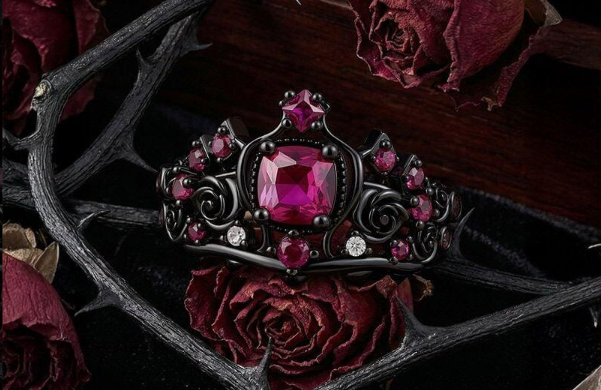
Gothic engagement rings have emerged as a frontrunner for those seeking dramatic flair and historical depth. Offering a non-traditional romantic aesthetic that stands in bold contrast to modern minimalism, these pieces are for those who find beauty in the shadows. If you’re drawn to a ring that feels like it has a soul, here’s everything you need to know about the Gothic aesthetic.
Navigate to:
What Exactly Makes a Ring Gothic?
Gothic style is less about a single “look” and more about an atmosphere. It draws heavily from Medieval and Victorian architecture, emphasizing verticality and intricate “lace-like” metalwork.
- Darker Color Palettes: While white diamonds remain a staple, Gothic rings often feature “moodier” stones like black diamonds, deep red garnets, salt-and-pepper diamonds, or sapphire.
- Intricate Metalwork: Look for details like filigree (delicate wire patterns) or scrollwork (spiraling, vine-like engravings).
- Symbolic Motifs: Elements from nature or myth are common, such as crescent moons, thorns, or floral motifs like cherry blossoms or leaves.
Common Cuts for Gothic Engagement Rings
The choice of stone cut is the most critical decision in a Gothic ring, as it defines the “vibe” of the entire piece. We can categorize them into three distinct styles:
The Vintage Soul (Soft & Romantic)
These cuts are for those who love the “haunted ballroom” aesthetic—romantic, warm, and historical.
- Old European Cut (OEC): Historically cut by hand under candlelight, it has a “higher crown” and a softer, deeper glow that feels more connected to a vintage aesthetic than modern machine-cut stones.
- Rose Cut: Originating in the 16th century, its flat base and faceted dome resemble a budding rose. It offers a subtle, watery shimmer rather than a bright sparkle, perfect for a low-profile, mysterious look.
The Architectural Edge (Sharp & Powerful)
If you prefer the “Noir” side of Goth—strong lines and dramatic symmetry—these geometric cuts are ideal.
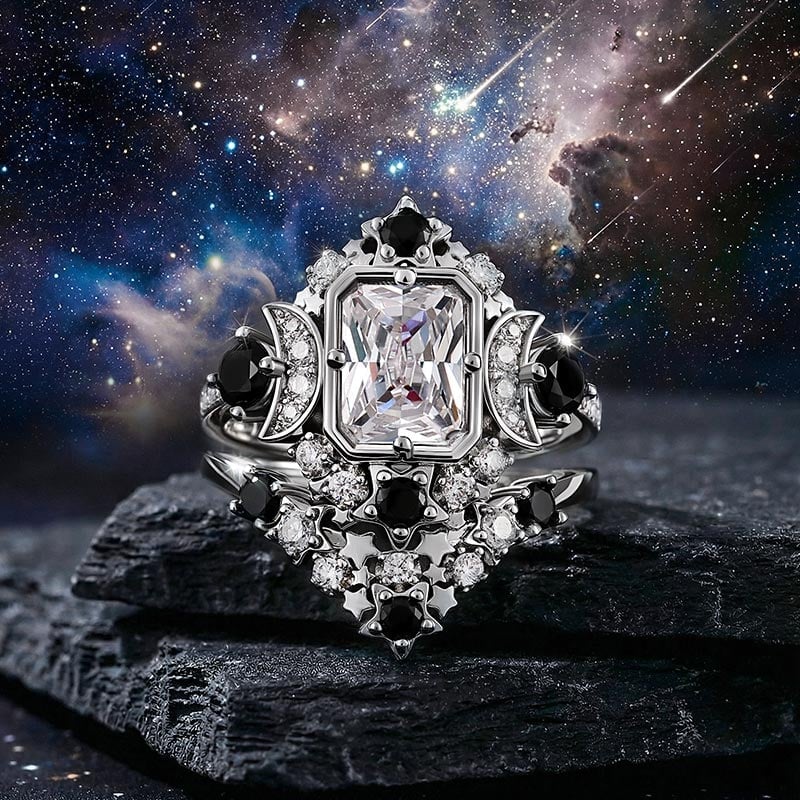
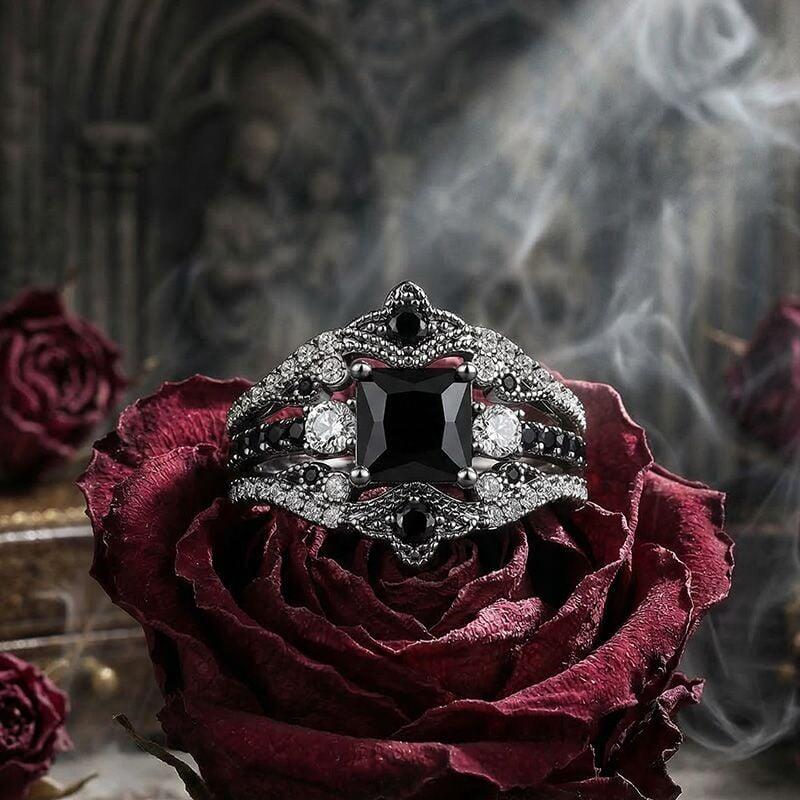
- Radiant & Emerald Cuts: These rectangular shapes offer sharp, clean lines and a powerful, structural energy when paired with dark accents.
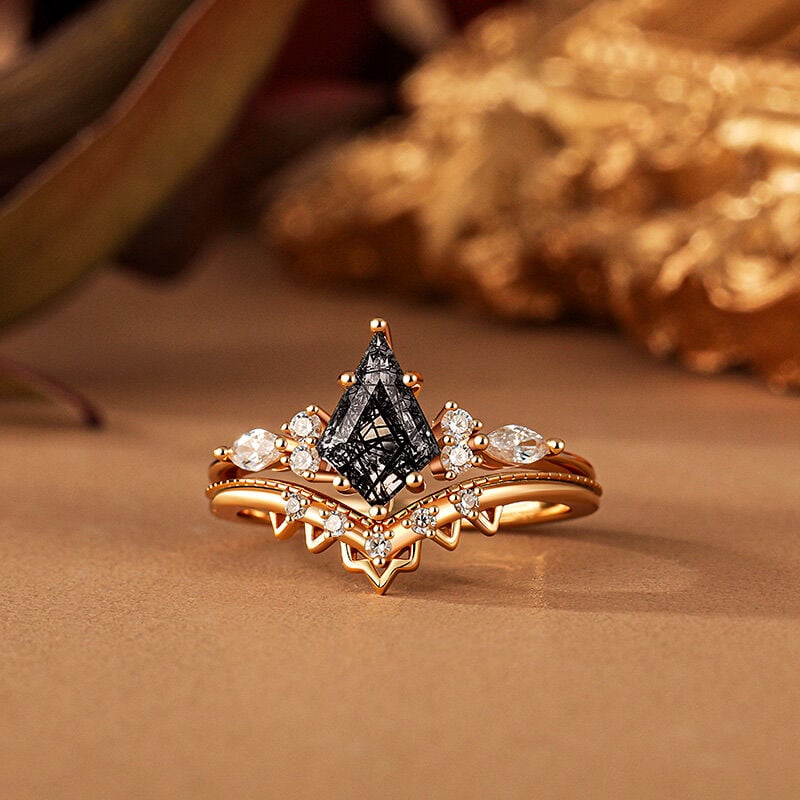
- Kite Cut: A highly modern, four-sided geometric shape that looks like an ancient talisman or an architectural spire.
The Mythic & Symbolic (Bold & Narrative)
These cuts use their unique shapes to tell a story or represent a specific Gothic motif.
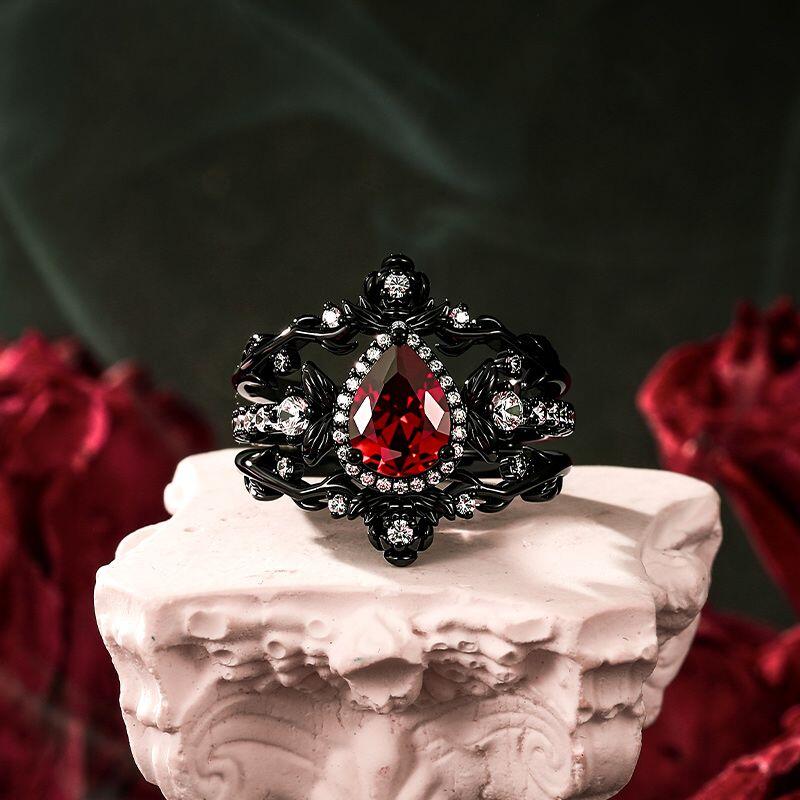
- Pear Cut: Often called the “teardrop,” this cut provides a sense of melancholy and elegance. It pairs beautifully with crescent moon accents.
- Marquise Cut: With its sharp, pointed ends, this cut emphasizes the “verticality” found in Gothic cathedrals and adds a touch of sharp, dangerous beauty.
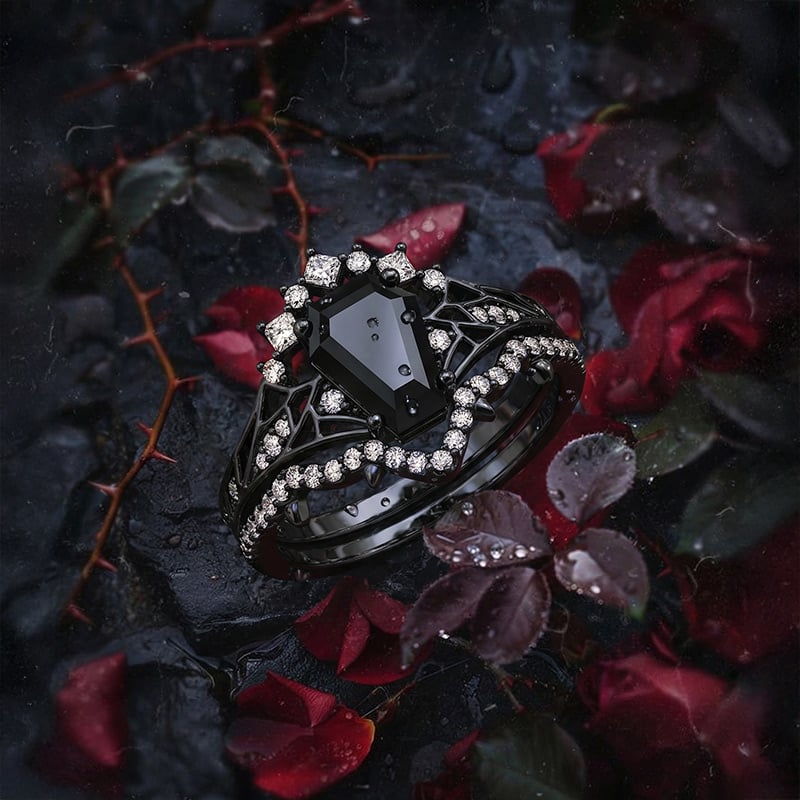
- Coffin Cut: For a bold statement of “memento mori” (remember you must die), this six-sided cut is a literal interpretation of the aesthetic, often set with dark stones like black onyx or garnet.
Styles of Gothic Engagement Rings
Gothic isn’t a monolith. Depending on your personal taste, you might lean toward one of these styles:
- Romantic Goth: Focuses on rose gold or yellow gold to contrast with darker stones, relying heavily on scrollwork and nature-inspired motifs.
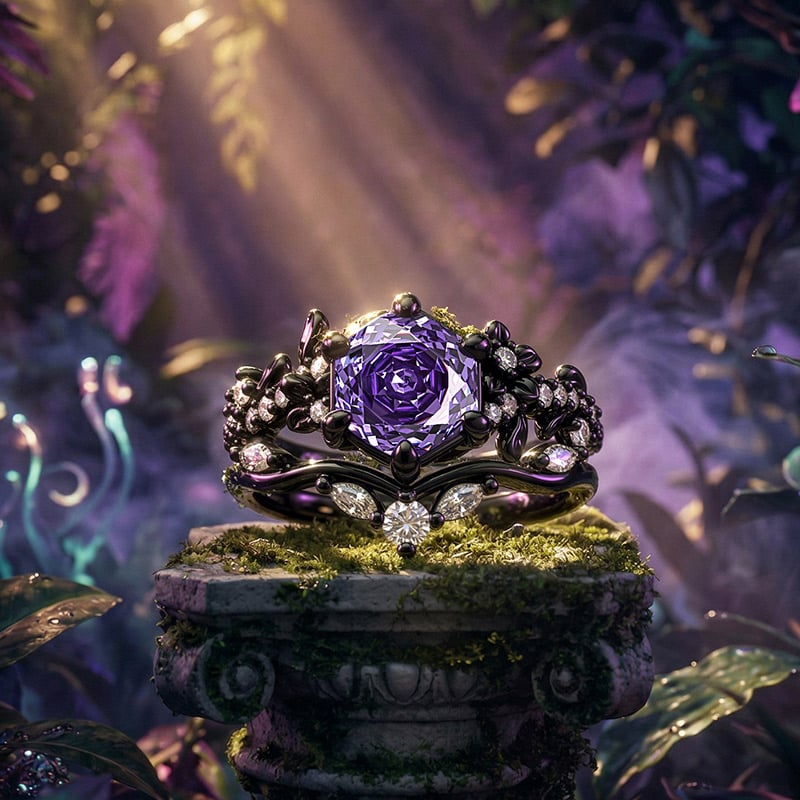
- Nature-Inspired Gothic: This style weaves organic elements like leaves, thorns, or floral motifs into dark frames, creating a look that is both organic and mysterious. In Gothic symbolism, thorns represent protection and a love that is fierce and enduring—unyielding against all odds.
- Architectural Noir: Focuses on strong symmetry and black-and-white contrasts, such as white diamonds set in black rhodium.
- Celestial Gothic: Incorporates crescent moons and star motifs, moving toward a “mystical” representation of eternal love.
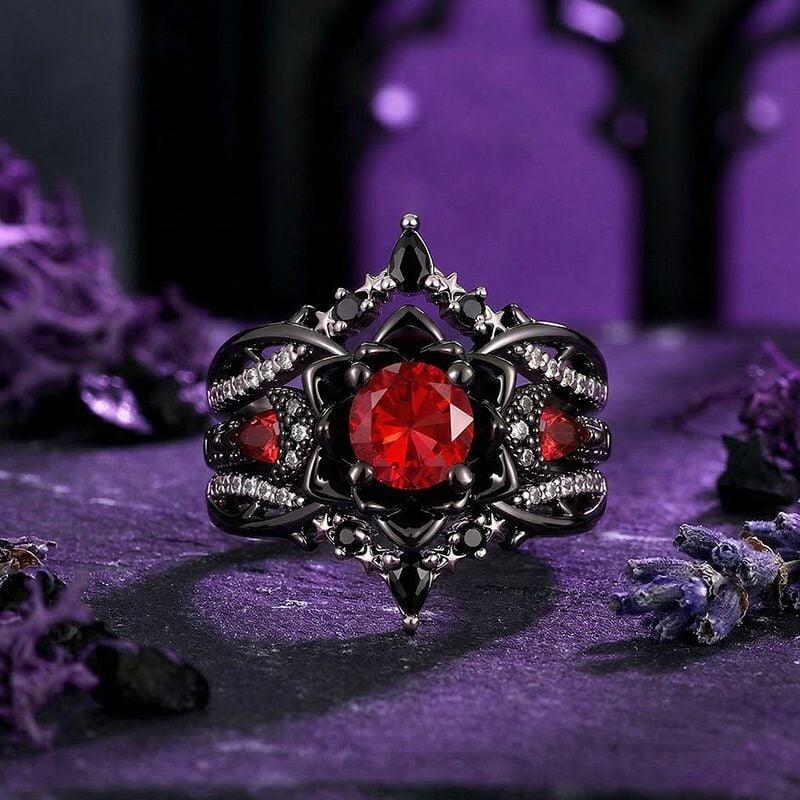
Materials for Gothic Rings
| Material | Why it Works for Gothic Style |
| Oxidized Sterling Silver | The most authentic choice for a “weathered” or “antique” look, especially for intricate carvings. |
| Black Rhodium Plating | Applied over gold or silver to create a dark, gunmetal finish that highlights diamond brilliance. |
| 18K / 14K Gold | Yellow and Rose gold offer a warm, romantic contrast to dark stones; 14K provides extra durability for fine details. |
| Platinum | The ultimate choice for high-end Gothic rings; its cool, heavy feel and natural whiteness evoke a “noble” coldness. |
| Alternative Metals | Metals like Titanium or Tungsten are ideal for bold, geometric, or “industrial” Gothic styles; they are virtually scratch-proof and modern. |
Pro Tip: While Black Rhodium creates a stunning, moody aesthetic, it is a plating. Over time, it will develop a unique “distressed” look as the underlying gold shows through—a process many enthusiasts find adds to the ring’s antique character.
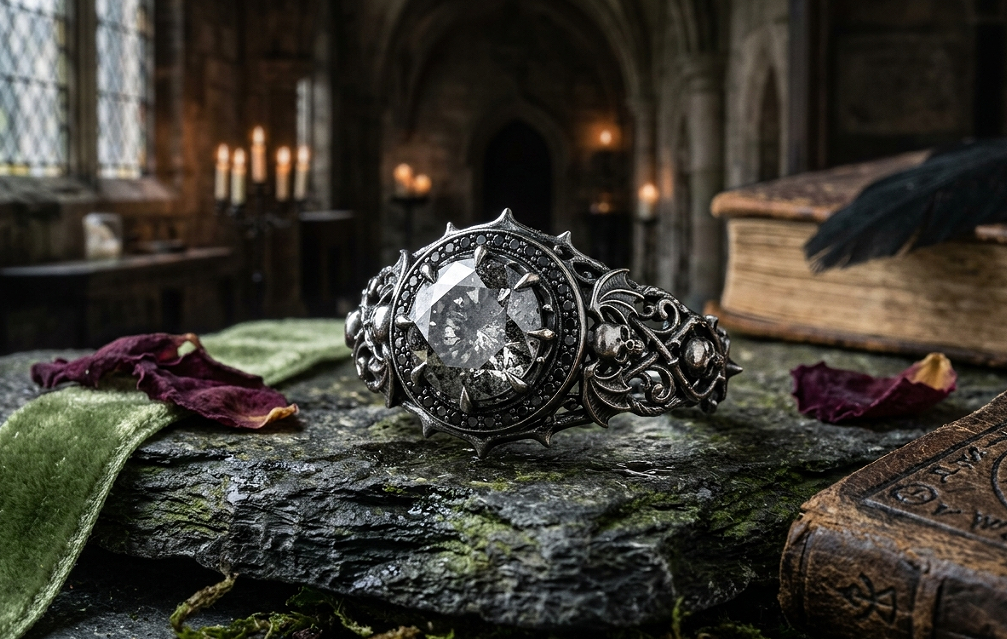
How to Care for Gothic Engagement Rings?
Gothic rings, with their intricate “nooks and crannies” and unique finishes, require specialized care to maintain their mysterious allure.
- Mind the Plating: If your ring features Black Rhodium, avoid harsh chemicals or excessive polishing to preserve the finish as long as possible.
- Intricate Detail Cleaning: For rings with heavy scrollwork or filigree, use a very soft-bristled toothbrush and mild dish soap in warm water to gently clear out debris without scratching the metal.
- Stone-Specific Care: If you’ve chosen a Salt-and-Pepper Diamond or Moss Agate, manual cleaning is often the safest bet, as some highly included stones can be sensitive to the intense vibrations of ultrasonic cleaners.
- The “Last On, First Off” Rule: To preserve the finish and prevent snagging—especially with sharp Marquise or Kite cuts—always put your ring on after applying lotions or perfumes and remove it before physical activities.
Is a Gothic Engagement Ring Right for You?
Choosing a Gothic engagement ring is more than a fashion choice; it is a celebration of individuality and a statement of enduring love that transcends conventional boundaries. Whether you are drawn to the historical “soul” of an Old European Cut or the sharp, modern drama of a Kite cut, the best ring is the one that resonates with your personal story. It’s an invitation to embrace the shadows and find a beauty that is entirely your own.
More Jeulia Post: