
There’s something irresistibly captivating about a green gemstone. It evokes images of lush forests, new beginnings, and timeless elegance. But when it comes to choosing a green ring, two distinct beauties often stand at the center of the great moss agate vs. emerald ring debate. While both share a stunning verdant hue, their aesthetics, stories, and practicalities are worlds apart. In this article, we will uncover the main difference and help you to find the perfect shade of green for you.
Navigate to:
What Is a Moss Agate?
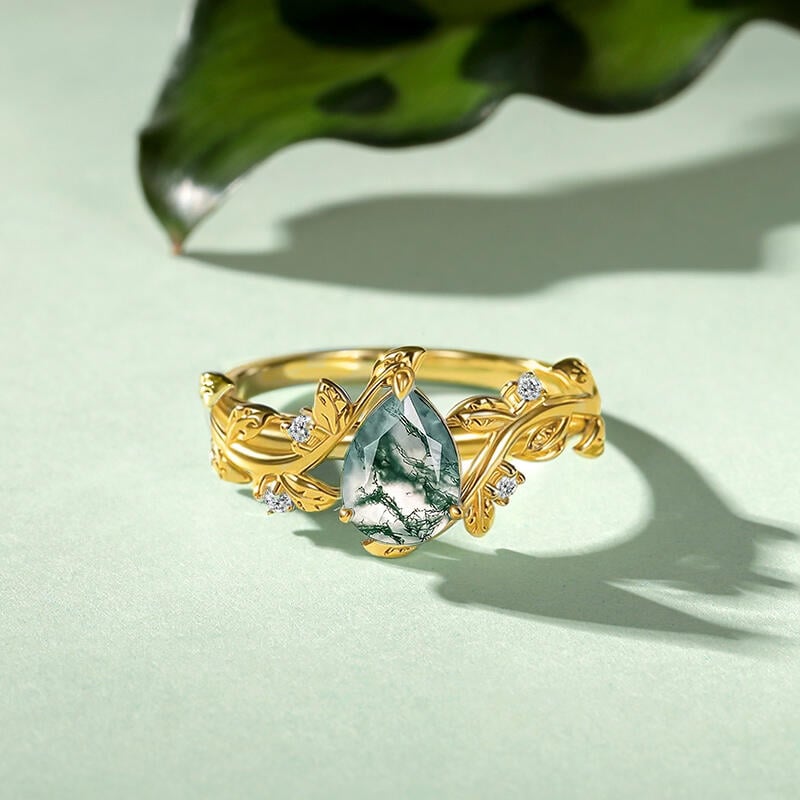
Imagine gazing into a tiny, wearable forest, complete with swirling tendrils of “moss” and delicate fern-like patterns. That’s the magic of moss agate. It’s a type of chalcedony (a form of quartz) characterized by its distinctive dendritic inclusions, usually made of manganese or iron, which create patterns resembling moss, trees, or landscapes within the stone.
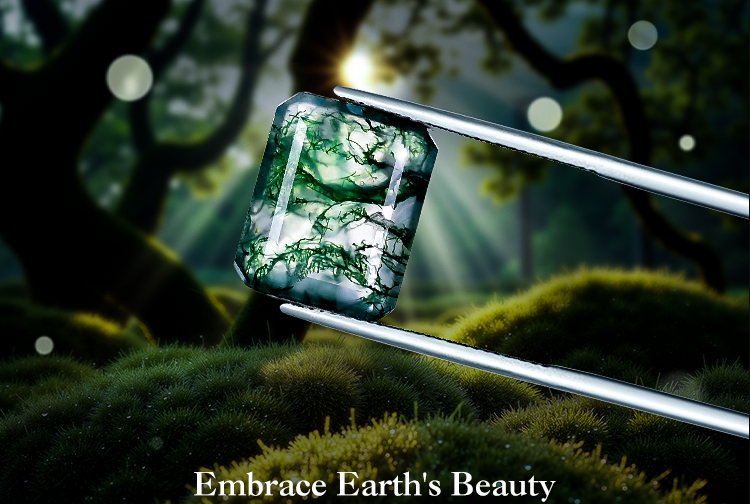
Pros of Moss Agate
- Unique & Organic Beauty: No two moss agates are ever exactly alike. Each ring is a one-of-a-kind piece of nature’s artwork, offering a truly personal connection.
- Earthy & Ethereal Aesthetic: Its translucent to opaque appearance, combined with the natural inclusions, gives it a grounding, bohemian, and slightly mystical vibe. It’s perfect for those who love understated beauty and a connection to the natural world.
- Symbolism of Growth & New Beginnings: Often associated with nature, growth, abundance, and emotional balance, moss agate is a beautiful choice for someone embarking on a new chapter or seeking grounding energy.
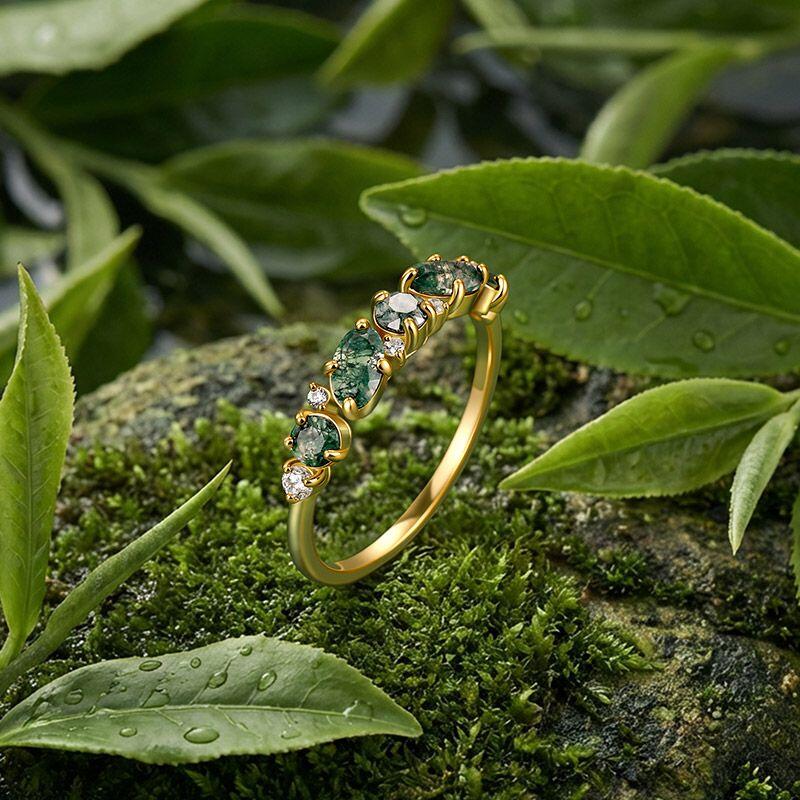
4. Durability for Daily Wear: With a Mohs hardness of 6.5-7, moss agate is reasonably durable for everyday wear. While not as hard as, say, a sapphire, it can withstand regular activity with proper care. 5. Accessible Luxury: Moss agate offers stunning aesthetic value without the premium price tag of a precious gem. It’s an excellent option for a unique engagement ring or a statement piece without breaking the bank.
Cons of Moss Agate
- Less Sparkle: Unlike faceted emeralds, moss agate is generally cut en cabochon (domed) or in smooth, polished shapes to highlight its internal patterns, meaning it won’t have a fiery sparkle.
- Not a “Precious” Gemstone: While beautiful, it’s considered a semi-precious stone, which might be a factor for those seeking a more traditional “investment” piece.
What is Emerald?
For centuries, emeralds have captivated royalty, adorned the wealthy, and symbolized love, rebirth, and prosperity. Part of the beryl family, emeralds get their vibrant, signature green color from trace amounts of chromium and/or vanadium.
Pros of Emerald
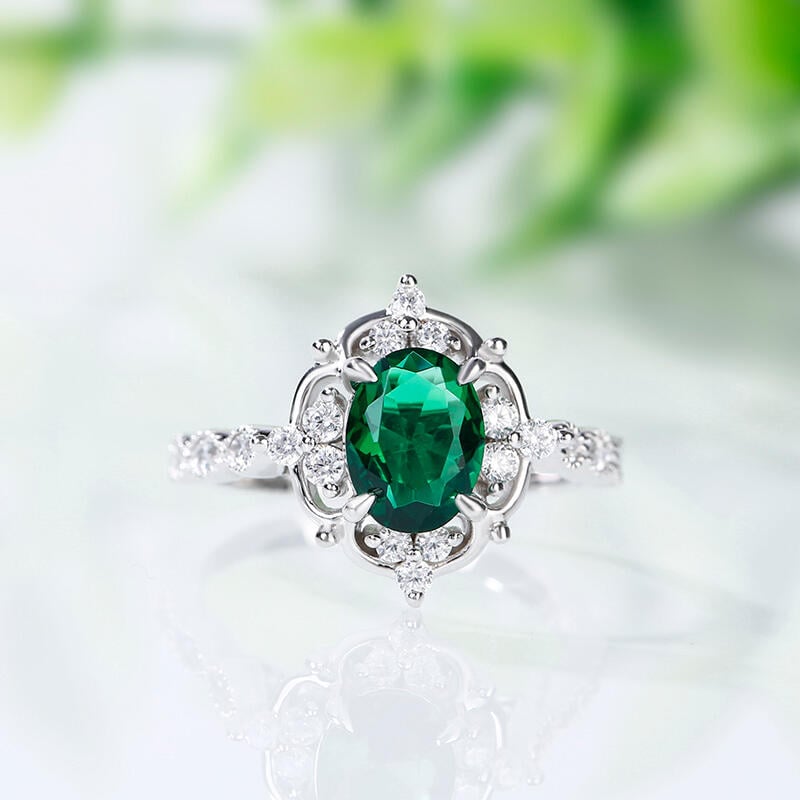
- Regal & Luxurious Appeal: Emeralds exude an undeniable sense of prestige and sophistication. Their deep, rich green is instantly recognizable and speaks of timeless elegance.
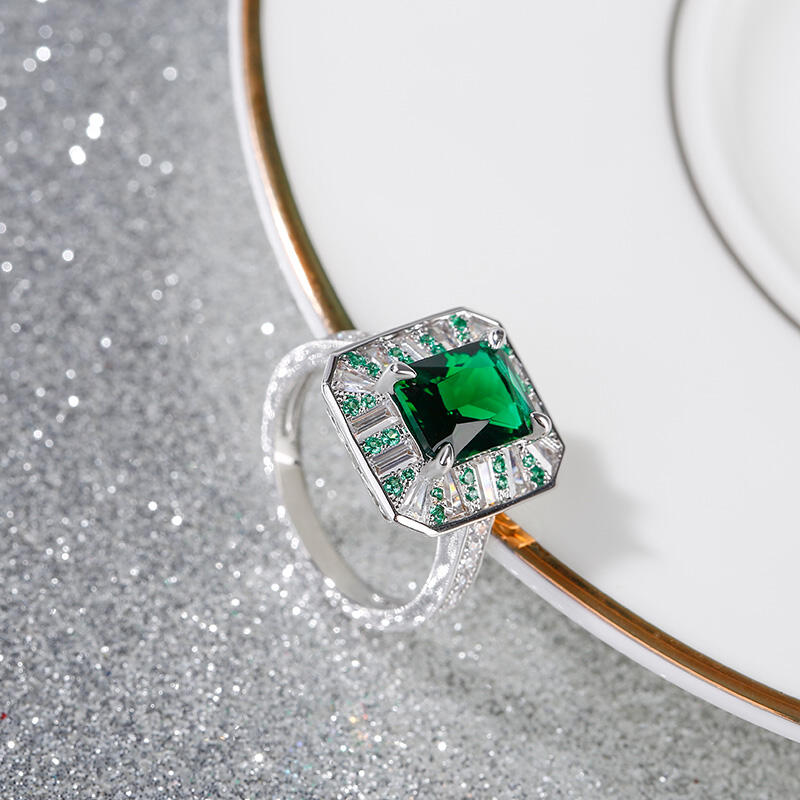
- Vibrant Sparkle: When expertly cut and faceted, emeralds possess a magnificent brilliance and a captivating play of light, especially in their characteristic “emerald cut.”
- Rich History & Symbolism: Associated with Venus, the goddess of love, as well as royalty and wisdom, an emerald ring carries a profound historical and symbolic weight. It’s also the birthstone for May.
4. Investment Piece: As one of the “big four” precious gemstones (alongside diamonds, rubies, and sapphires), a high-quality emerald can be a significant investment and an heirloom to be passed down. 5. Classic & Timeless: Emerald rings are a perennial favorite, often set in classic designs that stand the test of time, making them perfect for traditional engagement rings or special occasion jewelry.
Cons of Emerald
- Delicate Nature: Emeralds are notoriously softer than many other precious gems, with a Mohs hardness of 7.5-8. They are also prone to inclusions (often referred to as “jardin” – French for garden) which can make them more brittle and susceptible to chipping or breaking if not handled with care.
- High Maintenance: Due to their fragility, emeralds require specific care. They should not be cleaned with ultrasonic cleaners and need gentle handling to prevent damage.
- Price Point: High-quality emeralds command a significant price, making them a more substantial investment than moss agate.
- Feather Inclusions: Most emeralds have inclusions (jardin). While these are natural and often part of the gem’s character, they can affect clarity and durability.
Moss Agate Rings vs. Emerald Rings: Difference Quick Comparison
| Feature | Moss Agate | Emerald |
|---|---|---|
| Aesthetic & Vibe | Organic, earthy, unique, natural, bohemian | Regal, luxurious, vibrant, classic, sophisticated |
| Color | Varied greens, white/clear base, dendritic patterns | Deep, rich, intense green |
| Sparkle | Low (translucent/opaque) | High (when faceted) |
| Cuts | Often seen in Rose Cut, Kite and Hexagon Cuts | Signature “Emerald Cut”, Ovals and Pears Cut |
| Setting | Nature-Inspired Settings, Minimalist Prongs, Low-Profile Settings | The Bezel Setting, The Halo Setting, Yellow Gold |
| Durability (Mohs) | 6.5-7 (Good for daily wear with care) | 7.5-8 (More delicate, prone to chipping/fracture) |
| Price Point | Accessible, affordable luxury | Significant investment, premium price |
| Symbolism | Growth, nature, new beginnings, grounding | Love, rebirth, royalty, wisdom, prosperity |
| Maintenance | Relatively low | High (gentle cleaning, avoid harsh impacts) |
| Ideal For | Nature lovers, unique styles, everyday wear, budget-conscious, alternative engagement rings | Special occasions, heirlooms, luxury seekers, traditional engagement rings, May birthstone |
Cutting Styles
The way a stone is cut determines how it interacts with light and how much of its internal character is visible.
Moss Agate Cuts
Moss Agate is much more durable than emerald, allowing for experimental and modern shapes that wouldn’t be safe for a more brittle stone.
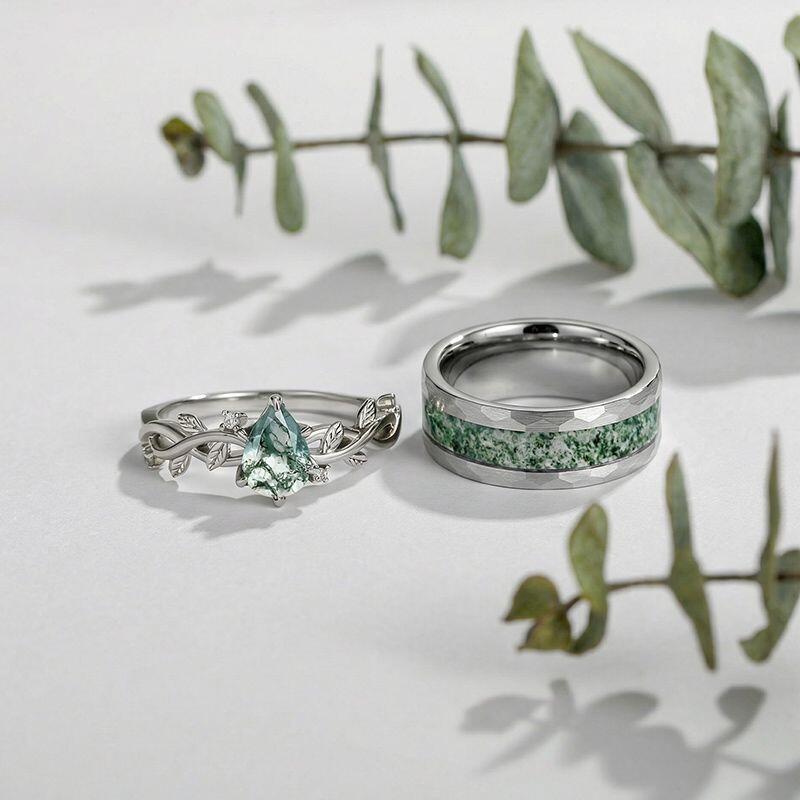
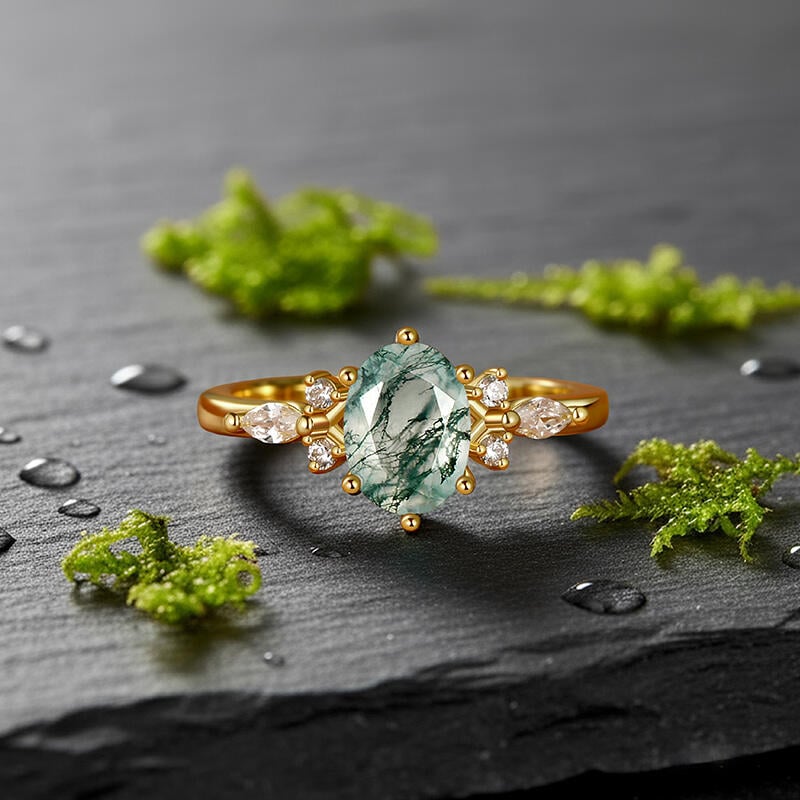
- Rose Cuts: This is currently the most popular cut for Moss Agate. The flat bottom and domed, faceted top allow life-like “moss” patterns to be the star of the show without the distraction of deep-set reflections.
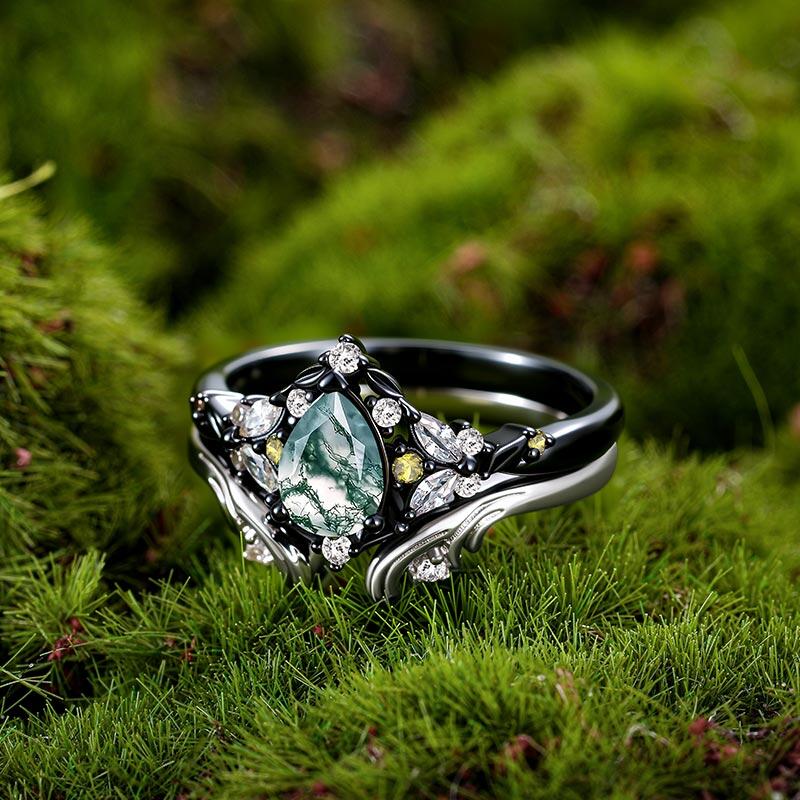
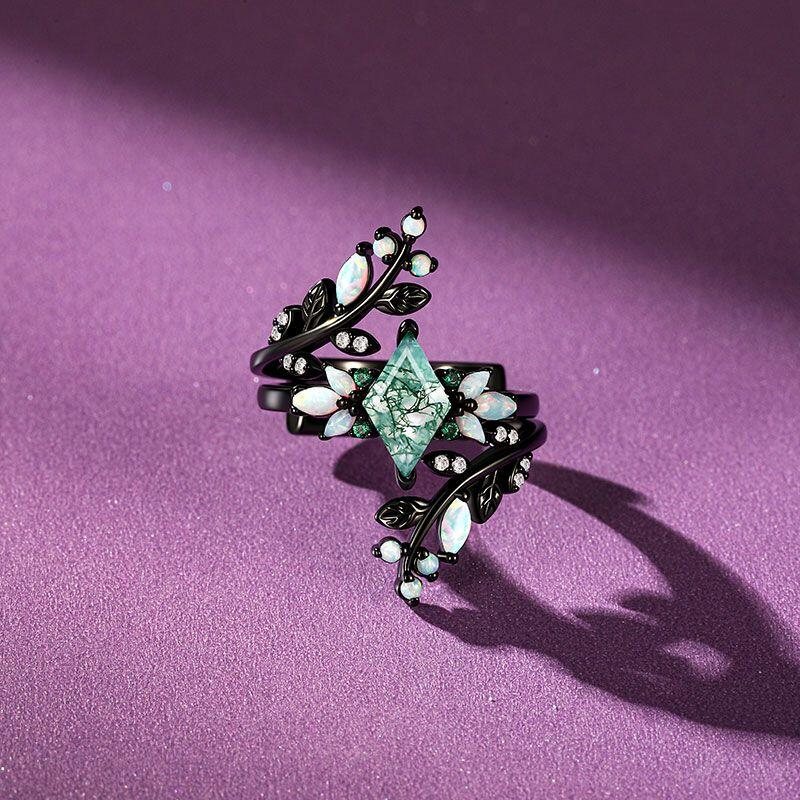
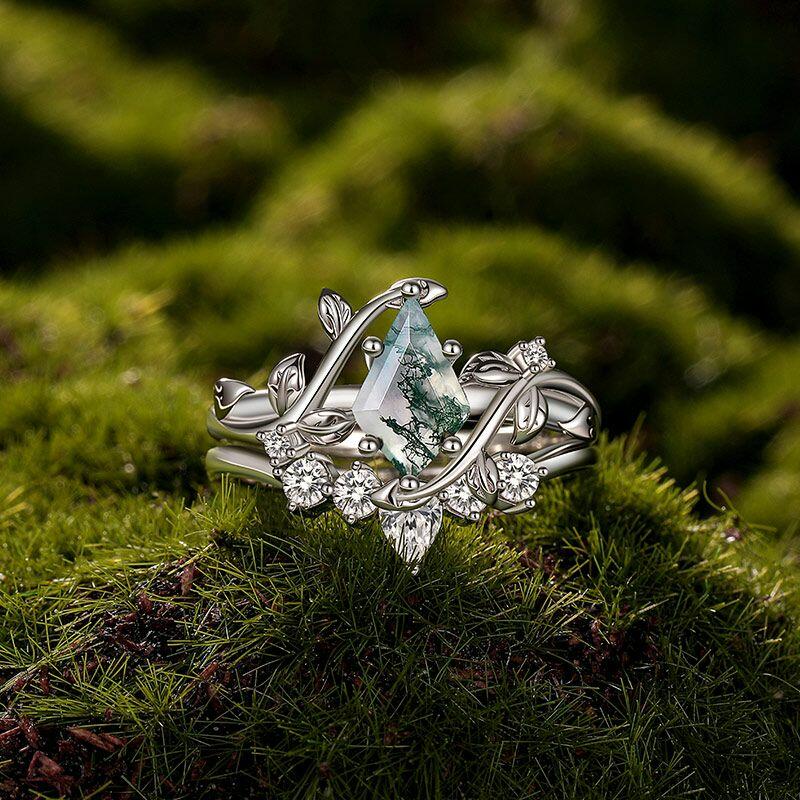
- Kite and Hexagon Cuts: Moss Agate has become the darling of the “alt-bridal” world. Geometric kite shapes and hexagons highlight the sharp, dendritic patterns of the stone, giving it a modern, architectural edge.
- Cabochan: For a truly vintage or bohemian feel, a smooth, rounded cabochon cut makes the stone look like a drop of forest water.
Emerald Cuts
Because emeralds are naturally brittle and often have significant inclusions, they require expert lapidary work.
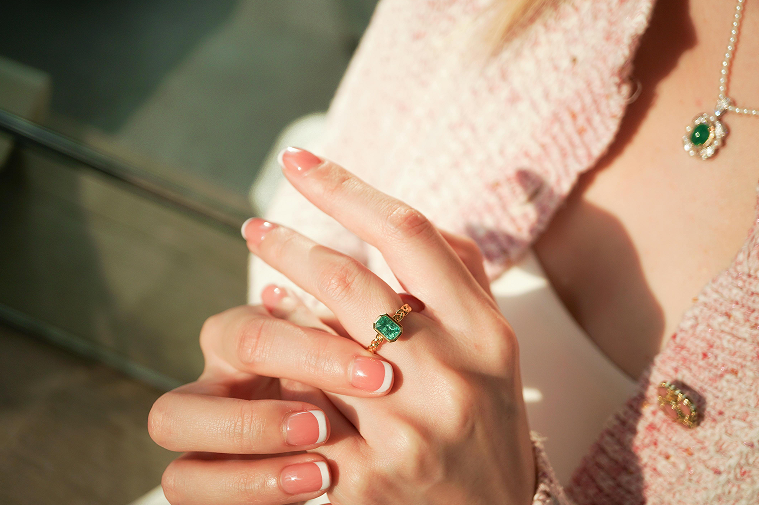
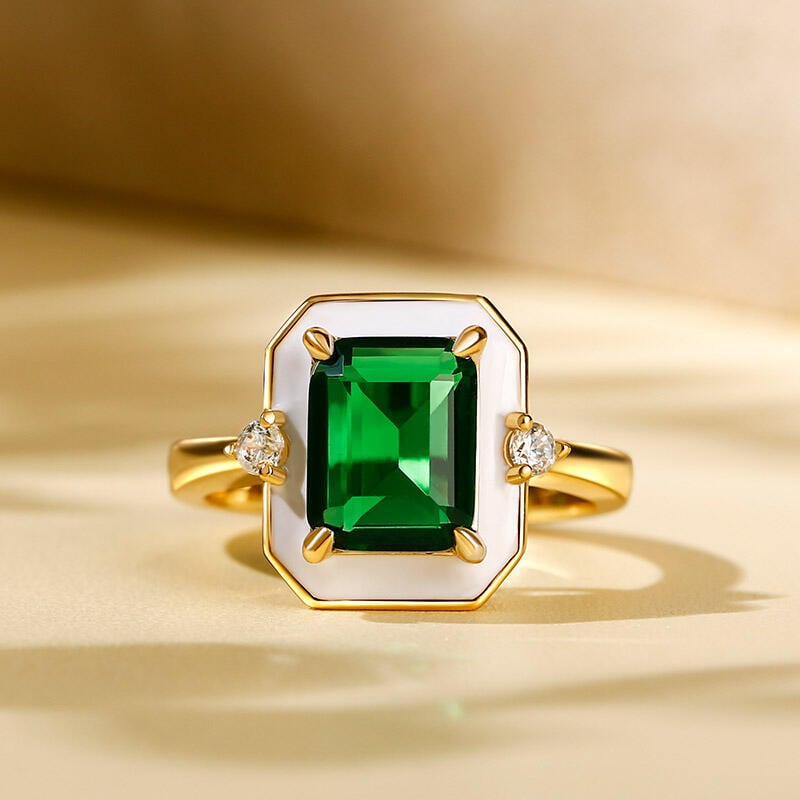
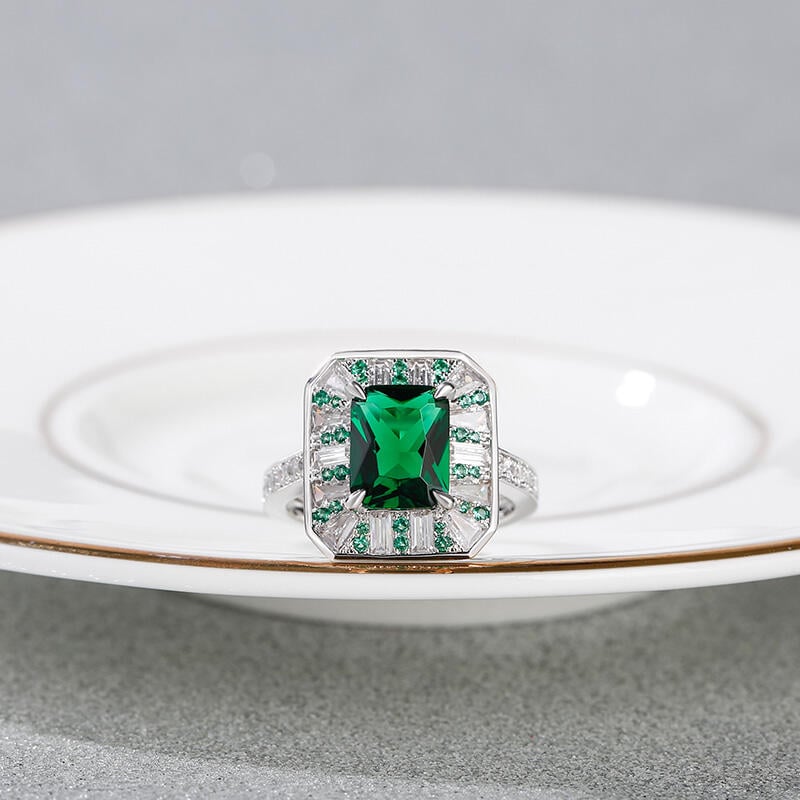
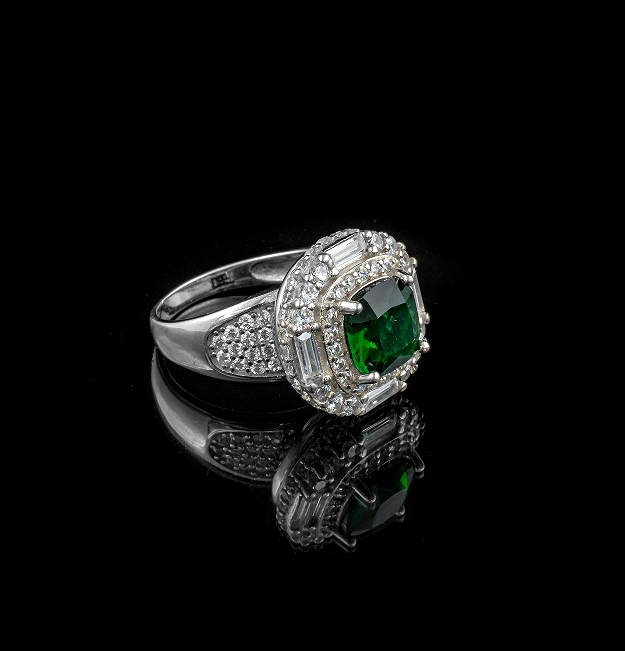
- The Signature “Emerald Cut”: This rectangular step-cut was literally invented for this stone. The wide, flat facets act like windows, showcasing the deep color and the “jardin” while protecting the stone from chipping.
- Ovals and Pears: These are popular for emeralds to maximize “face-up” size and create a classic, romantic silhouette.
- The Goal: With emeralds, the cut is designed to enhance color saturation and minimize the visibility of cracks.
Setting Styles
The setting isn’t just about style—it’s about protecting your investment.
Moss Agate Settings
Moss Agate is tougher (ranking 6.5 to 7 but without the internal fractures of an emerald), meaning it can handle more delicate or “open” settings.
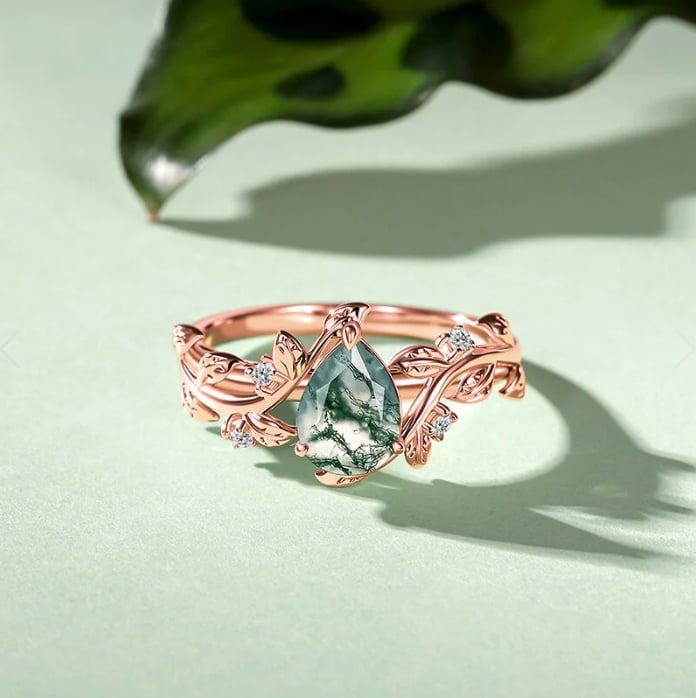
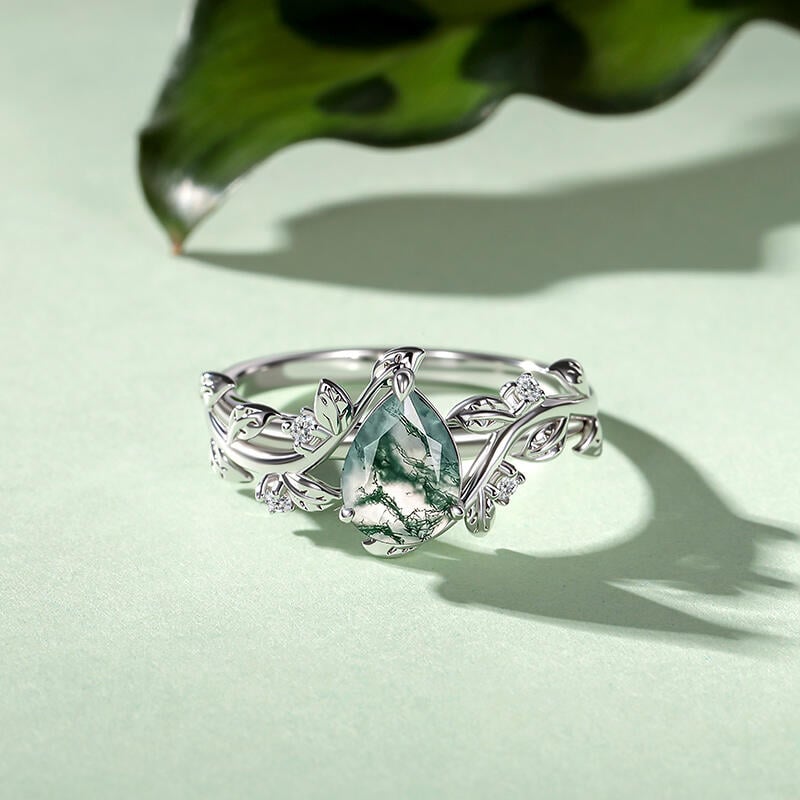
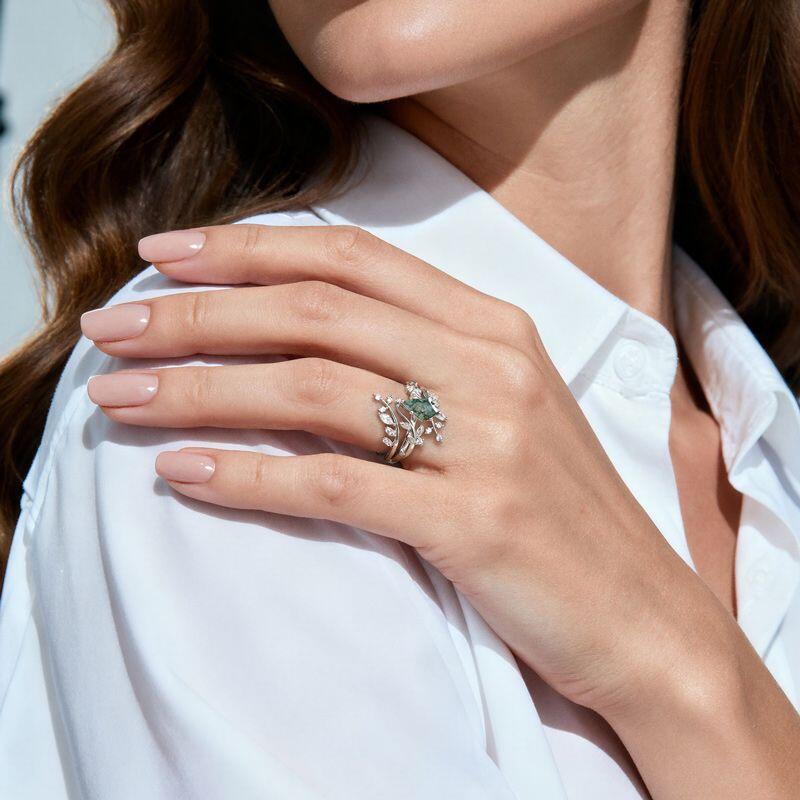
- Nature-Inspired Settings: Because Moss Agate looks like a landscape, it pairs beautifully with settings featuring twig motifs, leaf filigree, or vine-like prongs.
- Minimalist Prongs: Since the patterns in Moss Agate are so intricate, many people opt for simple 4-prong settings in rose gold or silver to let the “miniature forest” inside the stone breathe.
- Low-Profile Settings: Moss Agate is often cut thinner than emeralds, allowing for “low-profile” settings that sit flush against the finger—perfect for someone with an active lifestyle.
Emerald Settings
Emeralds rank 7.5 to 8 on the Mohs scale, but their inclusions make them prone to “cleavage” (splitting) if hit hard.
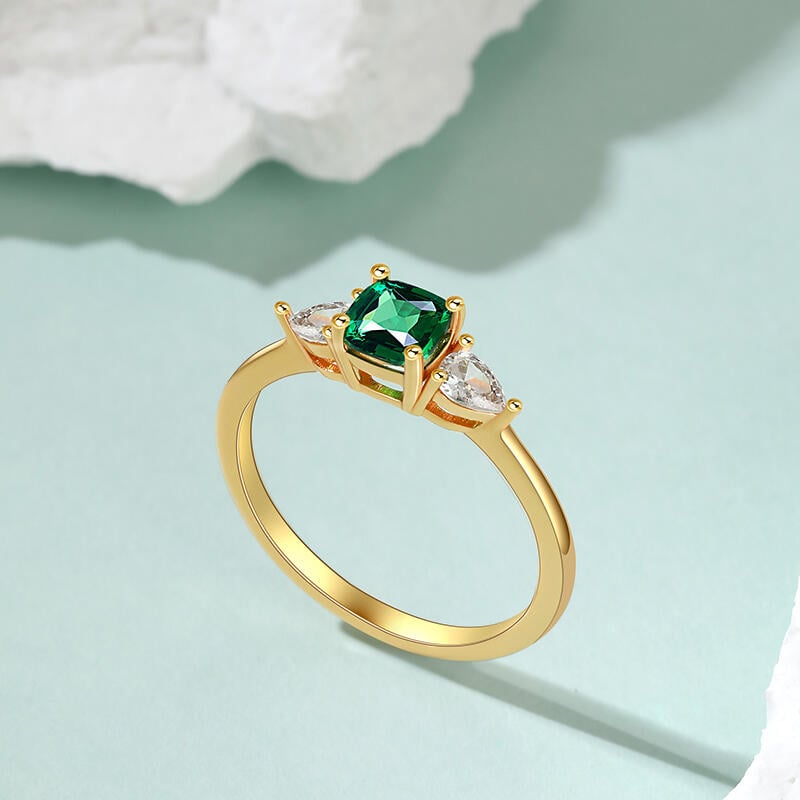
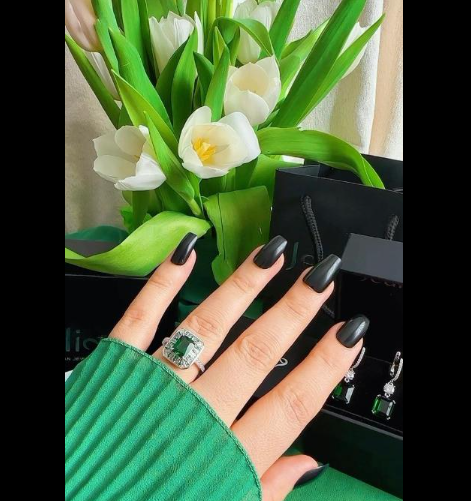
- The Bezel Setting: A metal rim surrounds the entire stone. This is the safest way to wear an emerald, protecting the fragile edges from daily bumps.
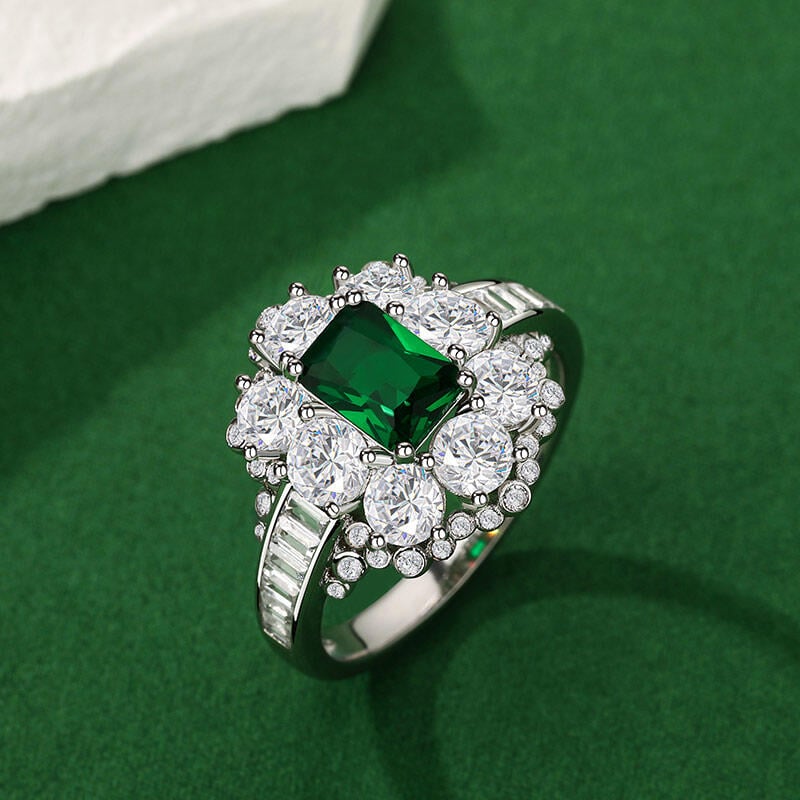
- The Halo Setting: Surrounding an emerald with a “halo” of diamonds not only adds sparkle (which emeralds lack compared to diamonds) but also acts as a literal bumper guard for the center stone.
- Yellow Gold: Historically, emeralds are almost always set in yellow gold. The warmth of the gold cancels out any bluish undertones in the green, making the stone look more vibrant.
Moss Agate Rings vs. Emerald Rings: Which is for You?
Ultimately, the choice between a moss agate and an emerald ring comes down to your personal aesthetic, lifestyle, and priorities.
- Choose Moss Agate if: You are drawn to the wild, untamed beauty of nature, value uniqueness above all else, prefer an earthy and artistic look, and seek a meaningful, durable, and budget-friendly piece for everyday wear.
- Choose Emerald if: You desire a gemstone that radiates classic luxury, appreciate rich history and symbolic depth, are ready for a significant investment, and are prepared to give it the care it needs to maintain its majestic sparkle for generations.
Both moss agate rings and emerald rings offer a stunning way to wear the color of life and vitality. Whichever you choose, let your new green ring be a reflection of your unique story and the beauty you cherish most.
More Jeulia Post: