
Few gems catch the eye like opal. With its play of color, it’s like wearing a piece of magic—a miniature galaxy that shifts with every move. But can everyone wear opal jewelry? What does an opal ring symbolize? Are opal really bad luck? In this article, we’ll uncover everything you need to know about opal jewelry.
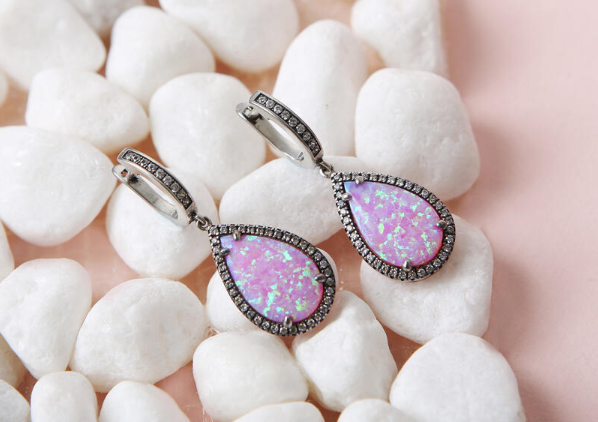
Navigate to:
What Exactly Is an Opal?
Unlike most gemstones that are crystalline in structure, opal is an amorphous form of silica (the same stuff quartz is made of) with a significant water content. Chemically, it’s hydrated amorphous silica.
What gives opal its famous “play-of-color” – the spectacular internal flashes of spectral hues? It’s all thanks to microscopic silica spheres stacked in a regular pattern. When light passes through these tiny spheres, it diffracts and splits into the colors of the rainbow, creating that mesmerizing, ever-changing dance of light that makes each opal unique.
| Property | Typical Range | Why It Matters |
|---|---|---|
| Hardness (Mohs) | 5.5 – 6.5 | Softer than most gemstones; requires gentle handling. |
| Specific Gravity | 2.0 – 2.2 | Light for its size, making large opal pieces comfortable to wear. |
| Water Content | 3–21 % | High water content can cause cracking if the stone is exposed to sudden temperature changes. |
| Refractive Index | 1.44 – 1.46 | Contributes to the brilliance and internal “fire.” |
Types of Opals
Opals come in a fascinating range of forms, each with its own distinct charm:
- White Opal: The most common precious opal, featuring a light body tone (white, yellow, or cream) that allows the play-of-color to shine. Often found in Australia.
- Black Opal: The most valuable and rarest type of opal, characterized by a dark body tone (black, dark gray, or dark blue/green). This dark background makes the play-of-color incredibly vibrant and intense. Primarily sourced from Lightning Ridge, Australia.
- Boulder Opal: Unique Australian opals where the precious opal forms within or on its host rock (usually ironstone). The thin layer of opal is left on the matrix, creating a striking contrast and often irregular shapes. Each piece is truly one-of-a-kind.
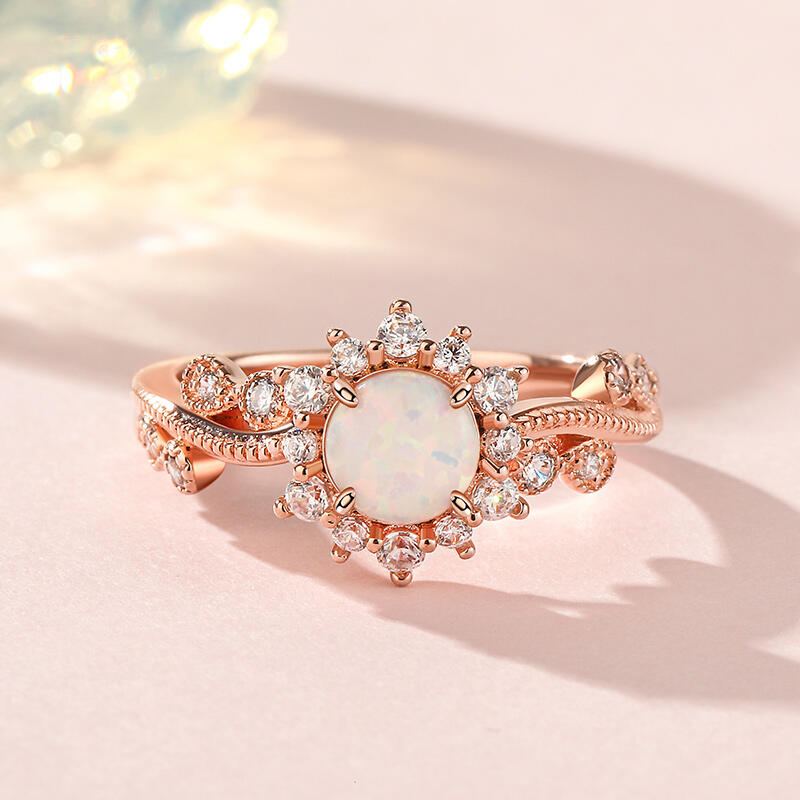
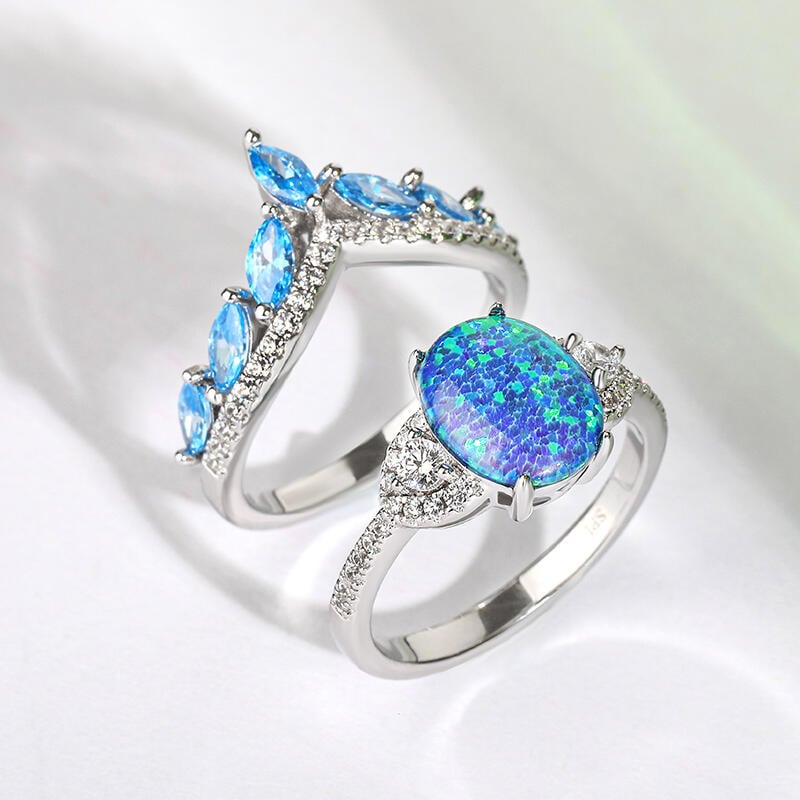
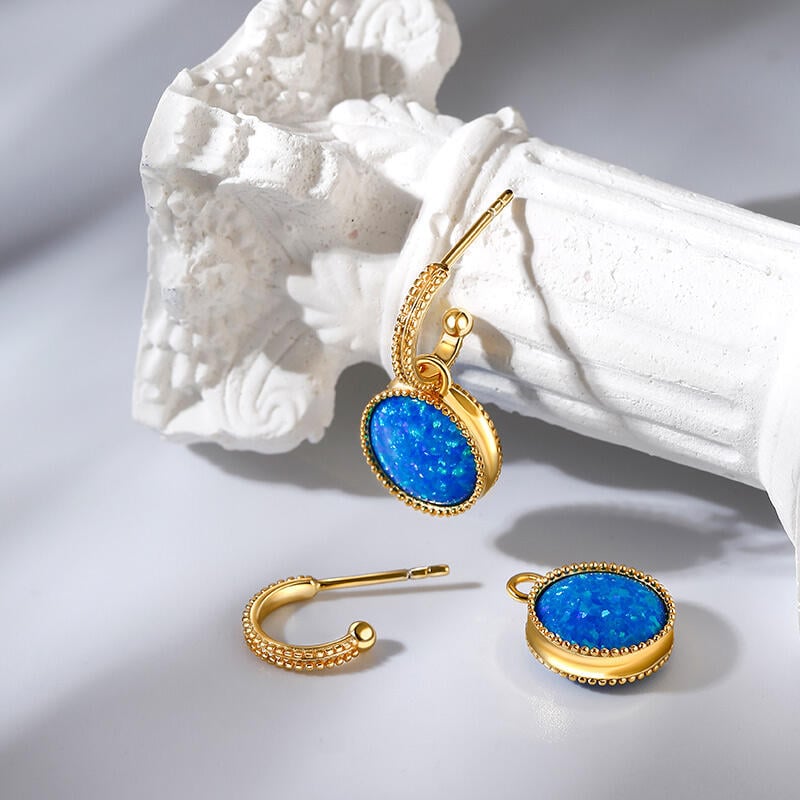
- Crystal/Water Opal: Transparent to semi-transparent opals that allow light to pass through them. Their play-of-color appears to float within the stone, giving them an ethereal quality.
- Fire Opal: Distinct from other opals, Fire Opals are named for their warm body color – typically fiery orange, red, or yellow. While some fire opals can exhibit play-of-color, many do not. They are primarily valued for their vibrant hue. Mexico is a prominent source.
- Ethiopian Opal: A newer discovery (largely from the Wollo Province), these hydrophane opals are known for their exceptional play-of-color and often come in various body tones. They are porous and can absorb water, temporarily losing their play-of-color, which returns as they dry.
- Peruvian Opal: A common opal from Peru, prized for its beautiful pastel blue-green or pink body color. It rarely displays play-of-color but is loved for its soothing hues.
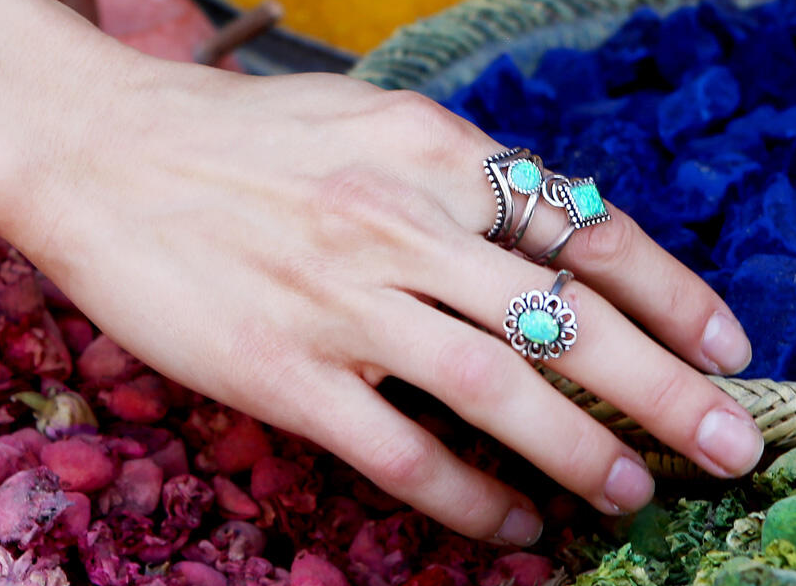
- Blue Opal: Typically refers to the opaque, usually non-iridescent stone from Peru. It’s cherished for its tranquil, solid sky-blue or turquoise color and calming, earthy style.
- Pink Opal: An opaque, gentle stone, often from Peru, admired for its soft milky-pink to peach color and soothing, nurturing energy, popular in feminine and healing jewelry.
- Green Opal: Valued for its serene, solid green color (often without play-of-color), ranging from mint to deep forest green. It’s associated with nature, calm, and renewal.
Can Everyone Wear Opal Jewelry?
The short answer is a resounding yes! Opal is a gem for everyone, loved across all kinds of styles and cultures. There’s no rule or bad vibe saying you can’t wear it—so feel free to find a piece that’s totally you! Whether it’s a simple pair of opal stud earrings for every day, a bold opal statement ring for a night out, or a dainty opal necklace to wear close to your heart, there’s something for every look and moment.
Ultimately, choosing an opal is a personal decision. If its captivating beauty speaks to you, if you feel a connection to its unique energy, or if you simply love its aesthetic, then it’s the perfect gem for you.
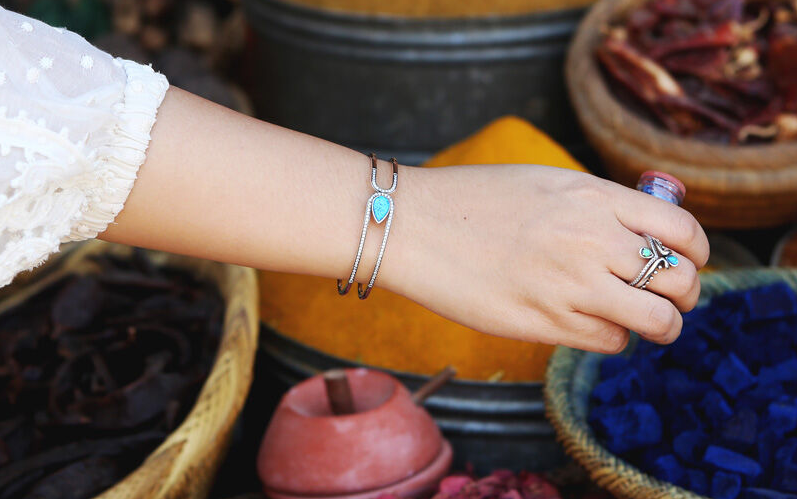
What Does Opal Symbolize?
Opal is the traditional birthstone for October, offering a vibrant alternative to tourmaline. For those born in this month, it’s believed to bring protection, creativity, and good fortune.
- Symbolism & Meaning:
- Hope & Purity: Historically, opals were seen as symbols of hope, purity, and truth.
- Creativity & Inspiration: Many believe opals enhance creativity, spontaneity, and foster imagination.
- Emotional Healing: Opals are thought to help express one’s true self, facilitate emotional release, and bring joy.
- Amplification: Some attribute opals with the ability to amplify thoughts and feelings, making them potent stones for introspection and manifestation.
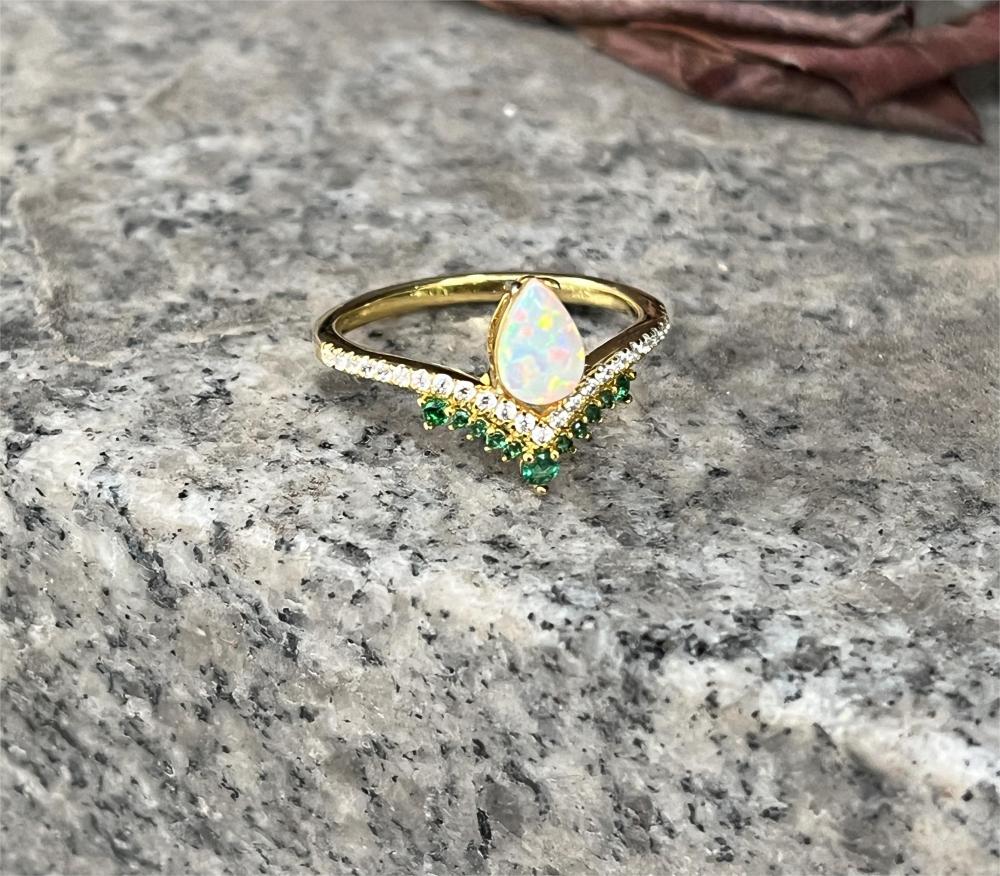
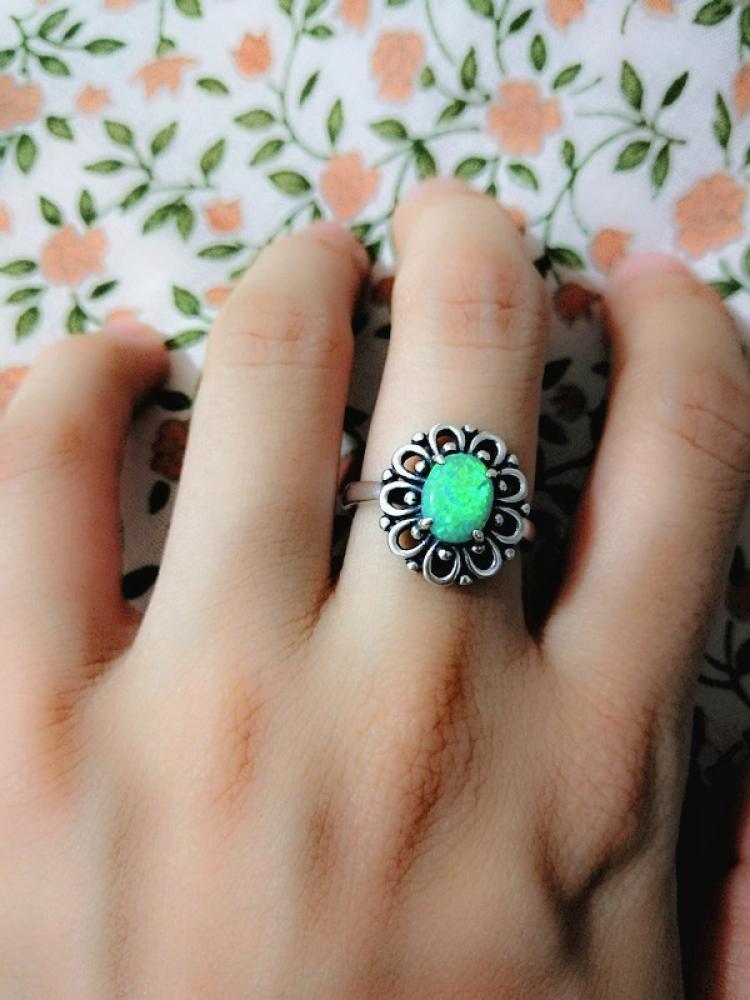
- Zodiac Connection:
- While linked to various signs, opals are particularly associated with Libra (September 23 – October 22). Libras, known for their love of beauty, balance, and harmony, often resonate with the opal’s multifaceted beauty and its ability to reflect various energies. Wearing an opal ring is thought to amplify a Libra’s innate charm, grace, and diplomatic finesse. This gem also speaks powerfully to Cancer (June 22 – July 22), serving as a stone of emotional protection, intuitive depth, and nurturing comfort, beautifully aligning with the moon-ruled, sensitive nature of this sign.
Which Finger is for an Opal Ring?
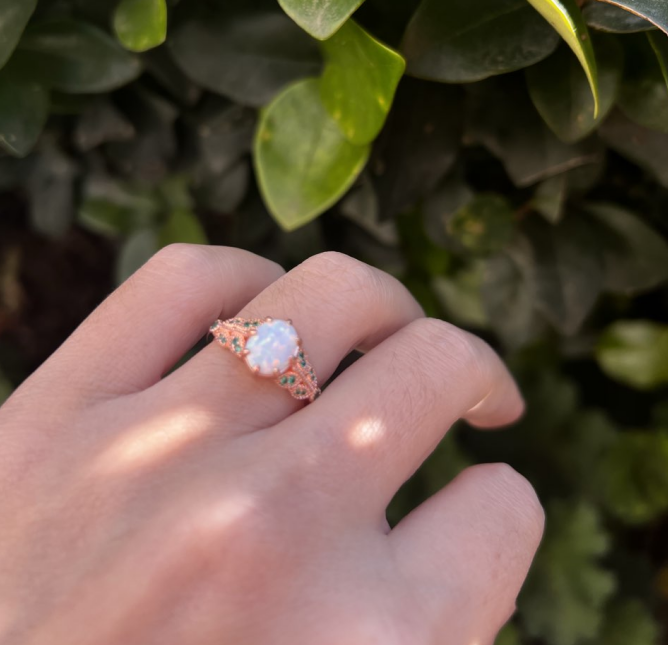
Most commonly, an opal engagement ring is worn on the left ring finger—a tradition rooted in the ancient belief that a vein, the “vena amoris” or “vein of love,” runs directly from this finger to the heart. After marriage, the wedding band is traditionally placed on the finger first, closest to the heart, with the engagement ring then stacked above it.
This order symbolizes that the lifelong bond of marriage encircles and grounds the initial promise of engagement, allowing both rings to be worn together as a complete symbol of a love that has evolved from commitment to eternal union. Of course, modern couples may choose different fingers or hands based on personal or cultural preference.
Are Opals Really Bad Luck?
It’s perhaps the most stubborn myth about opals—the idea that they bring bad luck. For centuries, opals were actually seen as lucky, protective, even magical. So how did the superstition start? It largely goes back to Sir Walter Scott’s 1829 novel Anne of Geierstein, where a character’s mood-changing opal loses its shine after being touched by holy water, and she soon dies. That dramatic story, along with the fact that opals are delicate and can crack if handled roughly, accidentally spread the rumor. But the truth is, ancient cultures like the Greeks and Romans treasured opals as stones of hope, prophecy, and protection. Their soft, watery structure simply makes them more fragile than gems like diamonds—so if one broke, it was physical vulnerability, not a curse. These days, the “bad luck” label is widely dismissed as pure myth.
So, no, opals are not bad luck. They are magnificent, vibrant gems that have been cherished for millennia for their beauty and positive symbolism.
Caring for Your Opal Jewelry
Given their unique composition, opals require a little special care to keep them dazzling:
- Avoid Harsh Chemicals: Keep opals away from household cleaners, perfumes, and hairspray.
- Protect from Impact: Opals are softer than many other gems, so avoid wearing them during activities where they might be knocked or scratched.
- Extreme Temperature Changes: Sudden drastic changes in temperature can cause an opal to crack (known as “crazing”).
- Avoid Dehydration: While not all opals are hydrophane, it’s generally good practice to avoid prolonged direct heat or very dry environments, which could potentially cause them to lose some water content and crack.
- Clean Gently: Use a soft, damp cloth and mild soap. Never use ultrasonic cleaners or steam cleaners on opals.
- Store Separately: To prevent scratches from harder gems, store your opal jewelry in a soft pouch or separate compartment.
Embrace the Magic of Opal
Ultimate, opal jewelry is suitable for everyone. Whether you’re celebrating an October birthday, connecting with your inner Libra, or simply drawn to its undeniable allure, a piece of opal jewelry is more than just an accessory – it’s a wearable universe, a masterpiece of nature, and a sparkling reminder to embrace wonder. Find the one that speaks to you.
More Jeulia Post: