
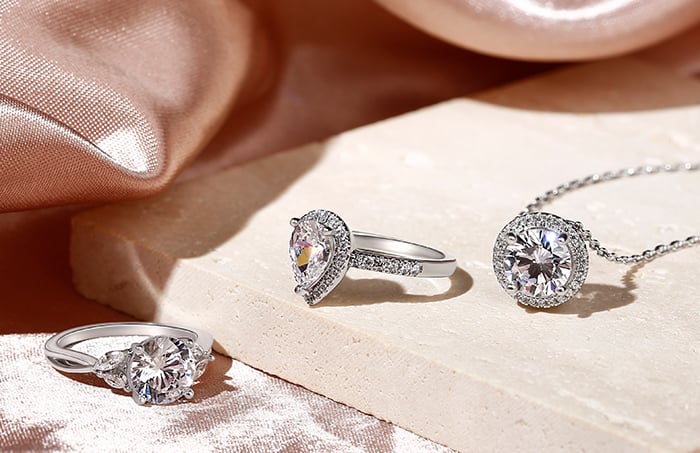
Lab grown diamonds have surged from a niche choice to a mainstream favorite for engagement rings. They deliver the same sparkle and size as natural diamonds, often at a more accessible price.
But many wonder: are they real diamonds? The answer is yes – lab grown diamonds are real diamonds. They are chemically, optically, and physically identical to mined diamonds. The key difference is their origin: instead of forming deep in the Earth over billions of years, they’re created in a lab using advanced technology that replicates nature’s process in just weeks.
Here’s a clear breakdown of how they’re made, the different growing methods, and their pros and cons.
Navigate to:
How Are Lab Grown Diamonds Made?
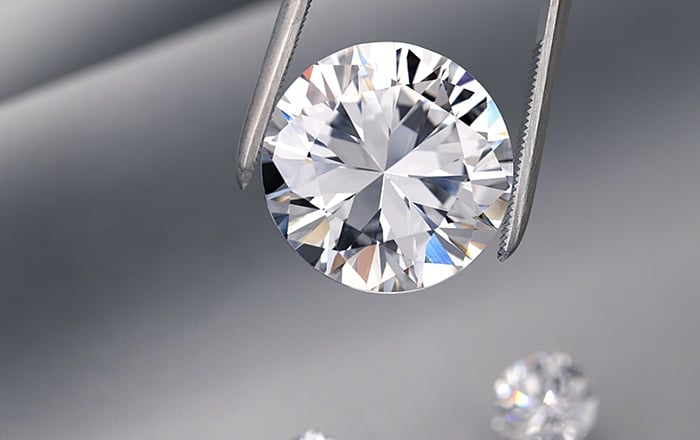
There are currently two primary methods used globally to create gem-quality lab grown diamonds, and both require an initial “seed” crystal—a tiny sliver of pre-existing diamond—to act as a growth template. Without it, the orderly crystal growth cannot begin, likely resulting in graphite or another form of carbon instead of a diamond. For this reason, the process is essentially one of “growth,” not creation from nothing – this “seed” is the foundation of the entire process.
High-Pressure / High-Temperature (HPHT)
The HPHT method seeks to replicate the exact conditions under which natural diamonds are formed in the Earth’s mantle.
The Process:
- The Environment: A tiny diamond seed, carbon material (often graphite), and a metal solvent (like iron, nickel, or cobalt) are placed inside a massive pressurized growth chamber.
- The Heat: The chamber is heated to intense temperatures, typically between 2,500 and 3,000 degrees Fahrenheit.
- The Pressure: Extreme pressure, equivalent to holding a 747 airplane on the tip of your finger, is applied (around 5.5 GigaPascals).
- The Growth: The metal solvent melts the carbon material, which then slowly crystallizes onto the cooler diamond seed. The new diamond grows layer by layer over the course of several weeks.
The Result: HPHT diamonds often have a very cuboctahedral shape (multiple faces) and can sometimes inherit traces of the metal solvent, which can affect color (often leading to beautiful yellows or sometimes blues, depending on the introduction of boron).
Chemical Vapor Deposition (CVD)
CVD is a more recent innovation that uses gas and vacuum environments, rather than crushing pressure, to grow diamonds. It is often described as a “layering” process.
The Process:
- The Environment: Diamond seeds are placed inside a vacuum chamber.
- The Gas: The chamber is filled with carbon-rich gases (like methane) and small amounts of other gases (like hydrogen).
- The Heat: Microwave beams heat the chamber to temperatures around 1,500 to 2,200 degrees Fahrenheit.
- The Growth: The gases break down into their component atoms. The pure carbon “rains” down and precipitates, layering onto the seeds and building the diamond crystal vertically, like a growing column.
The Result: CVD diamonds grow in thin, flat plates and typically require post-growth treatment (often a mild HPHT annealing) to improve color or clarity, as they sometimes exhibit brownish tints initially due to residual strain.
Method Differences & Resulting Diamond Properties
While both HPHT and CVD produce gem-quality diamonds, the differences in their growth environments lead to subtle, detectable markers:
| Feature | HPHT Diamonds | CVD Diamonds |
|---|---|---|
| Growth Speed | A few days to several weeks. Faster growth rate. | Several weeks to a month. Slower growth rate, but can be scaled easily. |
| Typical Shape | Cuboctahedral, multi-directional growth. | Tabular/plate-like, vertical growth. |
| Nitrogen Content | Often contains trace nitrogen (Type Ib) typically resulting in a natural pale yellow tone. | Typically nitrogen-free (Type IIa), making them extremely pure. |
| Characteristic Marker | Often requires inclusion documentation to prove non-natural status. | May exhibit strange “strained” layers or graining patterns. |
| Color Improvement | Excellent for creating fancy colors (blue or yellow). | Often requires post-growth HPHT treatment to remove brown tints and achieve D-F color grades. |
| Common Result | Excellent for growing high-quality, colorless diamonds. Often preferred for smaller, melee-sized stones and fancy colors like yellow or blue. | Excellent at producing high-purity, colorless diamonds. It’s the most common method for larger stones. |
Crucial Note on Color: The initial growth phase, particularly in CVD, can sometimes leave the stone with a faint brown or gray cast. This is why many high-quality, colorless CVD diamonds undergo a secondary HPHT treatment called annealing to stabilize the crystal lattice and remove the unwanted color. This treatment is disclosed and accepted within the industry.
Pros and Cons of Lab Grown Diamonds
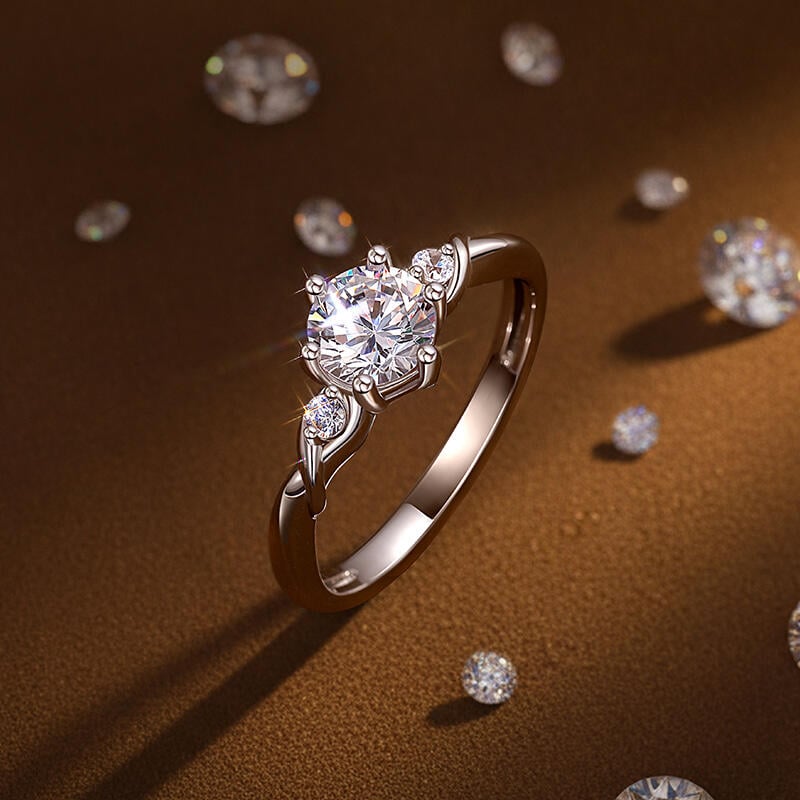
Like any product created through technology, LGDs come with their own set of advantages and disadvantages.
Lab Diamond Pros
- Exceptional Value: You get a significantly better size and clarity for your dollar, allowing buyers to move up several categories in the 4 Cs.
- Guaranteed Origin: They are traceable, conflict-free, and meet high ethical standards.
- Purity (Type IIa): Many CVD diamonds are classified as Type IIa (chemically pure), a rarity in natural diamonds (less than 2% are this pure).
- Fancy Color Accessibility: Lab technology allows for the consistent creation of vibrant fancy colors (like blue, pink, and yellow) that are extremely rare and costly in natural form.
Lab Diamond Cons
- Lack of Rarity: Because they are reproducible, they do not possess the geological rarity factor that drives the long-term pricing of natural diamonds.
- Resale Concerns: The secondary market for lab diamonds is currently less established, and rapid advances in manufacturing technology mean costs may continue to drop, potentially limiting the resale value compared to natural stones.
- Color Specifics (The Need for Treatment): As noted, the growth process (particularly CVD) can result in brownish, grayish, or sometimes bluish tints. While post-growth treatment fixes this for high-end stones, consumers must be aware that treatment is standard, not an exception.
Conclusion
Lab-grown diamonds are no longer just an alternative; they represent a fundamental shift that we’re all witnessing. By mastering the science of extreme pressure, heat, and gas, this innovation has given us an unprecedented choice. It empowers us to own stunning, high-quality diamonds that align with our values, without compromise on size, brilliance, or ethics.